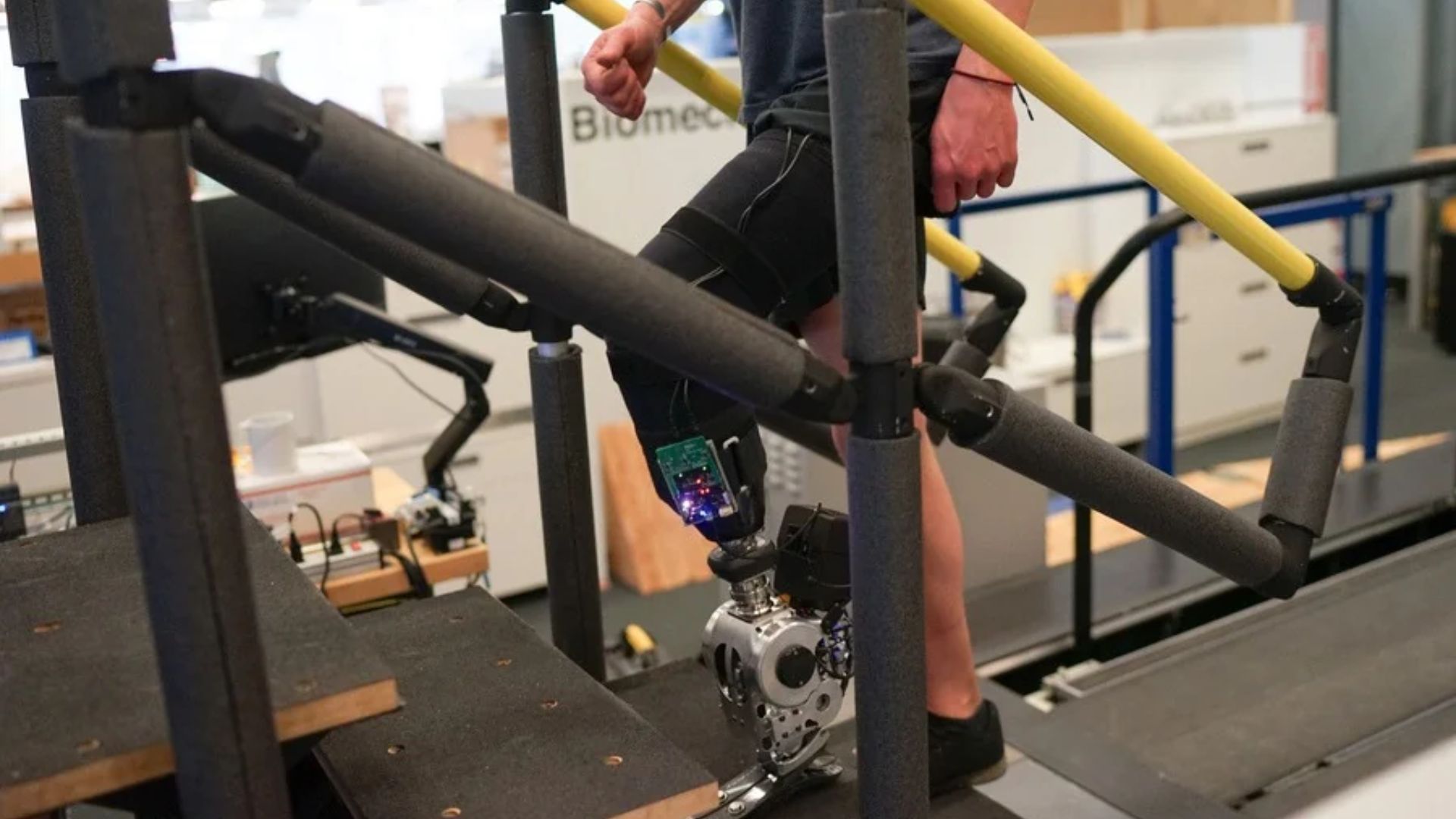
Researchers at the Massachusetts Institute of Technology (MIT) have shown a way to track muscle movements with tiny implanted magnets, potentially helping amputees control robotic prosthetic limbs more naturally.
Tested on three below-knee amputees, this technique could overcome the limitations of current muscle-signal systems.
The approach, called magnetomicrometry, measures changes in the distance between magnetic beads implanted in muscles. The researchers say these measurements provide more accurate and stable information about muscle movement than conventional surface electrodes.
The findings, published in Nature Sensors, build on years of work developing interfaces that allow prosthetic devices to respond more like natural limbs.
Most current muscle-controlled prosthetic systems use electromyography (EMG), which measures electrical activity associated with muscle contraction. Electrodes placed on the skin detect these signals, which software then translates into commands for a robotic limb.
However, electrical activity does not directly reveal a muscle’s mechanical behavior, including its length, movement speed, and force-related properties. The signals can also become less reliable when muscles remain contracted, when sweat interferes with electrodes, or when sensors pick up activity from neighboring muscles.
MIT’s magnet-based approach aims to overcome these limitations by measuring muscle movement directly.
Researchers implant pairs of tiny magnets into a muscle and position external sensors over the skin. When the muscle contracts or stretches, the distance between the magnets changes. The system tracks these changes to calculate muscle length and velocity, enabling the prosthetic controller to direct limb movement.
The magnets measure about 3 millimeters in diameter and are made from an alloy of neodymium, iron, and boron.
Source link