
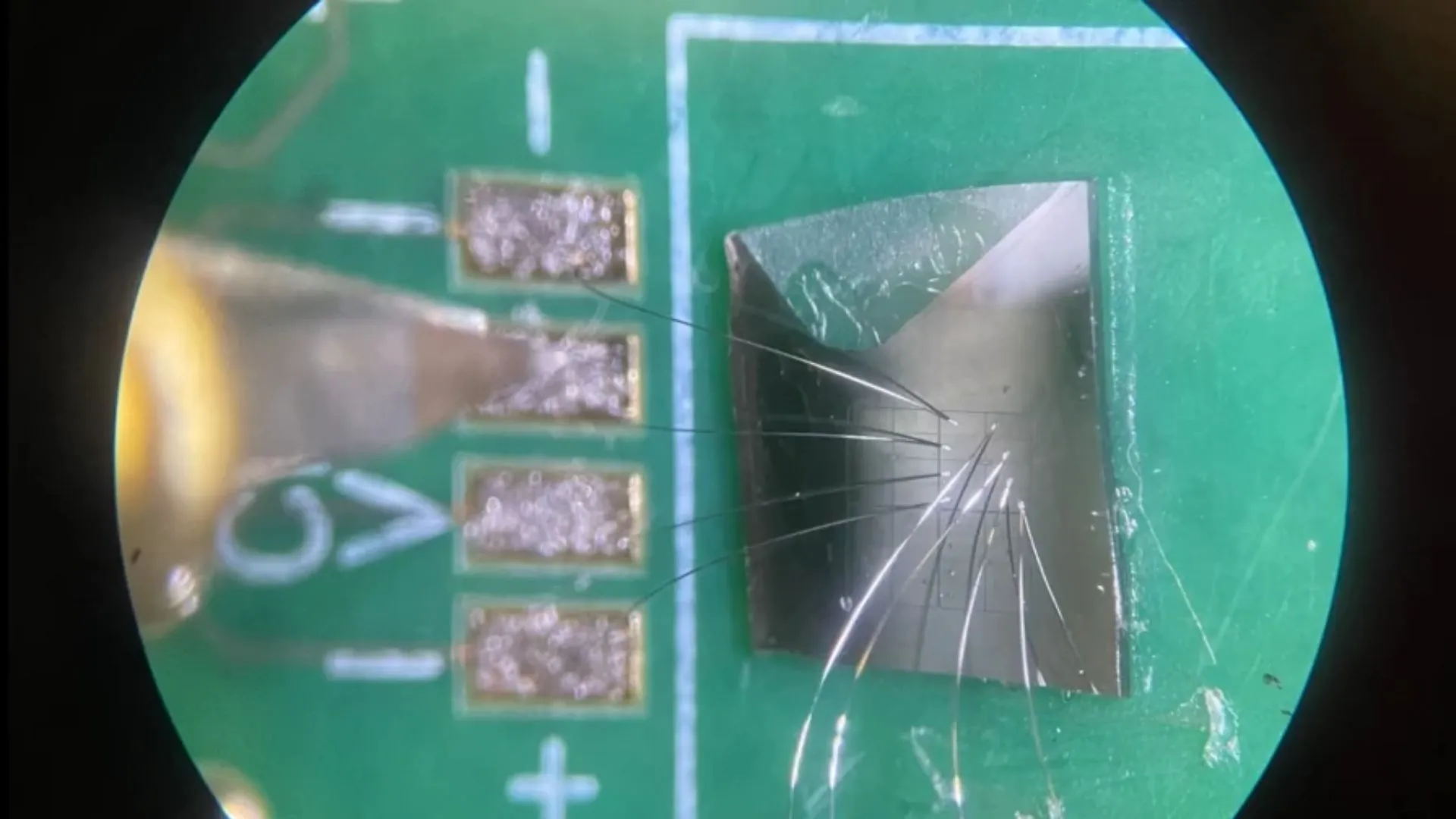
Researchers at the MIT Plasma Science and Fusion Center (PSFC) have developed a tiny superconducting device. It could serve as a low-energy memory cell and signal router for future superconducting and quantum computing systems.
Senior research scientist Jagadeesh Moodera and postdoctoral researcher Josep Ingla-Aynés unveiled a tiny superconducting sandwich device that can “store and process information” using less energy.
The team created a microscopic “memory cell” made of an ultrathin superconducting film sandwiched between two magnetic layers.
“Integrating these devices can lead to processors operating at high speed and low energy,” says Moodera. “This development addresses the current lack of suitable cryogenic memory and control components, allowing for the advancement of cryogenic electronics technologies, including quantum computing and networking.”
Computers and data centers face soaring demands for speed, capacity, and energy efficiency, making fast data delivery to processors essential.
Regular RAM provides quick access, but loses data without power, and non-volatile options like flash memory suffer from slower write speeds and eventual wear.
Researchers are exploring superconducting computers which operate at extreme cold with zero electrical resistance and minimal heat. These could help overcome the existing limits, though building fast, high-capacity memory that works in those freezing conditions remains a major hurdle.
MIT’s new device layers an ultrathin superconducting film between two magnetic tiers.
Flipping the magnetic alignment of those layers switches the film’s superconductivity on and off. Opposite magnetic directions allow resistance-free current, whereas matching directions trigger resistance. Computers read those two states as the ones and zeros of binary code.
Source link





