
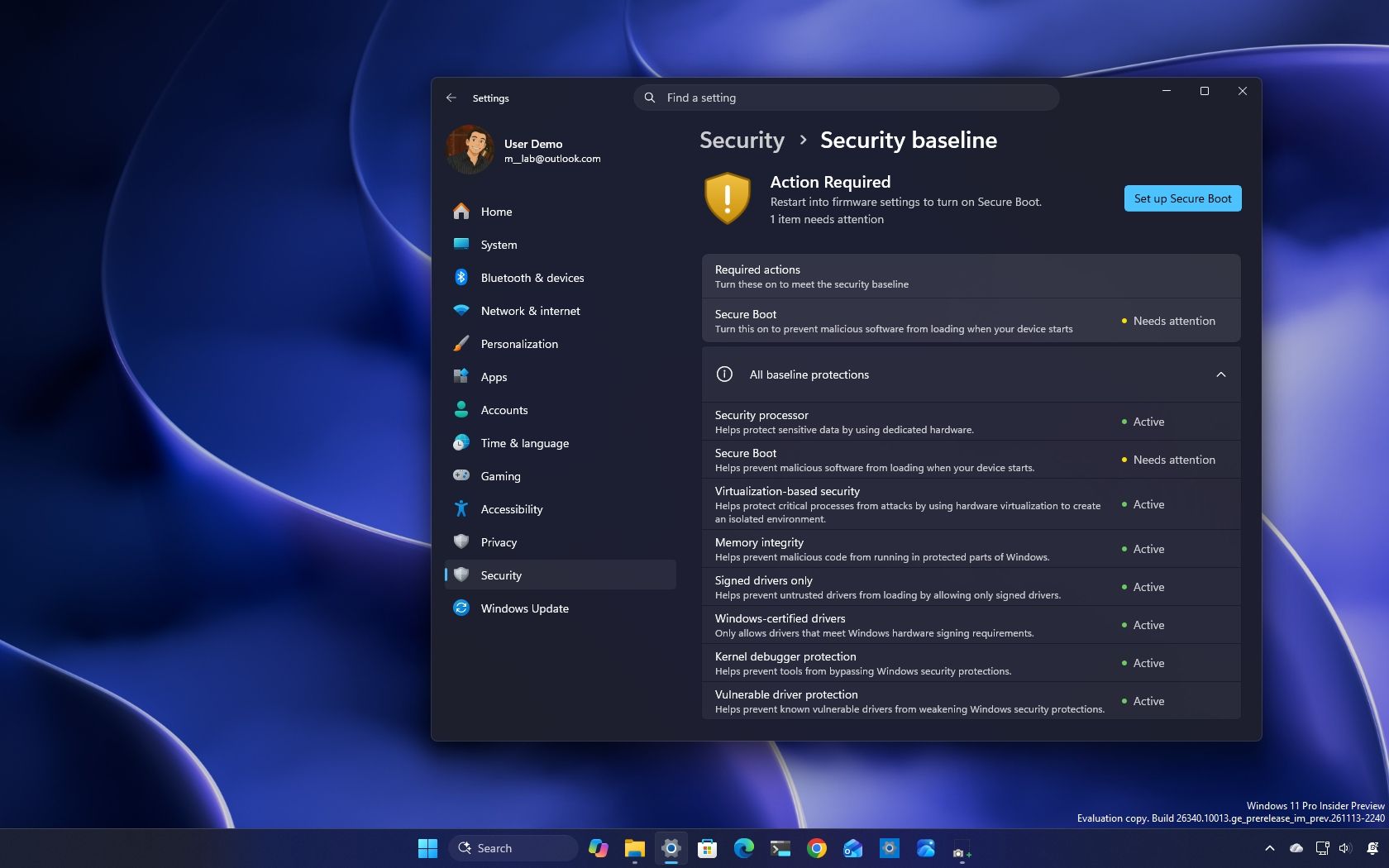
Windows 11 already includes plenty of security protections, but determining whether they're actually enabled hasn't always been straightforward.
Microsoft is trying to fix that with Windows baseline protection, a new feature that checks your PC against a standardized security configuration, identifies missing protections, and can help enable them.
Microsoft is also reorganizing Windows 11's security settings to make important controls easier to find. Here's how the new security experience works and what it could mean for your PC.
Windows 11 already includes different security technologies, including Secure Boot, virtualization-based security (VBS), Memory Integrity, and stricter driver requirements. The problem is that these protections have traditionally been managed separately across different surfaces.
Windows baseline protection brings these requirements together into a single security standard, allowing Windows 11 to determine whether a device meets all the criteria.
It's important to note that these are not new features. These are components that have been available for years. The company is only bringing them together under one assessment that can be checked by users, admins, and apps.
The new baseline protection experience is available through Settings > Security > Security baseline, starting with the release of build 26340.10013 in the Experimental channel for version 26H2 in the Windows Insider Program.
On this page, the operating system can show whether a device meets the Microsoft-maintained security baseline. If it doesn't, the page will show the missing requirements that need attention.
On home and unmanaged devices, users can also enable missing protections with a single action.
Source link





