

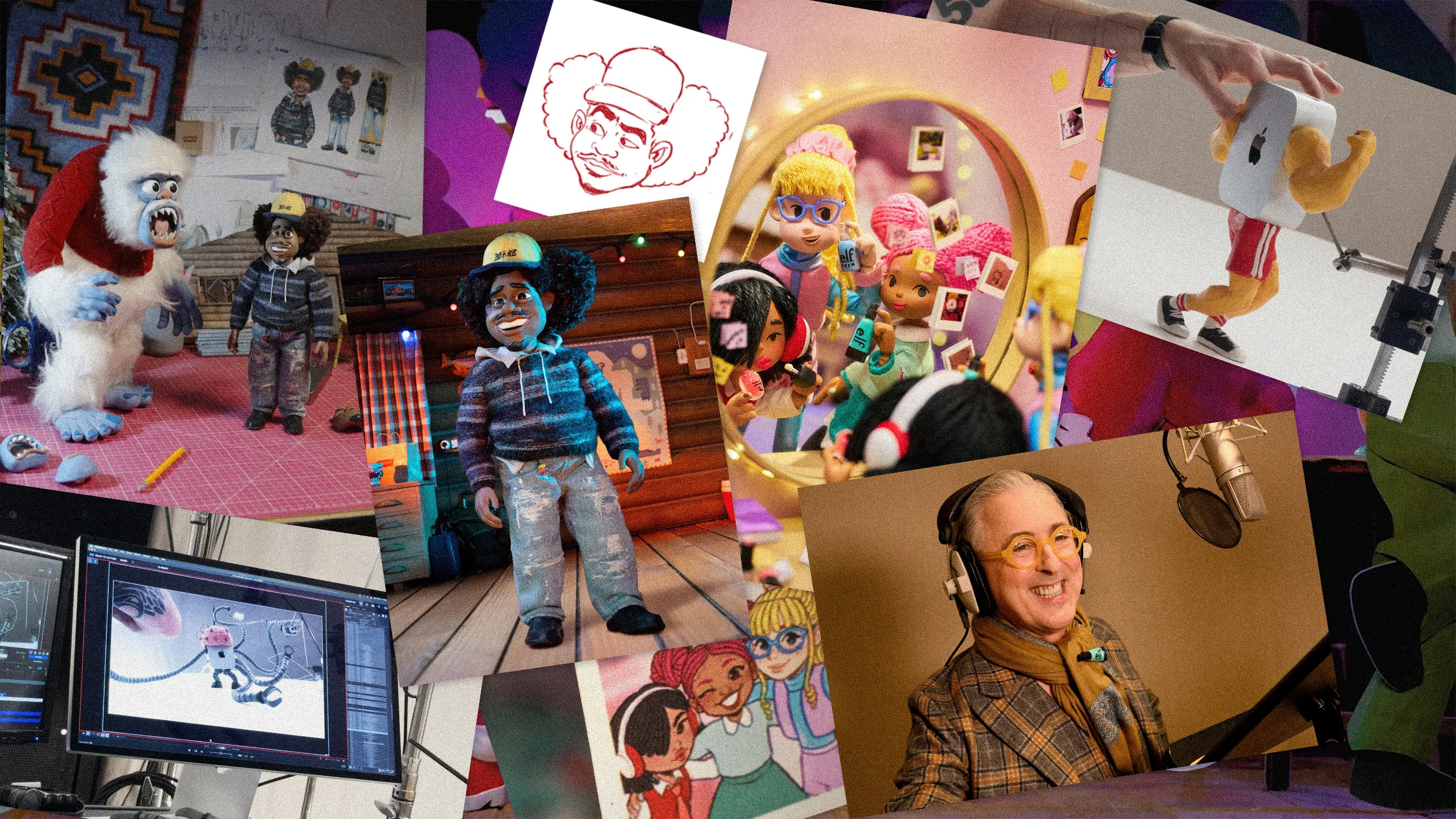
Levi’s stop-motion holiday ad, “Let’s Get Fuzzy,” took 2,000 hours to create. Every detail of the spot—including its tiny sweaters on tiny horses, miniature jeans with miniature red Levi’s tabs, and adorably befuddled yeti character—was made by hand. Levi’s captured it all in a behind-the-scenes video, which is live on its main Instagram and YouTube pages. According to Kenny Mitchell, Levi’s global CMO, that behind-the-scenes component was “central” to the campaign strategy.
“You almost want to make sure that you can show some of the verification and receipts for the hard work, effort, and craft that you’re putting in,” Mitchell says. “When we first posted our campaign on TikTok, one of the comments was like, ‘AI slop.’ And literally the next comment underneath it was, ‘No, this is stop motion.’”
For Mitchell’s team and animation partners at the production studio Blinkink, who spent four hours on every second of animation in “Let’s Get Fuzzy,” the behind-the-scenes film served a dual purpose: giving fans more access to the brand’s design efforts, and defending against inevitable AI accusations.
Recently, it’s a strategy that a host of brands seem to be adopting. Apple, Anthropologie, Prada, Dior, E.l.f., and Loewe are just a few of the major names that have recently debuted claymation, stop-motion, or hand-drawn ads with accompanying behind-the-scenes videos. As AI-finger pointing reaches a fever pitch, brands are spending more time and resources on behind-the-scenes footage, which has arguably become more important than the campaigns themselves.
Source link





