I’ve seen two total solar eclipses and have been duly impressed by what happens as the moon casts its shadow on Earth. But recently I’ve become even more intrigued by a similar phenomenon that doesn’t involve the sun or the moon—something called an asteroid occultation.
That’s what happens when an asteroid orbits around the solar system and blocks the light of a distant star you’re viewing from Earth. Like the moon during a solar eclipse, the asteroid casts a predictable moving shadow on a swath of Earth’s surface—a small silhouette in the dim light bathing us from that one star.
When such a fortuitous alignment occurs, amateur astronomers can discern things about the asteroid that professionals can’t readily measure, even with their giant telescopes on high mountains. That’s because amateurs are nimble: They can be in just the right place at just the right time to measure an asteroid’s fleeting shadow, which could be just a few hundred meters wide and traveling at tens of kilometers per second. With enough observers, they can collectively map that shadow, revealing the asteroid’s shape.
Even folks on a limited budget can do this, because the size of an asteroid you can measure doesn’t scale with the size of your telescope. If the occulted star is relatively bright, you don’t need much of a telescope at all.
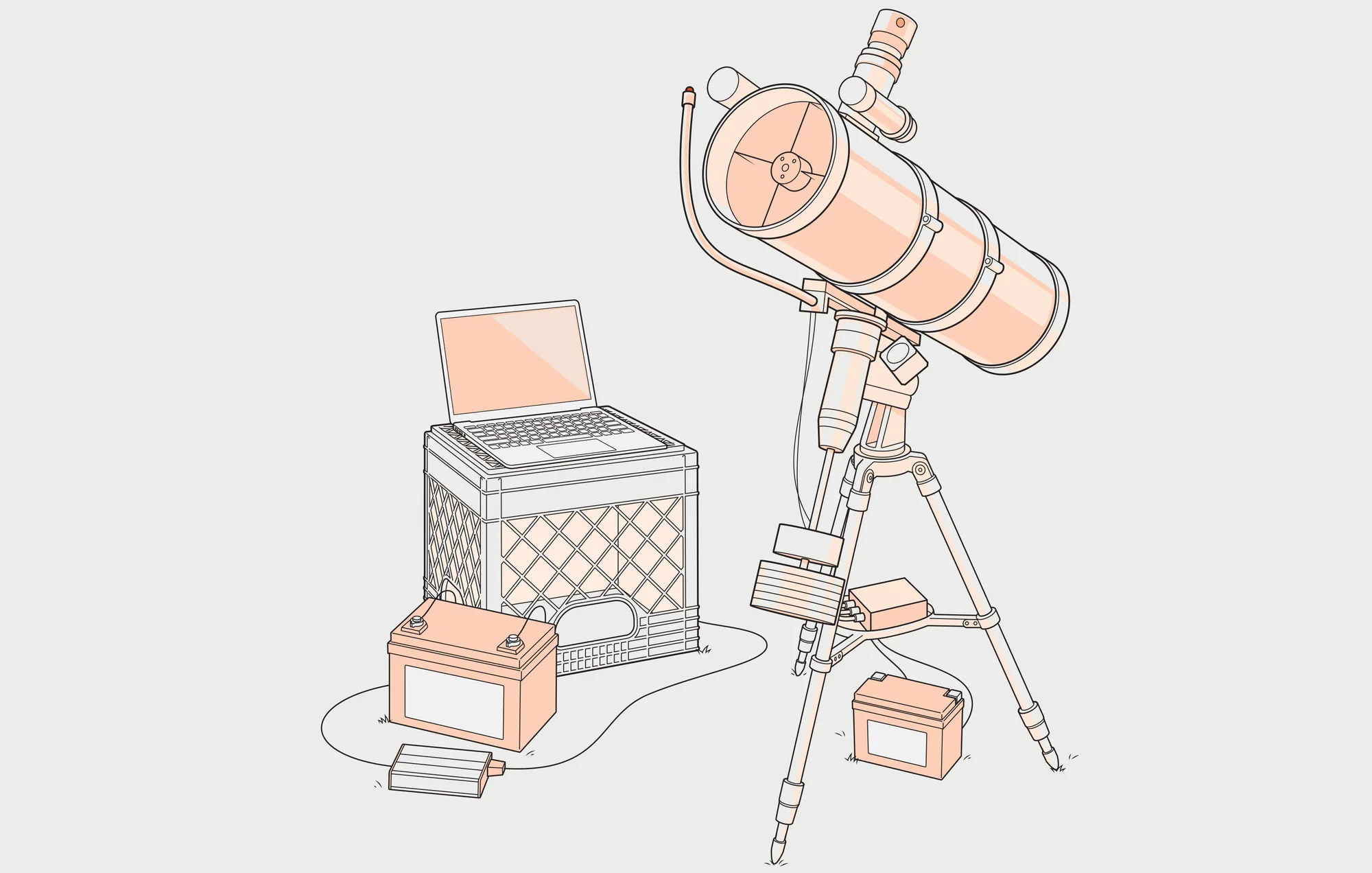
1-inch-aperture (130-millimeter) Newtonian telescope that sells for about US $300 . I attach it to a small equatorial mount ($150) that can track the stars by virtue of some added stepper motors driven by an open-source telescope controller called OnStep .
Source link