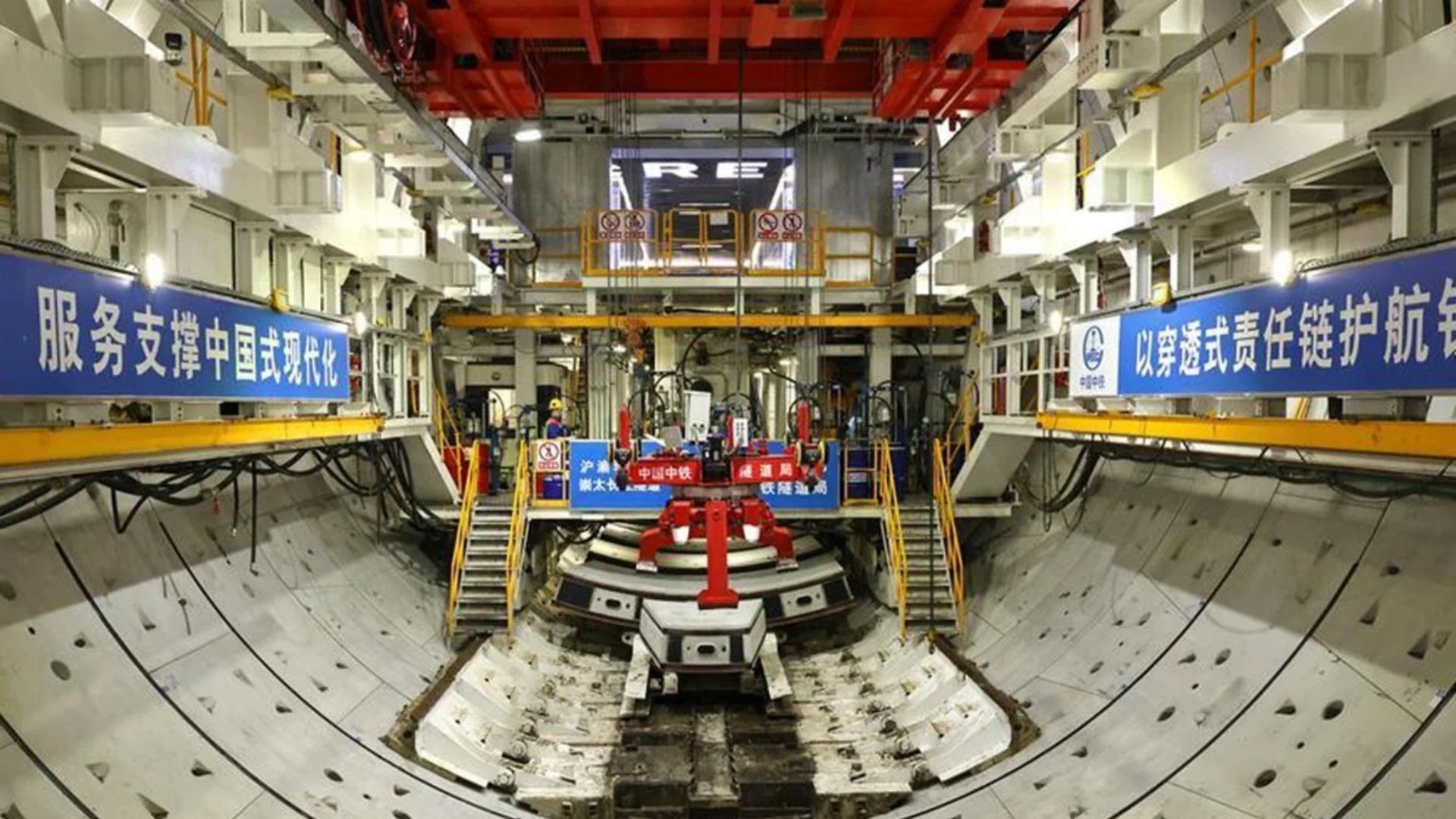
Operators in China are steering a 442-foot (135-meter) tunnel boring machine from a ground control center roughly two miles from its excavation point beneath the sea, using cameras, sensors, and real-time alerts to monitor its progress.
The machine, named Yongzhou, is excavating part of the Jintang undersea tunnel connecting Ningbo and Zhoushan in Zhejiang Province.
It has advanced more than 13123.3 feet (4,000 meters) from the Ningbo side, completing about 83 percent of its planned excavation.
Now approaching a section about 305 feet (93 meters) beneath the seabed, the machine faces increasingly difficult ground conditions. Remote controls allow operators to guide excavation from the surface, while personnel remain onboard to supervise operations.
The remote-driving platform connects the ground control center with the machine’s underground operating systems. Cameras and sensors monitor cutterhead conditions, cutter wear, and excavation parameters, helping engineers identify problems as they develop.
The monitoring system also sends alerts directly to engineers’ smartphones, covering issues such as abnormal cutterhead torque, tunnel segment movement, and changes in oil and seal pressures.
“This tunnel boring machine’s (TBM) intelligent system is more sensitive than people,” said Dong Bing, chief mechanical engineer of the Yongzhou Railway project.
The team is also working toward greater automation. Assistant TBM operator Cheng Jie said future operators could initiate propulsion with a start command, with the machine then following preset parameters. That capability remains a development goal.
57 meters) and carries 308 cutters. It began operating in May 2024.
Source link