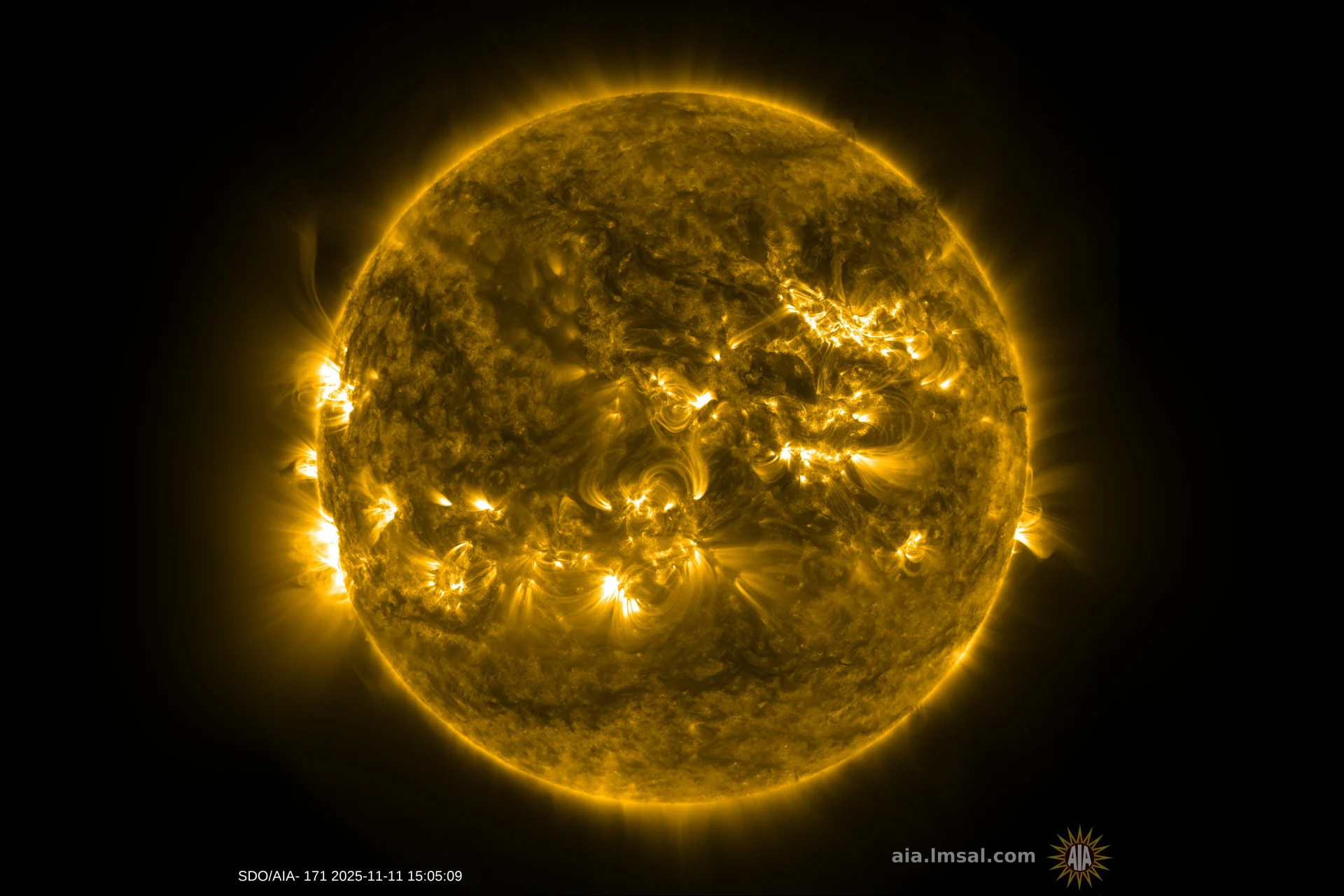
On November 11, 2025, an X5-class solar flare triggered the largest ground-level enhancement (GLE) event—when solar radiation is so powerful it generates measurable changes on Earth—in almost 20 years. Scientists didn’t miss the chance to deploy everything they had to collect as much data as they could. And nearly a year later, they have the details on how these storms affected Earth.
A paper published yesterday in Space Weather presents a comprehensive dataset on how extreme solar events affect airborne and terrestrial electronics, as well as human health. During the November flare, formally called GLE 77, researchers based in the U.K. and the Netherlands deployed weather balloons and instruments to collect radiation data both on the ground and up to 106,000 feet (32,308 meters) in the sky.
As expected, radiation levels significantly varied depending on location and altitude. One flight from London to New York experienced a 42.6% increase in radiation exposure—demonstrating the importance of direct observations, as opposed to model-based projections, when assessing radiation risk.
“This is the first time radiation data has been collected through the atmosphere during a space weather event in this way,” Krista Hammond, the study’s co-author and a space weather manager at the U.K. Met Office, said in a statement. This “represents a big leap forward in scientific understanding and will make a real difference to our space weather forecasting capability,” she added.
The Sun operates on 11-year cycles, transitioning between low and high magnetic activity. Most recently, NASA confirmed that our star reached its solar maximum in October 2024, adding that solar activity would likely increase throughout the next year.
Source link