
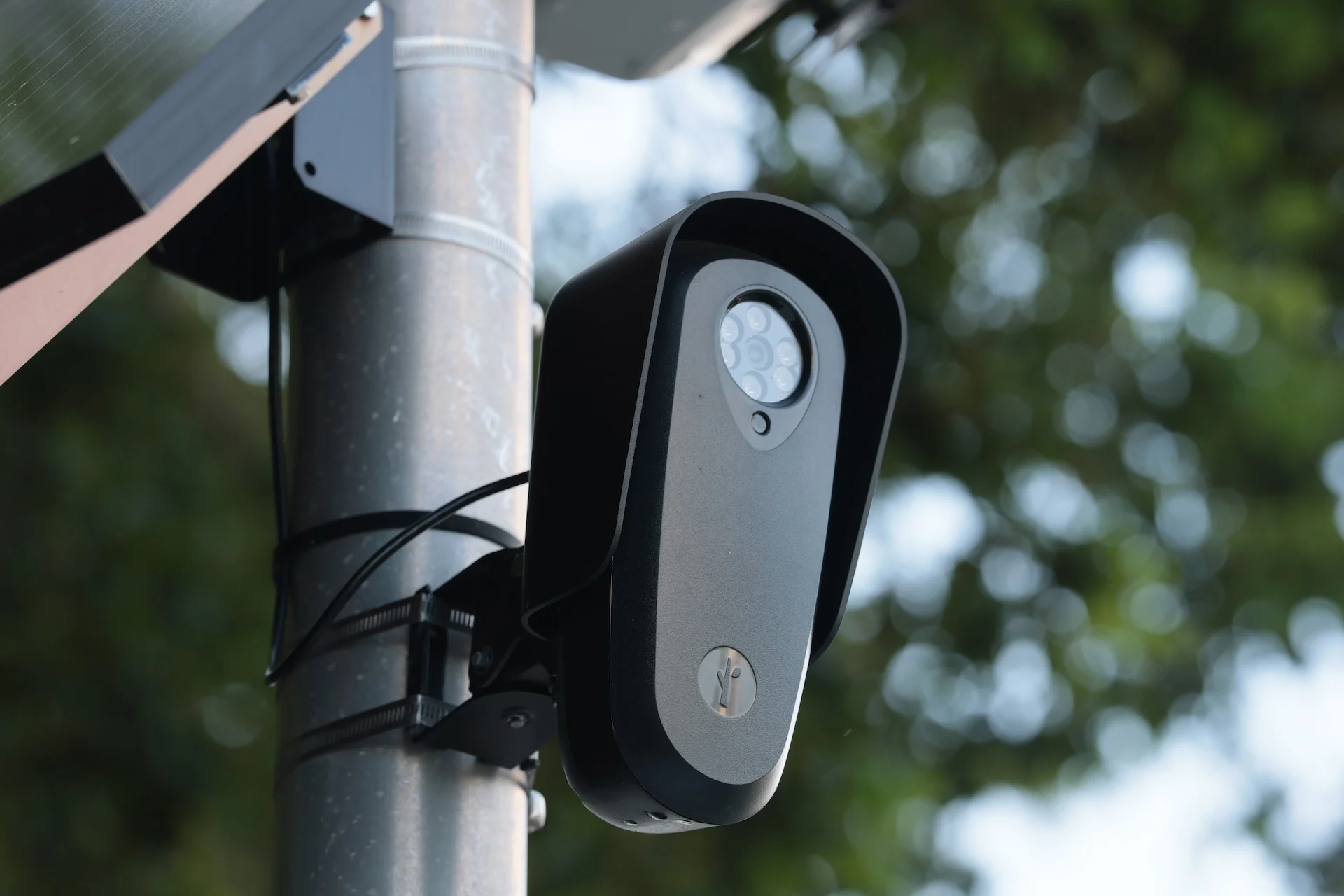
On Thursday, U.S. District Judge Sara E. Hill ruled in the case of United States v. Melisa Susan Kyle that a Tulsa County deputy’s warrantless search of automated license plate reader (ALPR) systems, including Flock, violated the Fourth Amendment. As a result, the judge suppressed the evidence that followed. The case is a federal prosecution in the Northern District of Oklahoma, and Kyle is charged with possessing methamphetamine with intent to distribute.
One evening a Mazda with a California plate passed Tulsa County Deputy Sheriff Freddie Alaniz, a Drug Enforcement Administration task force officer, while he was watching traffic. According to Hill’s opinion and order, Alaniz pulled onto the highway and followed the Mazda for “no apparent reason other than the fact that it had a California license plate.”
While he followed, Alaniz ran the plate through two ALPR systems, Flock and VehicleManager. Both products do roughly the same job, gathering and organizing historical vehicle location data for law enforcement.
The search gave him a travel log with more than 50 records of the vehicle’s whereabouts over the previous month, including that the Mazda had gone from Locust Grove, Oklahoma, toward the California-Arizona border and was headed back toward Missouri after a short trip. After that, he saw the driver fail to signal lane changes and follow another vehicle by about 30 feet. He pulled Kyle over for the traffic violations and used the short trip to California as his reason for asking to search the SUV. She refused, so he detained her for a dog sniff.
Source link





