
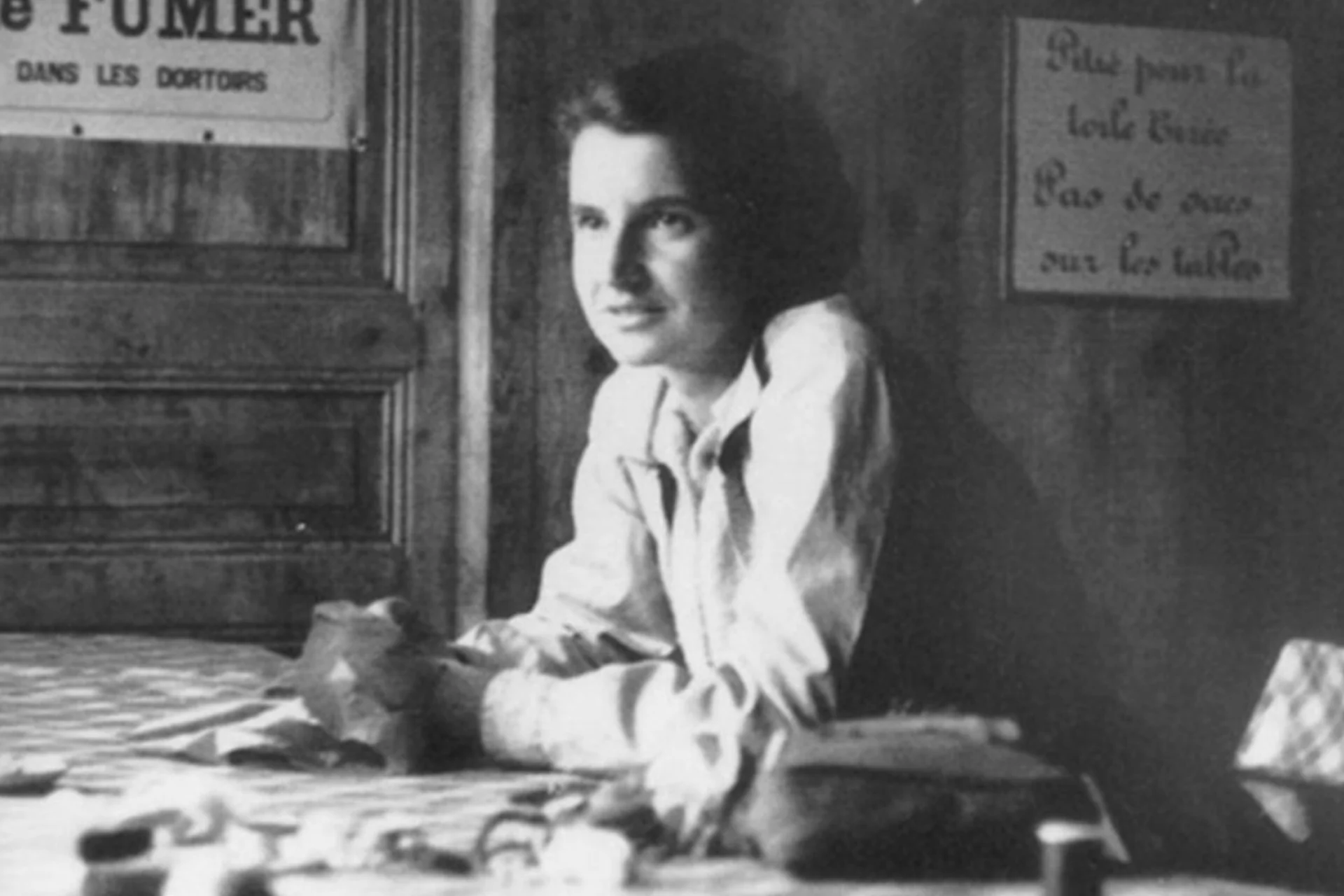
Biologist James D. Watson is famous for co-discovering DNA’s double helix structure. However, Watson appears to have greatly underplayed Rosalind Franklin’s contributions to the Nobel-winning discovery, which hasn’t gone unnoticed by historians and scientists. But a new study offers an unusual bit of evidence—hidden between the lines of Franklin’s lab notes.
Published in the Journal of the History of Biology, the essay argues that Rosalind Franklin did not miss her image’s significance as evidence of DNA’s helical structure, as Watson’s account of his first encounter with Photograph 51 implied. According to the paper, the earlier Photograph 49 used the same DNA sample as 51, and Franklin’s own notes strongly suggest that she recognized its importance. The same notes indicate 49 wasn’t good enough to publish, so Franklin adjusted the camera and took a better version: Photograph 51, which helped reveal DNA’s double helix structure.
By suggesting she simply didn’t “get it,” colleagues and later commentators “rhetorically erased her skill and judgment by describing it as though nature spoke for itself through the image—and to Watson, but not to Franklin,” study co-authors Alistair Sponsel and Brian Sutton, a historian and crystallographer at the Science History Institute and King’s College London, U.K., respectively, wrote in the paper.
James Watson’s memoir, The Double Helix , was published a decade after Franklin’s premature death in 1958.
Source link





