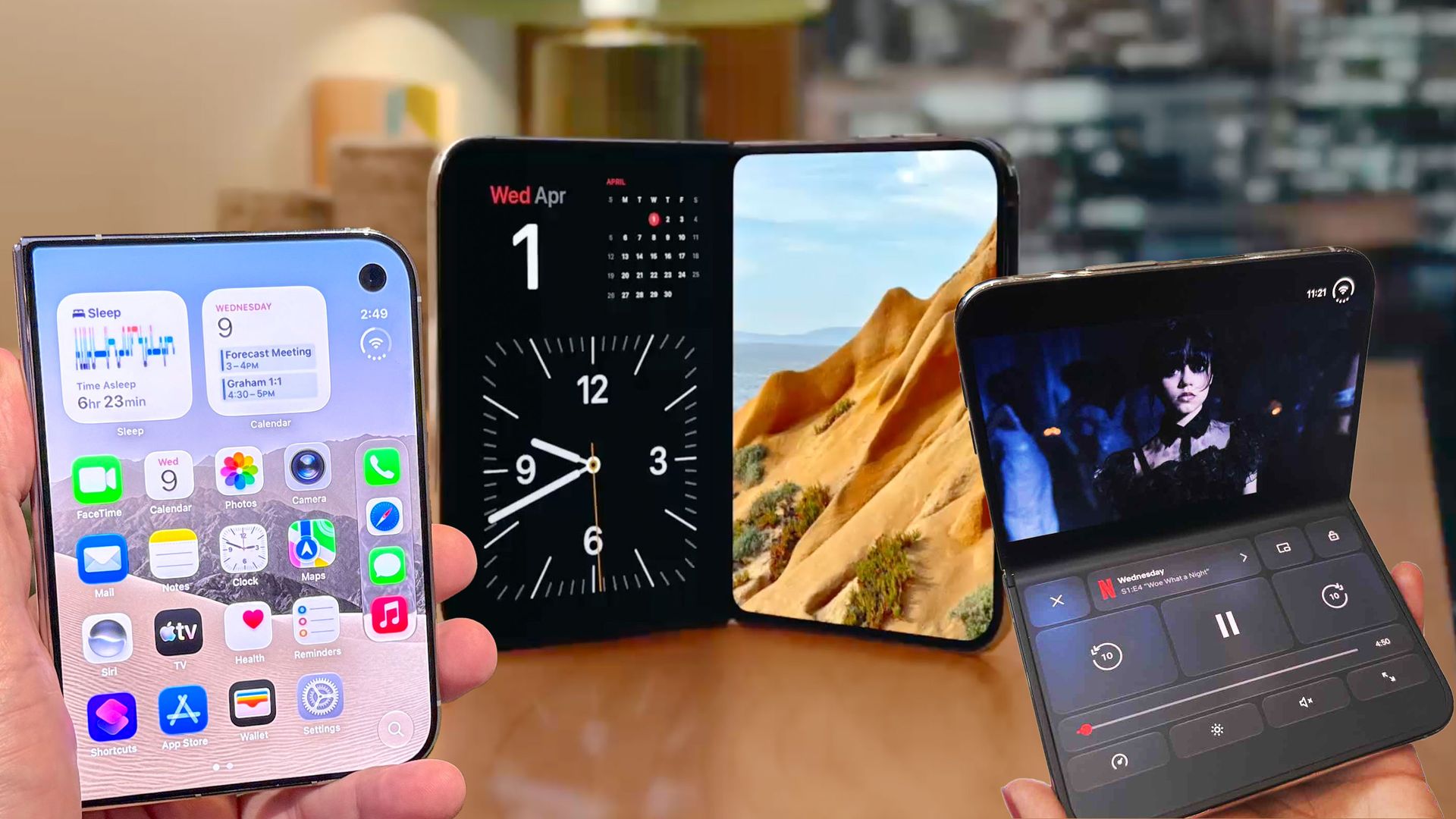
If you've only ever used iPhones, then the iPhone Duo is set to be a very different experience for you. Normally, phones only have one screen, and there are only two possible ways of using them: in a portrait/vertical orientation or landscape/horizontal. Foldables make things a little more complicated .
Not only does the iPhone Duo have two separate displays, it's also capable of detecting the position of the hinge — recognizing if the foldable screen is fully or partially open. That means there are a bunch of different ways you could use the phone, depending on the specific hinge state. While that may sound intimidating to newcomers, it's actually set to be one of the Duo's main advantages.
Here's what you need to know about the iPhone Duo's different modes, and how the Hinge State plays its part.
The key thing that the iPhone Duo's different modes rely on is the Hinge State, or more specifically the angle at which the phone's hinge is positioned. By detecting what angle the hinge is positioned in, the phone can alter the look of what's on screen to offer an optimal experience for the user.
Hinge is at zero degrees? That means the phone is closed, and content should only be displayed on the exterior cover display. 180 degrees? That means the exact opposite, and content should be displayed on the interior screen instead. The intermediary angles then determine just how the on-screen content is displayed.
Other foldables are capable of doing this, dynamically adjusting the on-screen interface in order to take advantage of the nuances of the phone's position.
Source link