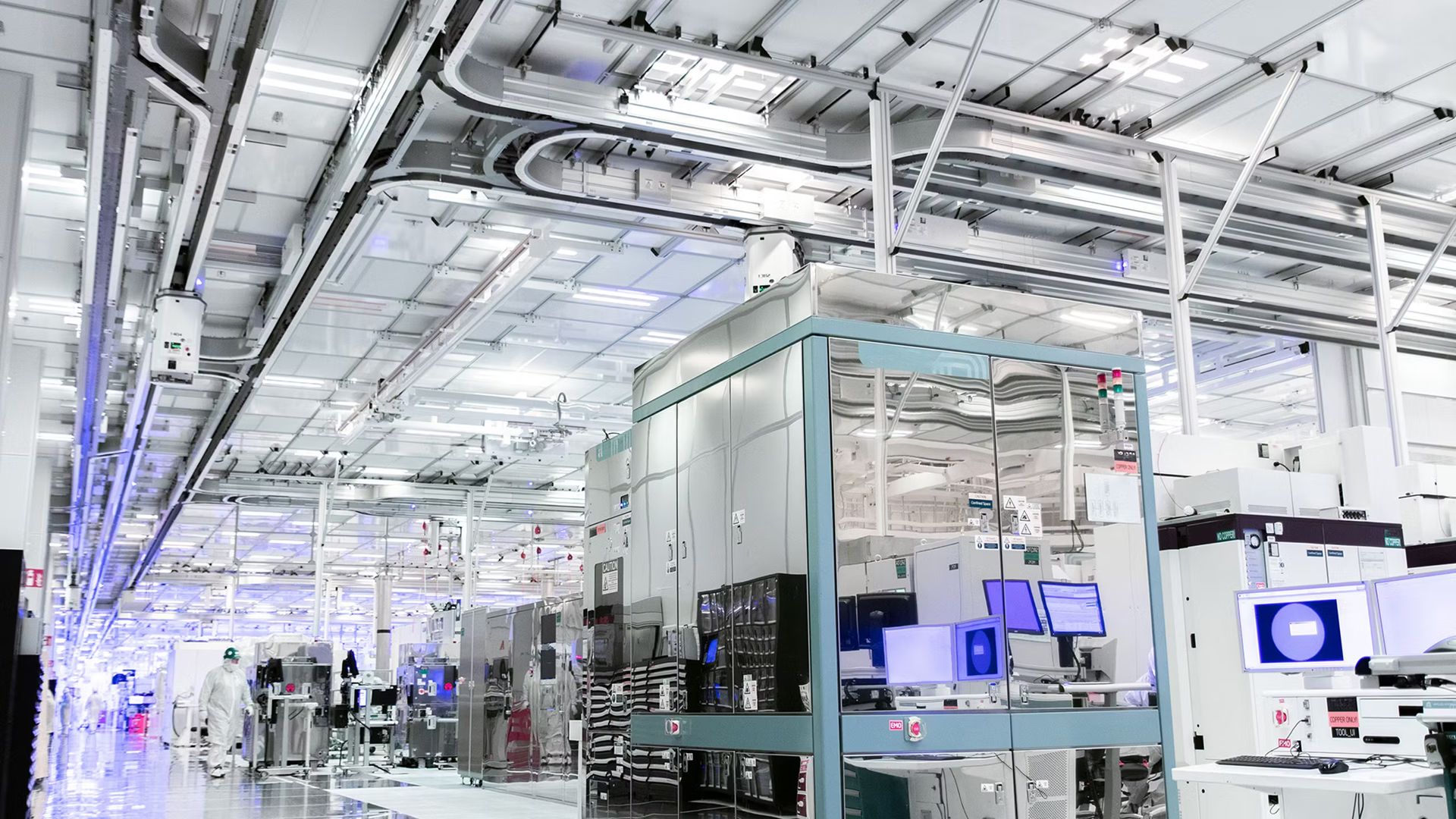
Intel's 14A (1.4nm-class) process technology is expected to deliver performance 'within 5%' of TSMC's A14 (1.4nm-class) production node, Naga Chandrasekaran, the chief technology and operations officer as well as general manager of Intel Foundry, told investment banking firm KeyBanc (via @Alex_Intel_). Given TSMC's track record of delivering steady performance, power, and area (PPA) gains with every new node, this might sound like entirely good news. However, the statement deserves a closer examination.
Delivering 'within 5%' performance is an ambiguous statement that may mean that 14A will be 5% faster than A14, or that 14A will be 5% slower than A14. While 'within 5%' performance compared to the direct rival of the same class may sound like a good competitive position, in recent years Intel's process technologies trailed TSMC's nodes in transistor density and remained competitive in performance or power. This was, to a large degree, attributed to Intel's historic focus on CPU performance, but not necessarily transistor density, as its own fabs have offset additional costs associated with larger dies.
78 GHz. These numbers should not be converted directly into a statement such as '18A is X% faster than N2,' because the processors use different architectures, voltages, standard-cell libraries, thermal envelopes, and physical implementations. However, they do provide a useful real-world reference point: the available N2 processors do not show a substantial frequency advantage over 18A. If anything, the highest observed CPU frequencies favor Intel's process.
Source link