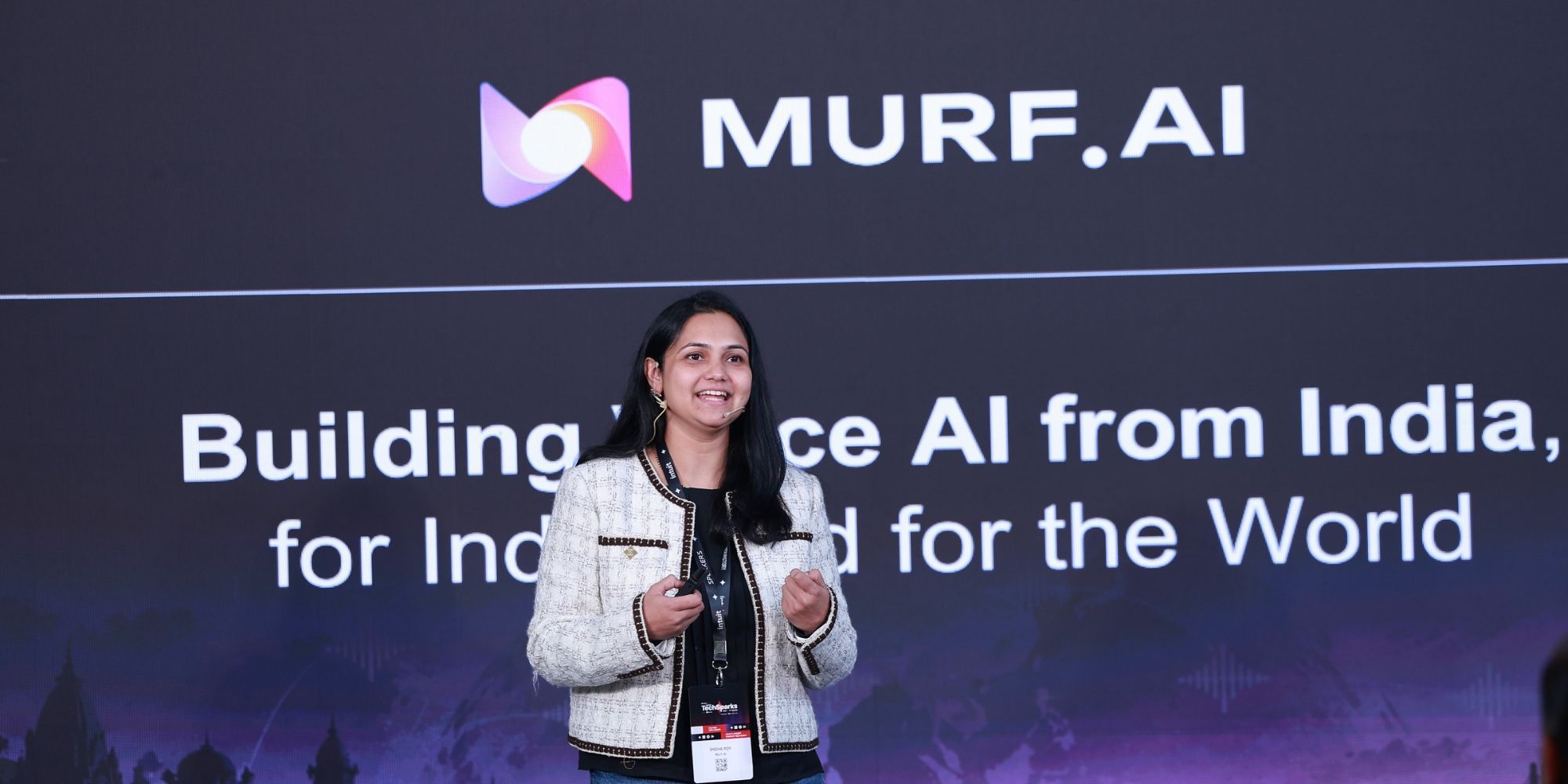
What Indian users consider an ordinary conversation could be the toughest test for voice AI, and solving it could unlock applications worldwide.
An AI voice can answer a question, confirm an order or help book a reservation. But can it pronounce an Indian name correctly, understand an address spoken in a mix of Hindi and English, and respond quickly enough to sound natural?
For Sneha Roy, the co-founder and COO of Murf AI, these are not exceptional scenarios. They are the baseline for building voice AI that works for India and, ultimately, the world.
During a masterclass on ‘Building voice AI from India, for India, and for the world’, at TechSparks 2026, Roy explained how India’s linguistic complexity, infrastructure constraints, and cost considerations are influencing the development of speech technology.
Roy drew parallels with products that adapted to Indian users before finding wider applications. Google Maps introduced offline functionality for areas with limited internet connectivity, while Netflix introduced a mobile-only plan that, Roy said, has since been adopted in 78 countries. Uber piloted cash rides in Hyderabad, before expanding the option to other markets.
Consider a routine delivery-status call in Bengaluru. A customer might combine English with a regional language, use a locally familiar pronunciation of an address, and expect a PIN code to be spoken digit by digit. A model built around standardised English can struggle with these details.
“If the customer has to change something about the way they speak just to get the agent to cope up, or keep repeating their address or their name, we haven’t finished building it yet,” said Roy.
Source link