India has long been a global hub for technology services, but its growing engineering capabilities are opening up opportunities to develop products, create intellectual property (IP), and take ownership of innovation. As multinational companies expand their research and development (R&D) centres in the country, Indian teams are moving beyond executing assigned tasks to solving complex problems and building solutions for global markets.
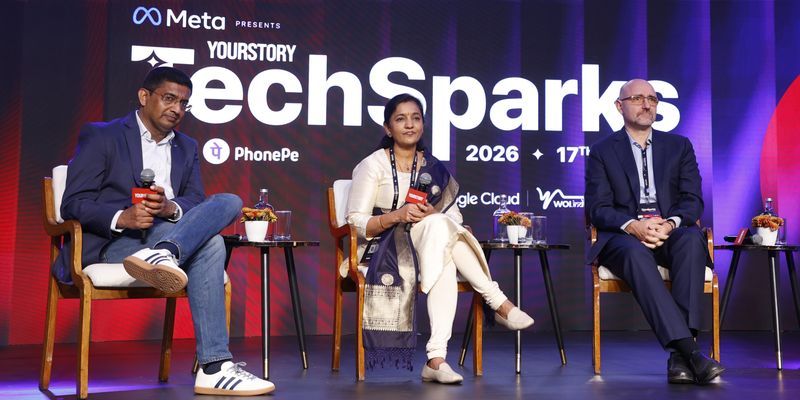
At YourStory’s TechSparks 2026, Manu Saale, Managing Director and CEO, Mercedes-Benz Research and Development India; Kalavathi GV, Executive Director and Head, Global Development Centre, Siemens Healthineers; Luigi Celmi, CEO, Lufthansa Systems India; shared their perspectives on how India’s global capability centres (GCCs) can move up the value chain. The discussion explored the importance of localising products, building domain expertise, and fostering a problem-solving mindset.
For Kalavathi, the shift begins with recognising that healthcare solutions cannot simply be transplanted from one market to another. “What works in the US does not work in India,” she said.
“Our mantra is: Medtech is global, but healthtech is local,” she said, explaining how healthcare solutions must account for differences in lifestyles, disease prevalence, affordability, and access to care.
Previously, companies often adapted products designed for developed markets by removing features to make them suitable for India. But this approach did not adequately address the country's diverse healthcare needs, which span private hospitals, government facilities, and district clinics.
Kalavathi said that affordability and accessibility became essential, along with the needs of both patients and healthcare providers. So, the company began working with Indian clinics, hospitals, and customers to develop solutions tailored to local healthcare needs.
Source link