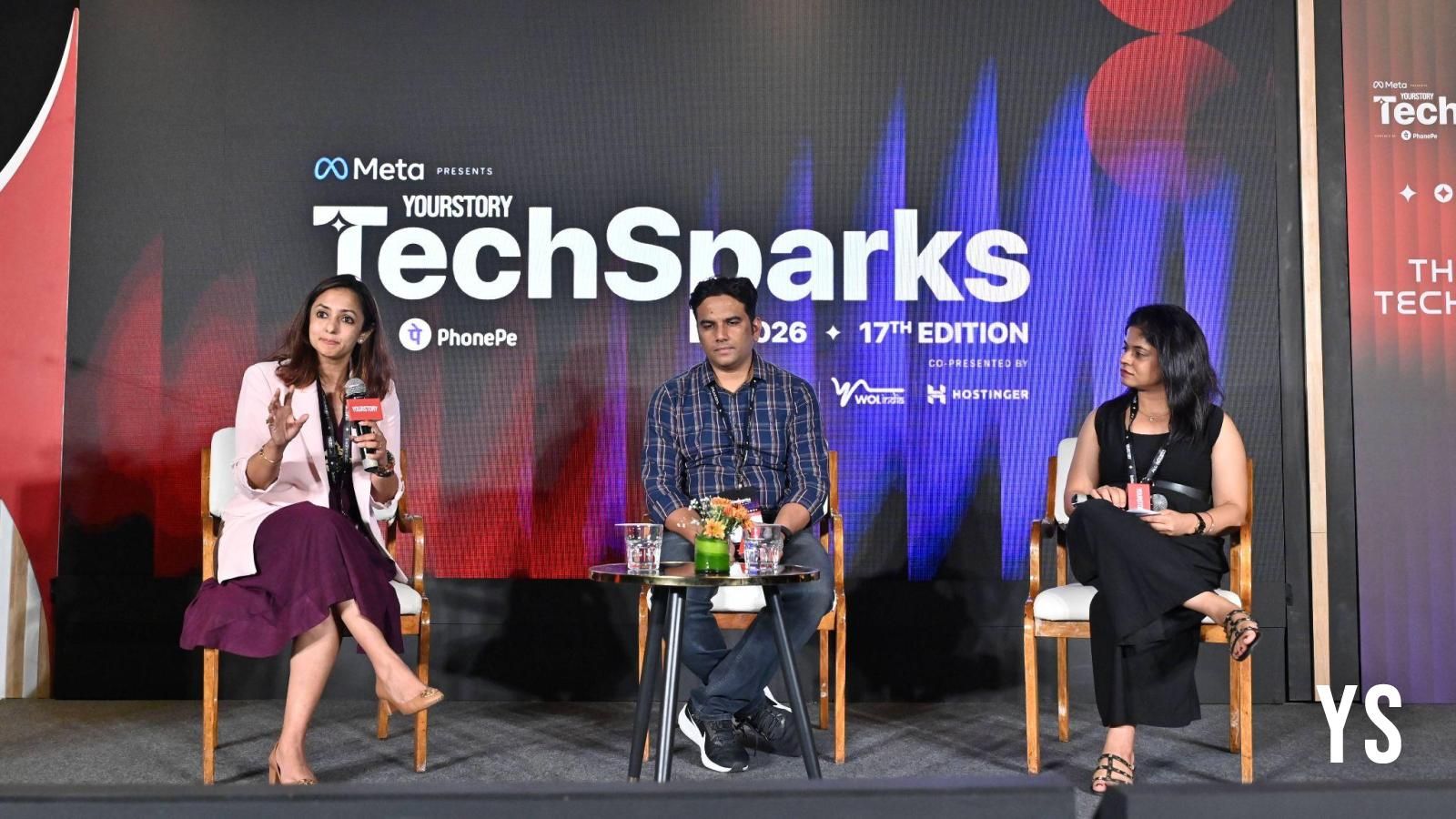
India’s app-first economy still lacks a thriving marketplace for digital goods, and fixing that is as much a question of sovereignty as of technology, according to speakers at the 17th edition of YourStory’s TechSparks.
Speaking on a panel titled “India’s digital economy 2.0: Public tech, AI sovereignty, and the next 500 million”, Priya Narasimhan, Chief Business Officer at Indus Appstore, said the country’s mobile-first habits should have produced a large digital goods market, but have not. She blamed distribution monopolies held by Google and Apple and the economics of their 15% to 30% billing commissions, which make lower-priced digital products unviable. Web stores, the other route, suffer from user friction and low reach, she said.
Narasimhan argued that digital sovereignty is about how and where consumers meet technology. She named three layers India must control: discovery and distribution through app marketplaces, monetisation and billing, and a data trust and consent framework. She pointed to the Epic Games and Google dispute in the US as proof of what happens when developers depend on gatekeepers. She stressed, however, that sovereignty does not mean rebuilding every base layer. The aim, she said, is to plug into global technology on India’s terms.
Sagar Gaonkar, CTO of Eloelo Group, said India’s strengths lie in its data, its cultural variety and its creative and platform-building talent. Chips and large language models can be built upon, he said, with value added for India and then exported. He added that security cannot be an afterthought as more tools are hosted outside the country.
Source link