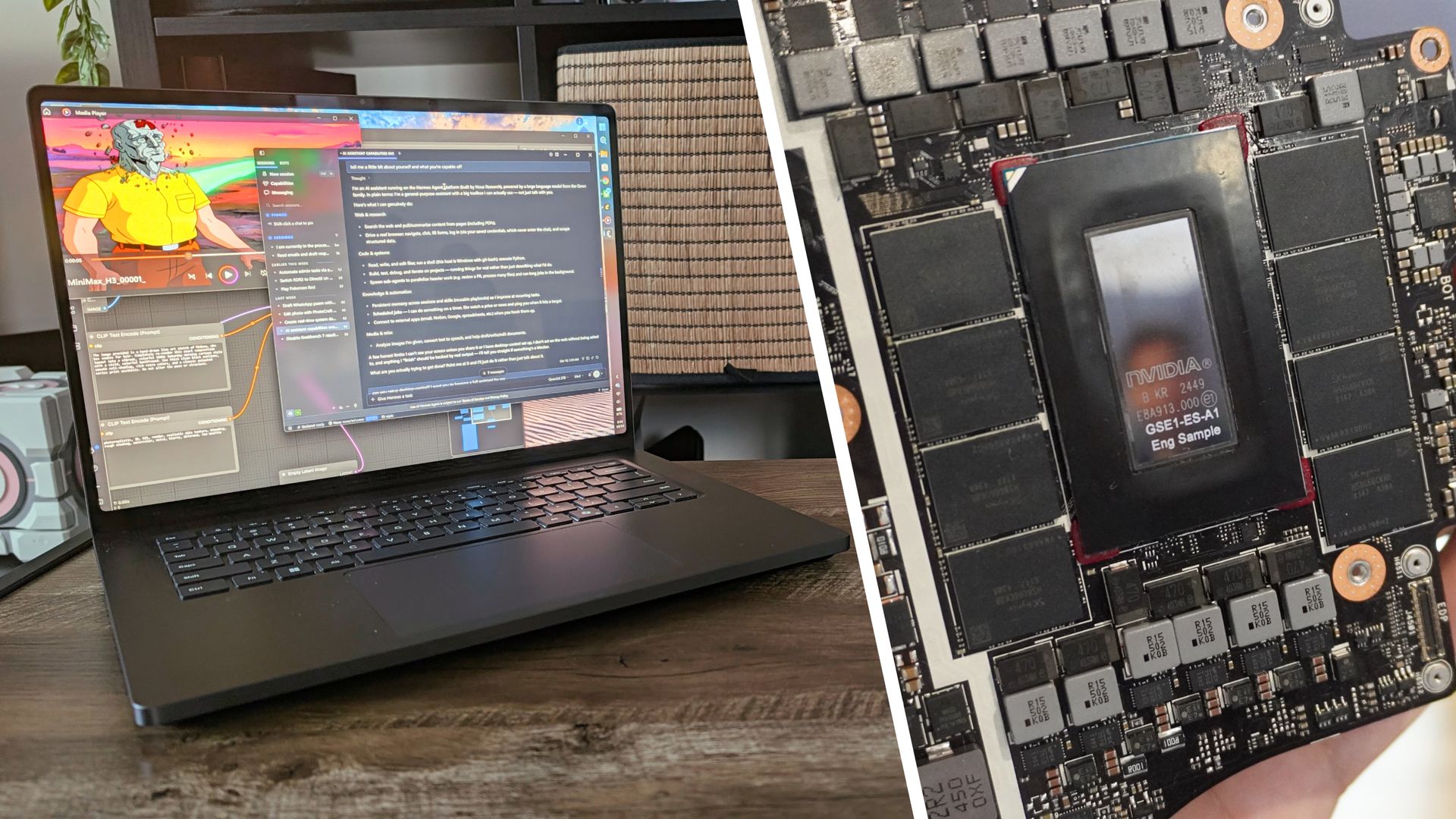
Welcome to the benchmark thunderdome. Nvidia RTX Spark is here — I’m now allowed to tell you about my last week testing it, and benchmark it for you live.
This isn’t just a new laptop chip — it’s an Arm-based Grace CPU glued to a Blackwell RTX GPU sharing up to 128GB of unified memory. If you want a diary of my thoughts and experiences all throughout the past seven days, I’ve written about my week living with RTX Spark.
But this live blog is for those who want numbers-based answers to the key claims Nvidia has made: does it run games? How fast is that CPU? Can that local AI capability automate your life? Is the Arm emulation as good as they say? Does it really have all-day battery life?
I’ve been testing this Surface Laptop Ultra in my lab all week, and while I can’t tell you my thoughts on the hardware itself, for the next few hours, I can share everything I found out about the chip itself.
The gates are open, so let’s get straight to the CPU math. How does Nvidia’s Arm-based Grace CPU stack up against Apple, AMD and Intel?
Here is the brutal truth: if you’re looking for RTX Spark to claim that single- and multi-core crown from the Cupertino crew, you won’t find it. In Geekbench 7, the RTX Spark’s speeds are noticeably slower than Apple’s M5 Pro and Max chips by quite a margin. Things get closer on the multicore when compared to Snapdragon X2 Elite Extreme, but single-core prowess still exists.
Source link