

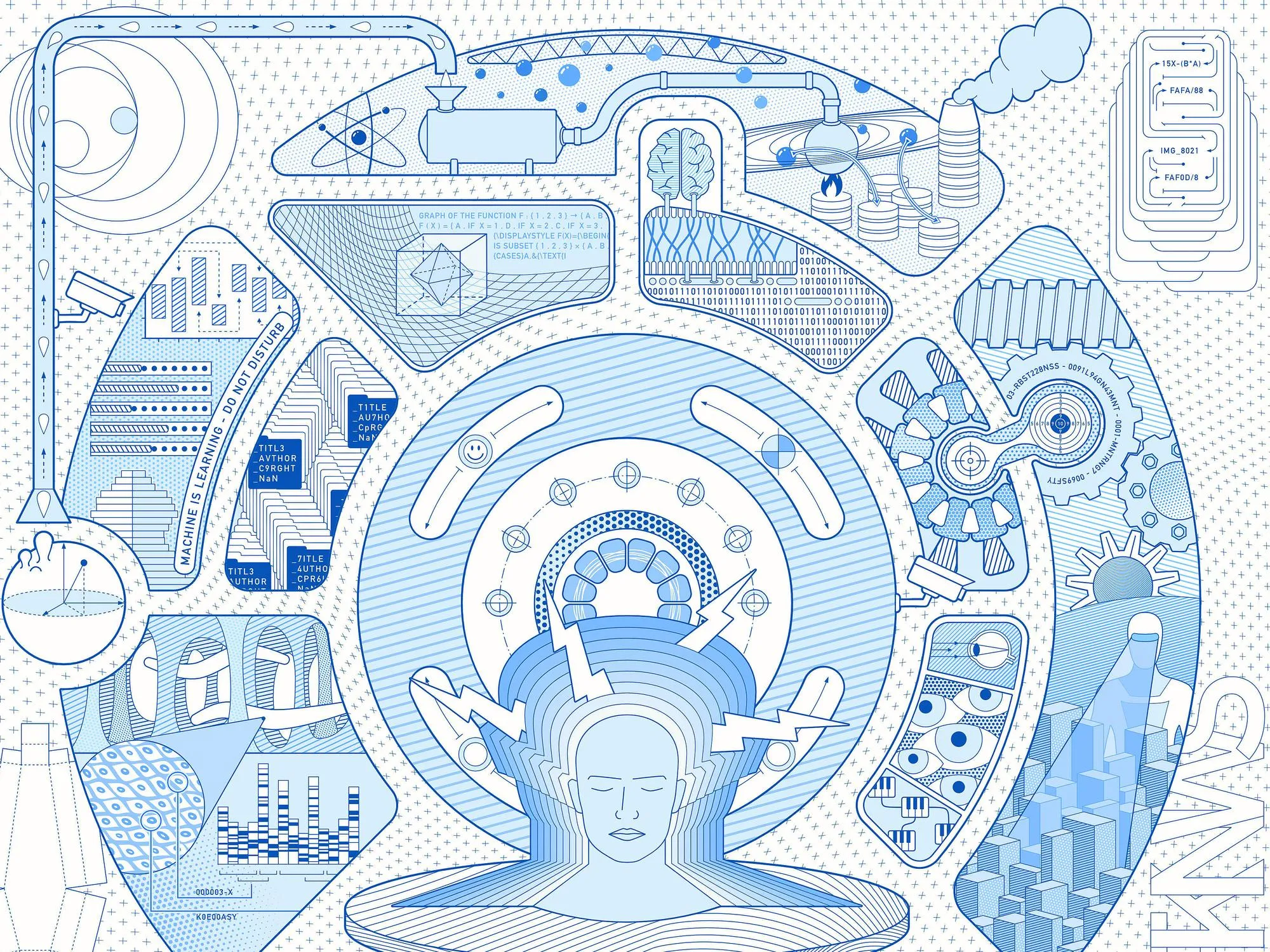
By 2028, genetic engineering and gene therapy will be used frequently to treat a variety of diseases, thanks to advances in artificial intelligence, according to the recently released 2030 Technology Megatrends Report from IEEE.
“We are seeing a fundamental shift in how technology evolves,” says IEEE Fellow Dejan Milojicic, chair of the IEEE Future Directions Committee’s Industry Advisory Board, the group responsible for the report. “Artificial intelligence is no longer operating in a vacuum; it is now deeply connected to our energy, infrastructure, and physical systems.” Milojicic, a Hewlett Packard Enterprise Fellow, is a vice president at HPE Labs in Milpitas, Calif.
AI underpins many of the report’s 30 technologies and five “megatrends,” which are technology shifts with the potential to reshape industries and everyday life for decades. A megatrend isn’t a single breakthrough but a collection of related technologies.
For the 2030 report, 166 experts—from 38 countries across six continents—drawn from industry, academia, and government identified 30 breakthrough technologies across the five megatrends: AI, energy, health, space, and physical AI. The experts graded the trends against five criteria: likelihood of success, impact to humanity, maturity, market adoption, and horizon to adoption.
Interconnected systems drive the megatrends, and the connection among them is AI.
The report notes that AI technology is advancing faster than any previous revolution, including industrial, electrical, and digital. The pace has turned the technology into general-purpose infrastructure, Milojicic says.
That evolution carries risks, though, the experts say. The report cites the lack of computing infrastructure and energy sources as constraints on the ability to scale up AI, and it says the technology’s growth will require reshaping the workforce.
Source link





