
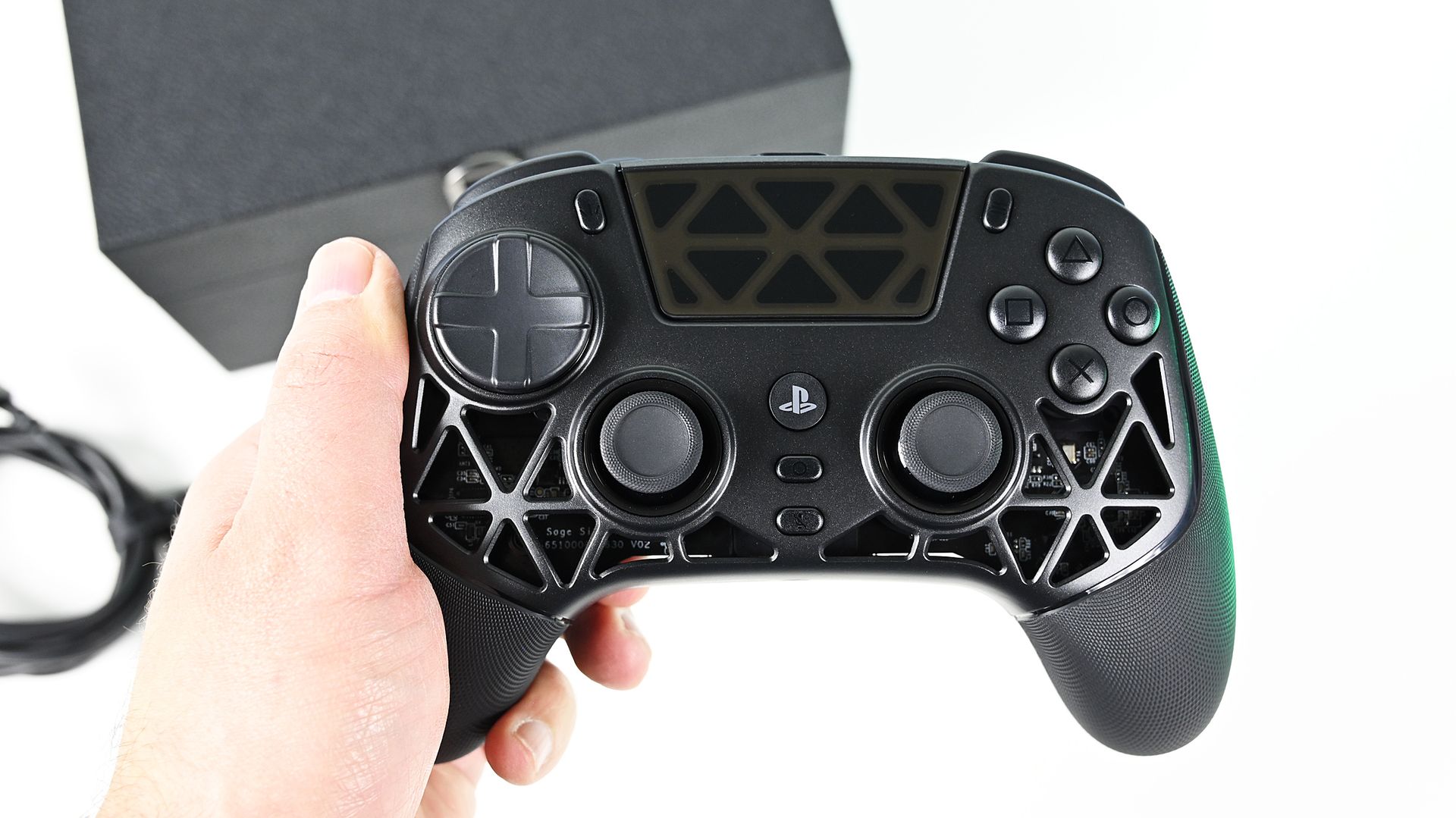
I've used a lot of expensive gaming peripherals over the years (including Razer's Signature Edition Huntsman keyboard), but opening Razer's new $349.99 Raiju V3 Pro Signature Edition feels less like unboxing a controller and more like buying a fancy watch.
There's an ordinary cardboard box on the outside, albeit one that unfolds into multiple layers. Eventually, you arrive at a black leatherette presentation case with a metal latch. Open that, and the controller sits in a custom-cut foam bed alongside a metal Signature Edition plaque. Underneath are additional back buttons, thumbstick caps, an aluminum tool, USB cable, and HyperSpeed Wireless dongle.
For $350, you'd hope Razer would make an occasion out of it.
Like the remarkable Viper Mini Signature Edition mouse I reviewed back in 2023, the Raiju uses a magnesium alloy exoskeleton that exposes much of the electronics underneath. That mouse weighed a surreal 49 grams and almost felt fake when I first picked it up. The Raiju isn't nearly so dramatic at 260 grams, but it's appreciably light without feeling cheap.
That's why I wanted to talk to Charlie Bolton, Senior Director and Global Head of Design at Razer, about the bigger question behind this thing: Why does Razer make Signature Edition products at all?
Razer started the Signature Edition idea with the Viper Mini, according to Bolton, almost as a "swan song" celebrating everything its designers and engineers had learned from that generation.
Rather than changing what people already liked about a proven product, Razer gives its designers considerably more freedom with materials, construction and presentation.
Source link





