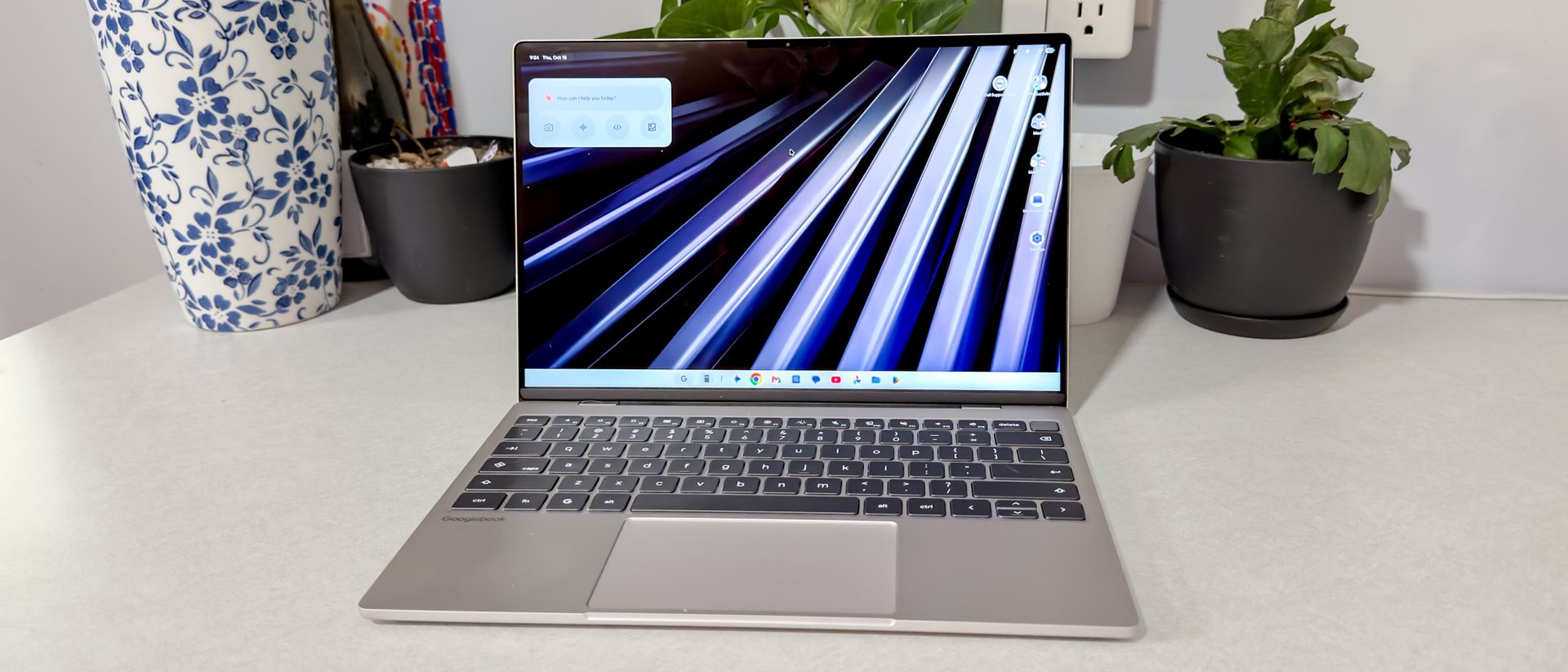
I spent a week testing the new Dell XPS Googlebook ($999 to start). Despite its affordability, Dell packed this machine with solid components, such as a Snapdragon X Elite X1 chip and 16GB of RAM. It never slowed down no matter how busy my workflow became. Hardware-wise, it's a pure winner.
That said, I'm less excited about the software. Its Android apps are still mobile apps scaled up to run on a larger laptop display. Sure, the optimized versions run well, but when I'm on a laptop, I want desktop apps.
I'm also not quite ready to let AI run around my laptop, offering all kinds of help. Is wiggling the cursor to get help from Gemini a fun novelty à la Google Lens? Yes. Will I actually use it in my daily life? I just don't see myself doing that.
These laptops are built to work with the best Android phones, much like Apple's best iPhones and best MacBooks play nice together. And like Apple's system, iPhone owners are mostly left out of the crossover features between laptop and phone. I'd go so far as to say that iPhone users with no interest in switching to Android should skip this laptop and get a MacBook Neo or a MacBook Air instead.
That said, these slightly buggy laptops lay a strong foundation for the future of Google's laptop ventures. Will Google dethrone Apple and Microsoft as the top laptop operating systems? That's a long way off, but with enough time, iteration, and marketing, anything is possible for Google.
Source link