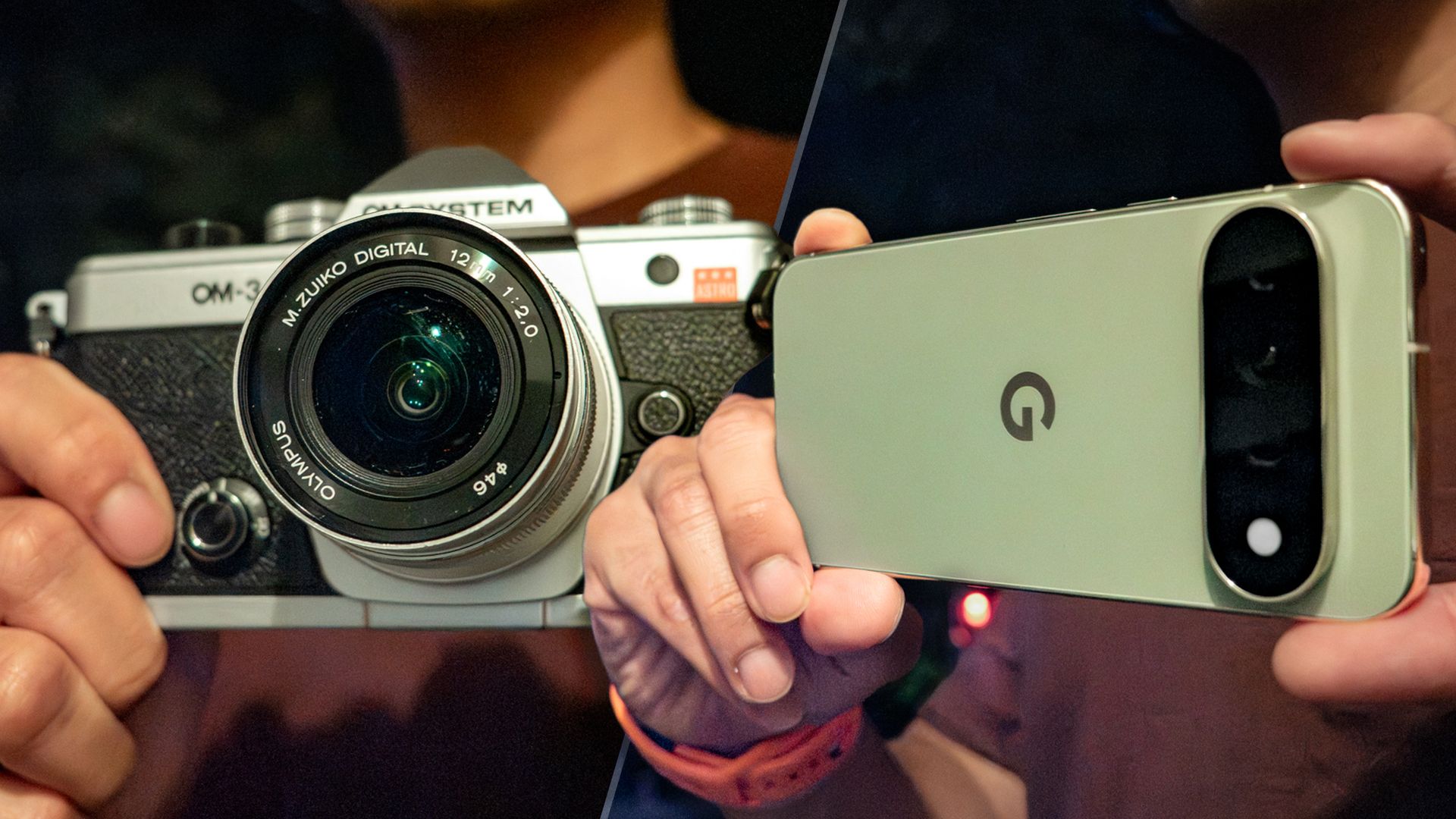
Ever since the Pixel 9 Pro XL, Google’s flagships have consistently impressed me with their astrophotography performance — and the latest Pixel 11 Pro XL is shaping up to be no exception. That’s largely down to its updated Night Sight engine, which directly dictates how effectively it navigates the nuances of night-sky imaging.
But that effortless automation is precisely one of the biggest strengths of shooting on the Pixel: all the heavy processing happens silently in the background. Google claims this updated Night Sight captures up to 4.5 times faster than prior generations, but I wanted to see how it holds up against dedicated hardware.
To find out, I pitted it against an OM SYSTEM OM-3 Astro setup — a $2,500 specialized mirrorless body meant to capture the night sky paired with a fast Olympus 12mm f/2 lens. On paper, it looks like an absurd mismatch, but the side-by-side results downright surprised me.
The greatest advantage of shooting astrophotography with the Pixel 11 Pro XL is that you don’t need to be a rocket scientist to capture scenes filled with brilliant, twinkling stars. With a dedicated setup like the OM SYSTEM OM-3 Astro, you can't just lean on full auto and hope it takes care of the rest. Instead, you have to dial in manual exposures, balance your ISO, and make sure your focus is spot on.
The Pixel effortlessly turns any first-time astrophotography shooter into a seasoned pro. All you have to do is follow my usual advice: secure the phone to a tripod, point it toward the sky, and switch over to Night Sight.
Source link