
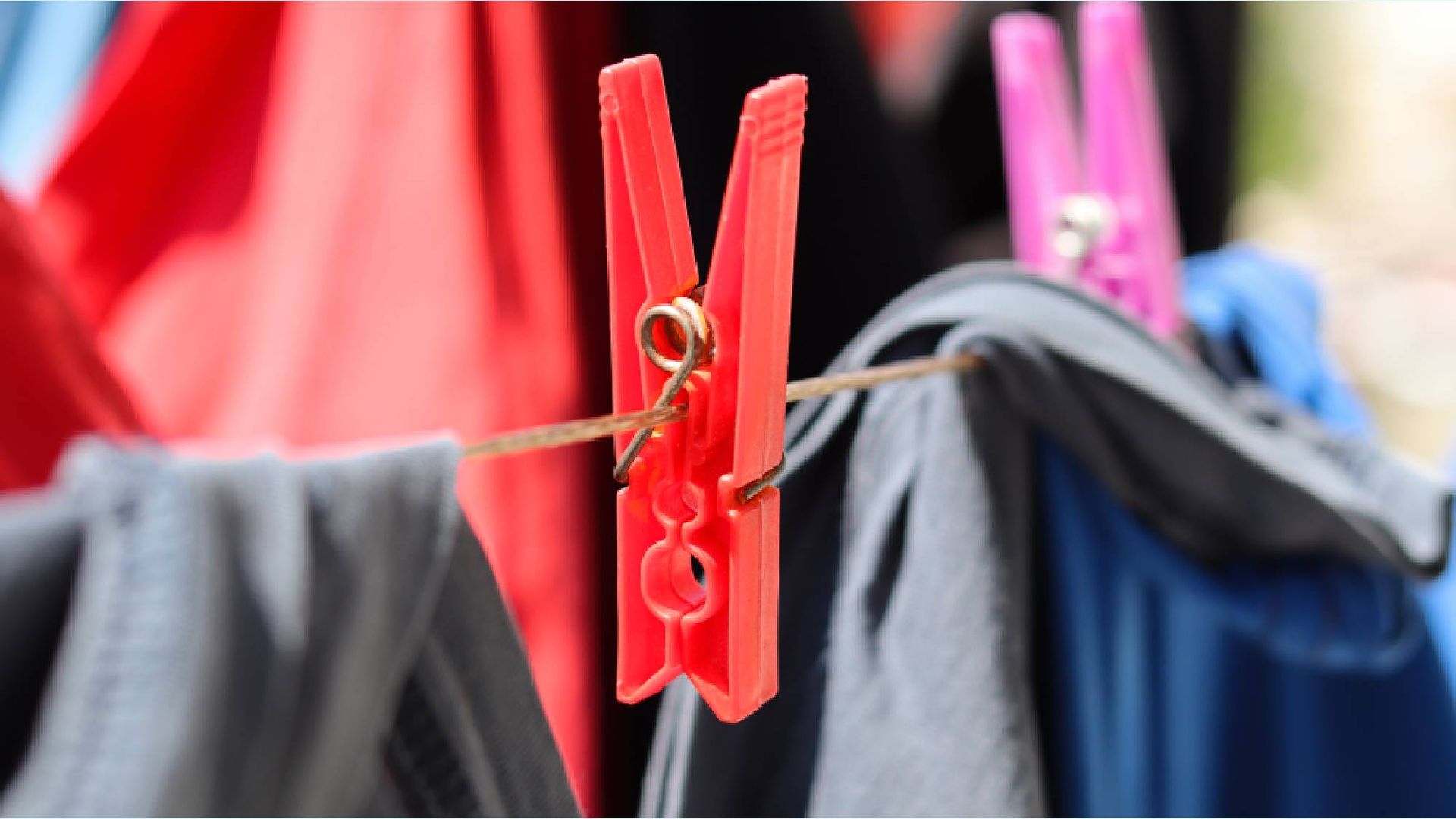
The humble clothespin (or clothes peg, if you live outside the US) has remained virtually unchanged for nearly two centuries. It is such a familiar fixture of daily life that most of us use it on complete autopilot. We squeeze the ends together, clamp the jaws directly over a shirt onto the line, and call it a day.
However, if you take a closer look at the inner profile, you’ll notice a deliberate little engineering trick hiding in plain sight: two distinct circular cutouts running along the gripping jaws.
Far from being a decorative choice, these separate openings actually serve a specific purpose.
If you inspect the inside jaws of a clothespin, you will notice one opening positioned closer to the metal spring and a second cutout set near the tip. The smaller cutout nearest the spring is designed to wrap around the clothesline itself.
The second, larger opening is contoured to hold fabric underneath or across the line. When you clamp the entire pin directly over heavy fabric and a thick wire at the same time, you force the jaws wide open, which concentrates all the spring's clamping force into two sharp pressure points.
The primary benefit of using the cutouts correctly is eliminating the deep, unsightly indentations that clothespins often pinch into shirt shoulders and waistbands.
By letting the smaller inner hole sit neatly on the clothesline while allowing the fabric to rest in the larger contoured jaw space below, the pin spreads its holding force over a wider surface area.
Source link





