

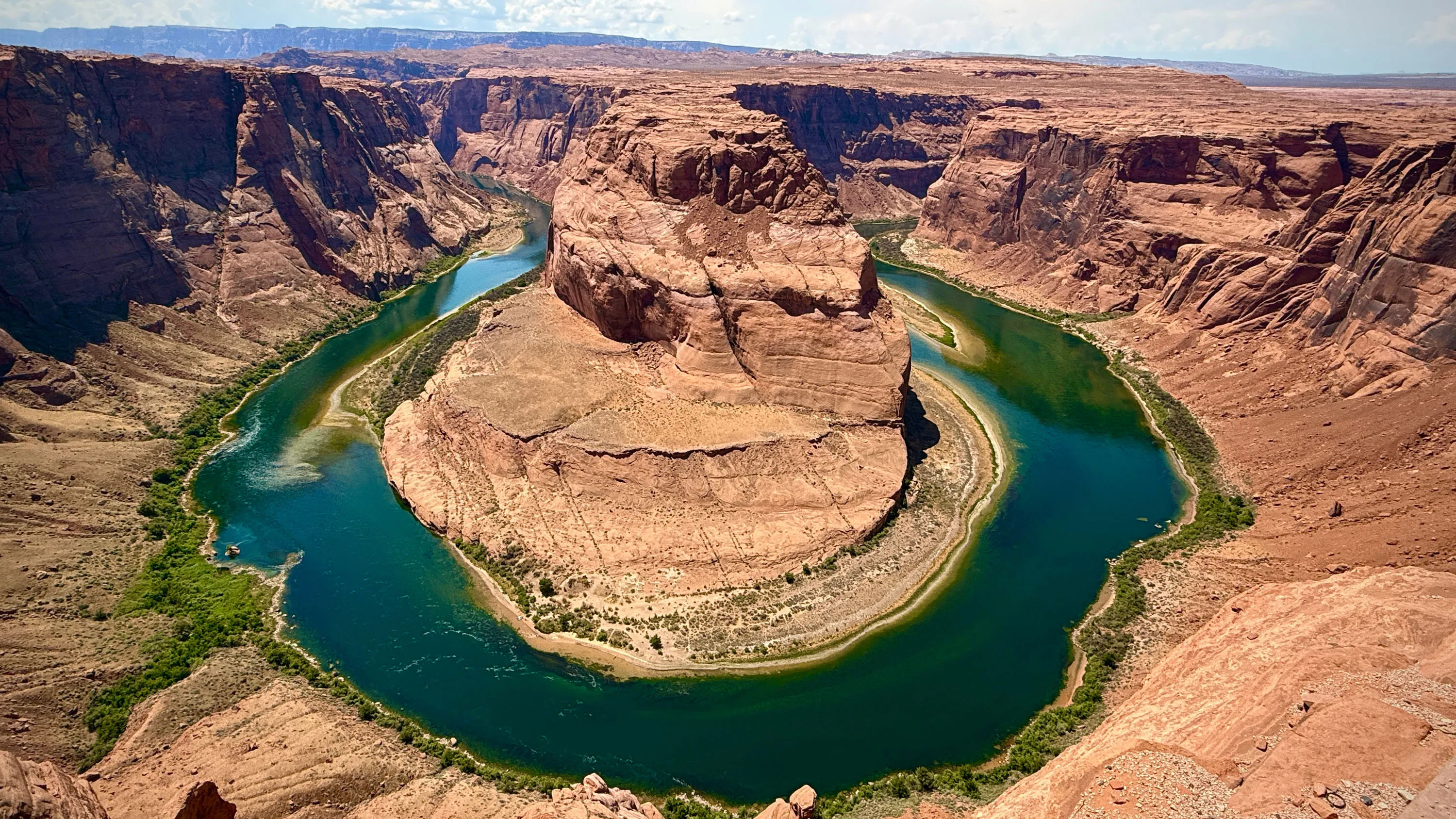
The US Southwest generated 28% less electricity via hydropower between April and August than the 10-year average, according to new data from the US Energy Information Administration.
Most hydropower plants in the US rely on dams to hold back water, creating reservoirs. The water can be released through turbines, generating electricity on demand. But an extreme, prolonged drought in the Colorado River Basin has resulted in dangerously low water levels in the Southwest’s two largest reservoirs, affecting the availability of this power source.
Residents and farmers in the US Southwest, a region that includes Arizona, New Mexico, and parts of Nevada and California, rely on water that melts in the spring from snowpack in the mountains and is slowly allowed to flow south via dam releases. Snowfall in the Rocky Mountains provides about 85% of the annual flow of the Colorado River. And in recent years, the river has seen record-low flows.
Two reservoirs along the Colorado River, Lake Powell and Lake Mead, have struggled to stay above the minimum level required for hydropower plants. At the end of September, Lake Powell’s depth was 3,518 feet, less than 1% above the level required to run the water through turbines that produce electricity at the Glen Canyon power plant. The Hoover Dam power plant requires 950 feet in Lake Mead, and that reservoir was 9% above the minimum in September.
Together, the two plants produced nearly seven terawatt-hours of electricity in 2025, enough to serve over 2 million people.
Low water levels have been an ongoing struggle for the region, which has been in a drought for 27 years.
Source link





