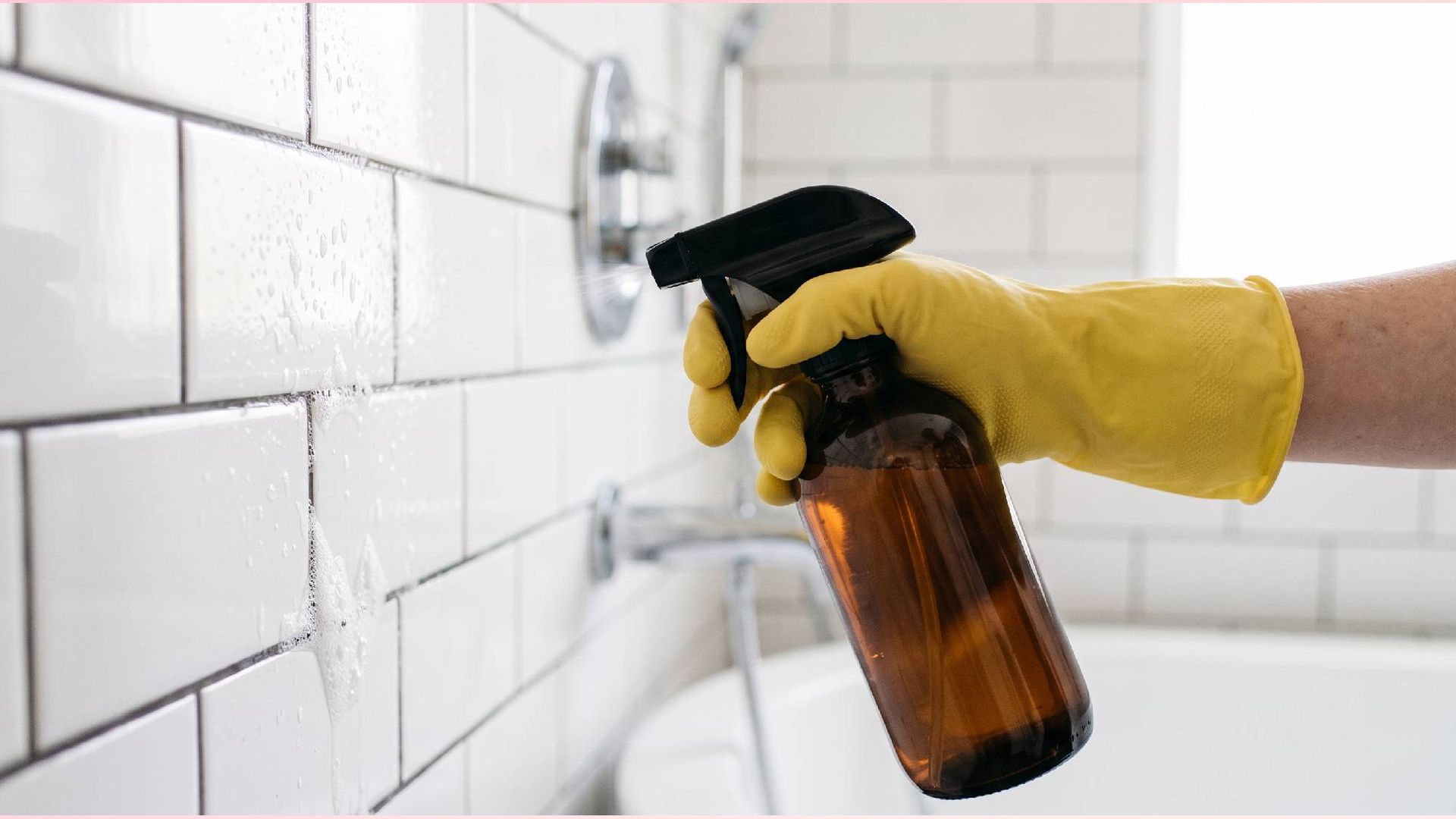
When it comes to tackle-it-all household cleaning, white vinegar has always been my go-to, from shining up the windows to deep-cleaning baseboards. While it works wonders in certain instances, the bathroom is where I ran into its limits: vinegar simply isn't strong enough to destroy mold spores, and its acidity can actually erode tile grout over time.
The problem is that bathroom humidity and trapped moisture create the ultimate breeding ground for stubborn mold, bacteria, and soap scum. Vinegar merely skims the surface of these messes, leaving behind strong, lingering acid fumes without actually tackling deep mold or eliminating persistent odors at their source.
Switching to standard 3% hydrogen peroxide gave me an odorless cleaner that's safe on tile and drastically out powers vinegar on bathroom grime.
The key difference comes down to how each cleaner attacks grime. White vinegar is a mild acid that relies purely on acidity to dissolve surface buildup. While that works on basic soap scum, vinegar lacks the oxidizing power needed to destroy stubborn mold down to its roots — and over time, using an acid on tile grout can slowly eat away at the finish.
Hydrogen peroxide works through an oxygenating fizzing action instead. When it hits mold or bacteria, it breaks down into water and pure oxygen. Those expanding oxygen bubbles penetrate deep into the microscopic pores of your grout, physically lifting trapped dirt and destroying mold at the source.
And while vinegar fills your bathroom with that pungent odor, hydrogen peroxide is, in fact, scent-free.
Source link