

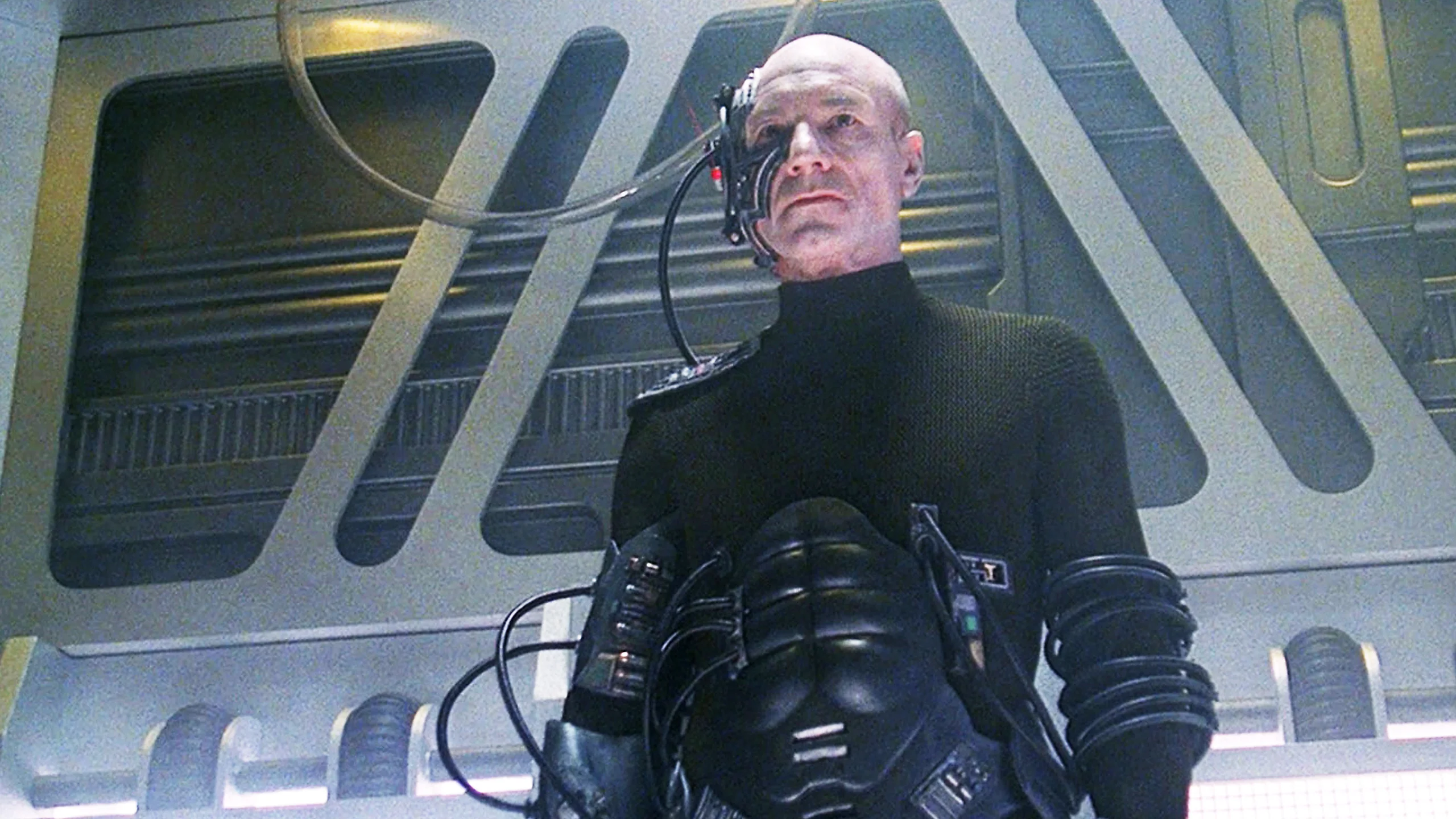
Like many who grew up in the late 1980s, I was a big fan of Star Trek: The Next Generation. While I enjoyed the stories, what really stuck with me in an enduring way was the ethos of the show, and especially what it had to say about how to lead when long-term principles and immediate goals pull in different directions. The death last month of Sir Patrick Stewart—the actor behind the inimitable Captain Picard—sent me back to watch some old episodes of the show. It is perhaps unsurprising that the episodes that stood out to me were those in which the captain and his crew confronted the Borg, a collective of formerly independent life forms who had become fused together into a single hive mind.
In the show’s lore, the Borg grew by absorbing other species and their technology. The hive’s drones carried the knowledge of every civilization the collective had absorbed but lacked anything in the way of individuality: they had no name, no will, and no ideas of their own. The first time I watched the episodes, I saw them as a thought-provoking and dystopian fantasy. Today, they strike me as delivering an essential warning about the dangers of AI.
The Borg chased perfection through uniformity. AI seems to be sending humans along a similar, worrying trajectory.
Language models are trained to predict the most likely next word in a sequence, then tuned to give the kinds of answers people rate highly. The result is output that is fluent, competent, and increasingly alike.
Source link





