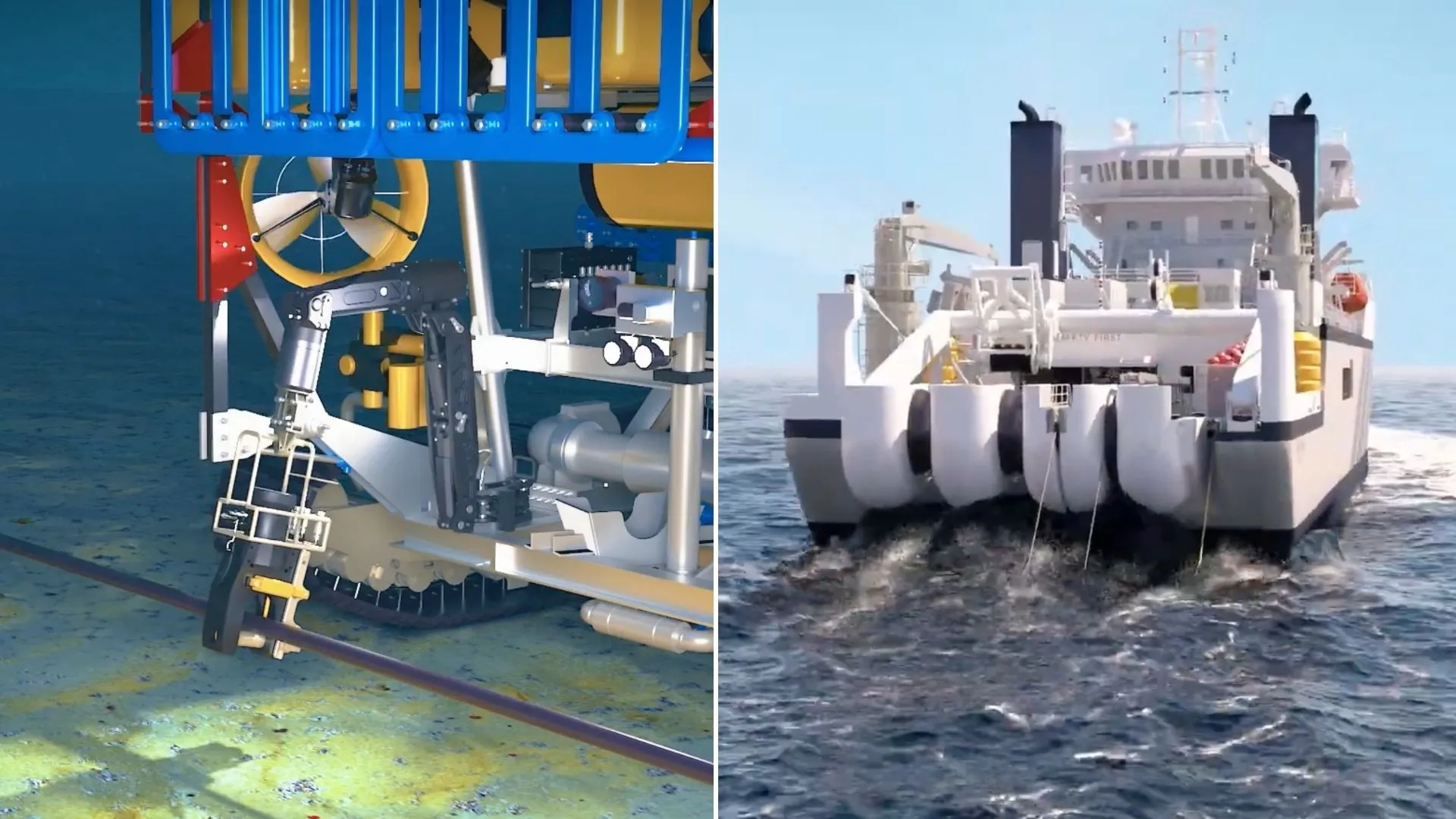
More than 99 percent of international data flows through submarine telecommunications cables, according to the International Telecommunication Union (ITU). These fiber-optic lines carry everything from cloud traffic and financial transactions to video calls between continents. Much of that hidden infrastructure depends on a surprisingly specialized industry: manufacturers who build cables designed to operate for decades beneath the ocean.
One of the companies building that infrastructure is SubCom, which operates a roughly 50-acre manufacturing campus in Newington, New Hampshire. The company designs, manufactures, and installs undersea fiber-optic networks, bringing together factory production, optical engineering, marine operations, and system testing.
The facility is now expanding as demand for international bandwidth grows. But its work involves more than producing long lengths of cable: each system must be engineered to transmit data across thousands of kilometers while withstanding pressure, water exposure, and the physical stresses of installation on the seabed.
At the heart of a submarine communications cable are optical fibers. These extremely thin glass strands transmit information as pulses of light. Unlike conventional electrical cables, which carry signals as electrical currents, fiber optics can carry enormous amounts of digital information over long distances with relatively little signal loss.
However, the fibers cannot simply be dropped into the ocean unprotected. Submarine cables are engineered with layers that shield the delicate glass from water, mechanical stress, and other environmental hazards. Depending on the route, manufacturers can add protective layers and steel-wire armoring to help the cable withstand demanding conditions, particularly in shallower waters where anchors and fishing equipment pose greater risks.
Source link