Selling internationally can open new markets for a brand. But behind every order lies a web of logistics, payments, product certifications, customs rules, and local compliance requirements. As businesses expand, managing these moving parts across countries can become a challenge of its own.
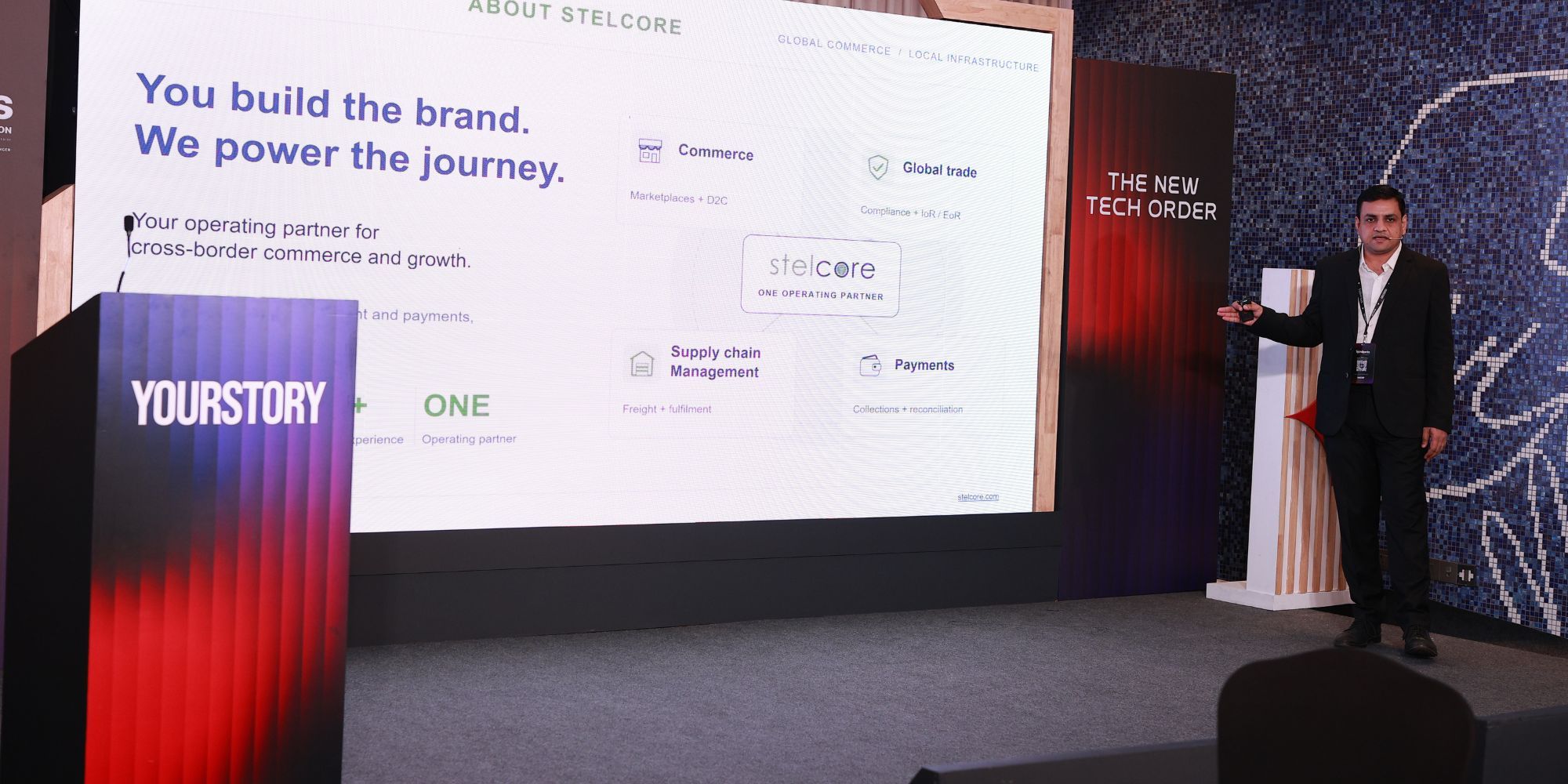
At TechSparks 2026, Founder and Chairman Bharat Mandot explained how the company connects trade infrastructure, compliance, and technology to help brands navigate global markets.
“Stelcore is about trade infrastructure, compliance infrastructure, and technology for global markets,” Mandot said, describing how the company supports brands entering international markets.
Stelcore says it has worked with more than 30,000 brands and sellers from India over 14 years of operations. It has a presence in more than 14 countries, including the US, Canada, the UK, Europe, the UAE, Singapore, Australia and South Korea.
Rather than requiring brands to establish a separate entity in every destination market, Stelcore brings together importing, storage, payments, last-mile delivery and returns.
When an order arrives through a marketplace or a brand’s direct-to-consumer (D2C) store, the system coordinates warehouse allocation and delivery. Stelcore’s local entity can act as the seller of record and importer, handling applicable compliance and logistics requirements.
Mandot described the model as a way to give brands international reach through one operating partner, without having to rebuild the process for every new market.
Cross-border commerce involves more than getting products from one warehouse to another. Brands must also meet destination-market requirements for product registration, packaging, labelling, certifications and technical documentation.
Mandot demonstrated Stelcore’s compliance assessment tool, which allows sellers to select a destination country and product category to identify relevant tests, reports, import procedures and certifications.
Source link