
Replacing large infrastructure components is a slow process. At today’s replacement rates, bridges in the US would have to last about 126 years — far more than most were designed to last.
Repeated stress over long periods can cause cracks to appear in steel structures. Replacing these structures is impractical and expensive, so engineers must find alternative solutions.
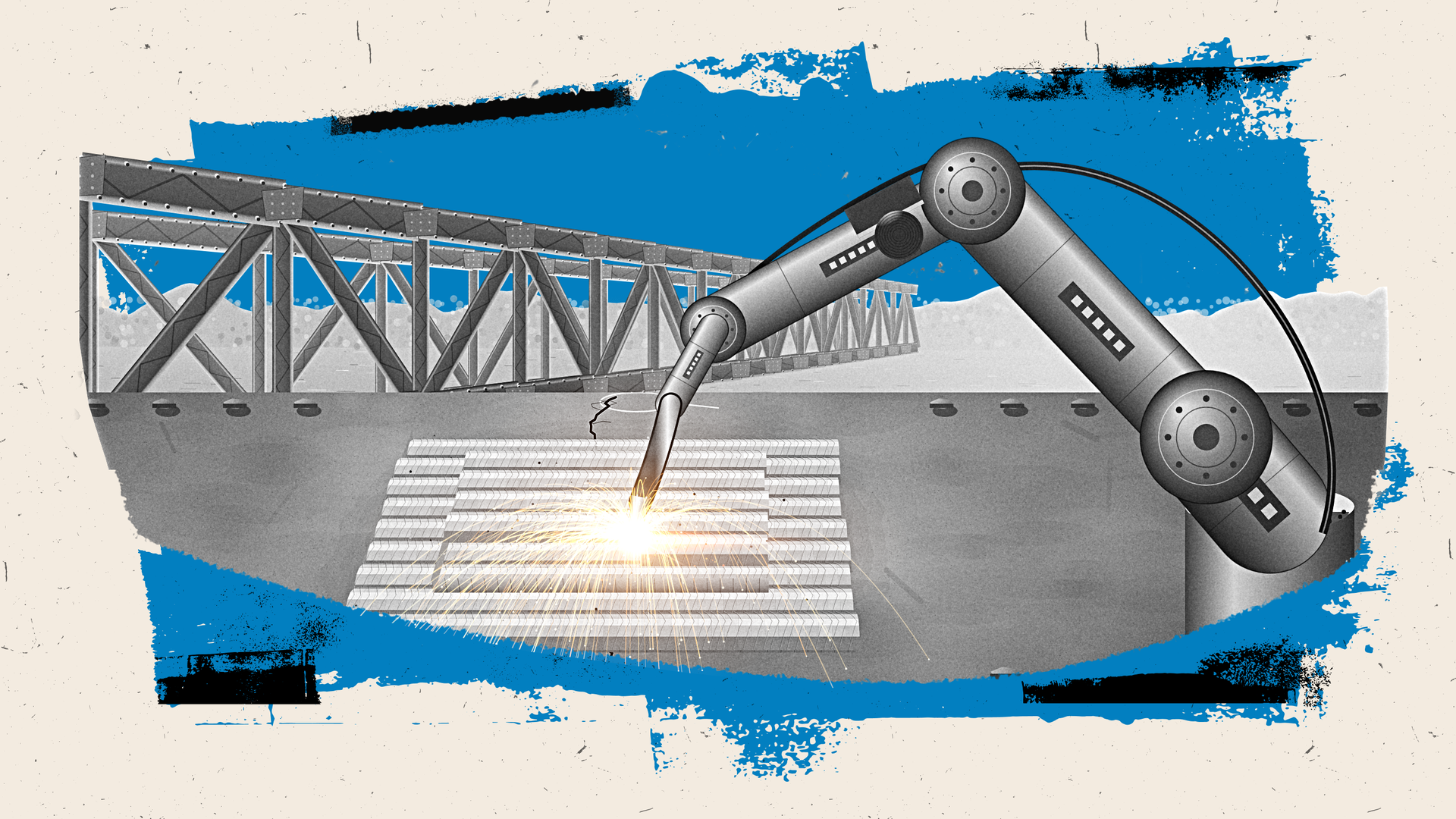
Wire arc additive manufacturing (WAAM) has emerged as a promising solution to fix these cracks. It is a metal 3D printing method based on arc welding. An electric arc melts metal wire, and the molten metal is deposited over the cracks.
While the method has been shown to work, limitations such as cracks forming at the edge of the printed patch mean repairs often need to be machined (cut and ground smooth) afterward. This adds time and cost.
Now, researchers from ETH Zürich, the Swiss Federal Laboratories for Materials Science and Technology (Empa), and the University of Waterloo have shown, in lab tests, that WAAM can be used to patch cracked steel plates without machining afterward.
Interesting Engineering (IE) spoke to co-author Hossein Heydarinouri from Empa about the team’s work.
“[My research group] focuses on developing innovative repair and strengthening solutions to extend the service life of existing structures. This approach offers a more sustainable and cost-effective alternative to fully replacing existing components,” said Heydarinouri.
Today, many traditional fixes for cracks in steel structures don’t last. These include stop-holes (small holes drilled at the crack tip to blunt it) and welding on extra plates.
Source link





