Educating 247 million primary and secondary students presents a monumental challenge, but as Sushma Boppana, Chief Executive Officer of Sri Chaitanya Group of Institutions, and Santhosh Viswanathan, Vice President and Managing Director for APJ at Intel, pointed out, India’s most urgent hurdle is structural rather than purely numerical.
While traditional Indian schooling remains largely anchored in nineteenth-century methods, society has rapidly jumped from the information age straight into the intelligence era.
A central flaw of legacy education is treating computer skills as an isolated laboratory subject. In contrast, modern enterprise requires a seamless blending of technical tools and daily tasks.
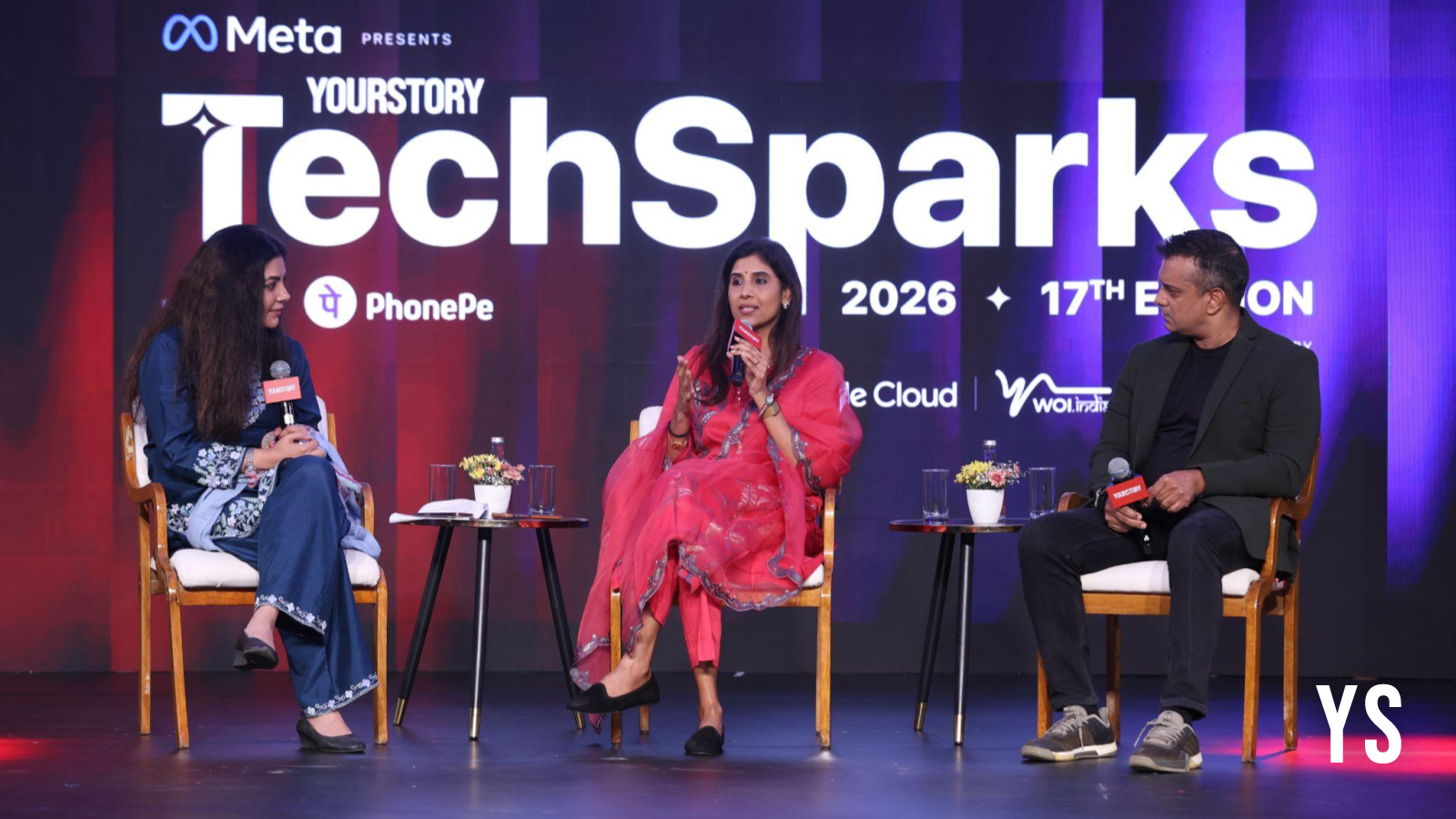
“When you come into the real world... you don't have... work time and... tech time. Tech and work are merged together and I think that's the biggest shift that we all have to start to make,” Viswanathan explained, speaking at a fireside chat with Shradha Sharma, Founder and CEO, YourStory and The Bharat Project at TechSparks 2026, YourStory’s annual summit.
Instead of viewing digital tools as an auxiliary feature, learning systems must embed technology natively into everyday instruction, the Intel leader noted.
Although online educational material is now abundant, maintaining student interest remains the primary bottleneck. Artificial intelligence (AI) presents a solution through hyper-personalised learning, which is essentially tailoring instruction to an individual's unique passions, pacing, and native language.
“If someone likes cricket and they want to learn quantum mechanics through cricket, you should have the option... that is very much possible with the AI that is there,” Viswanathan noted.
Source link