

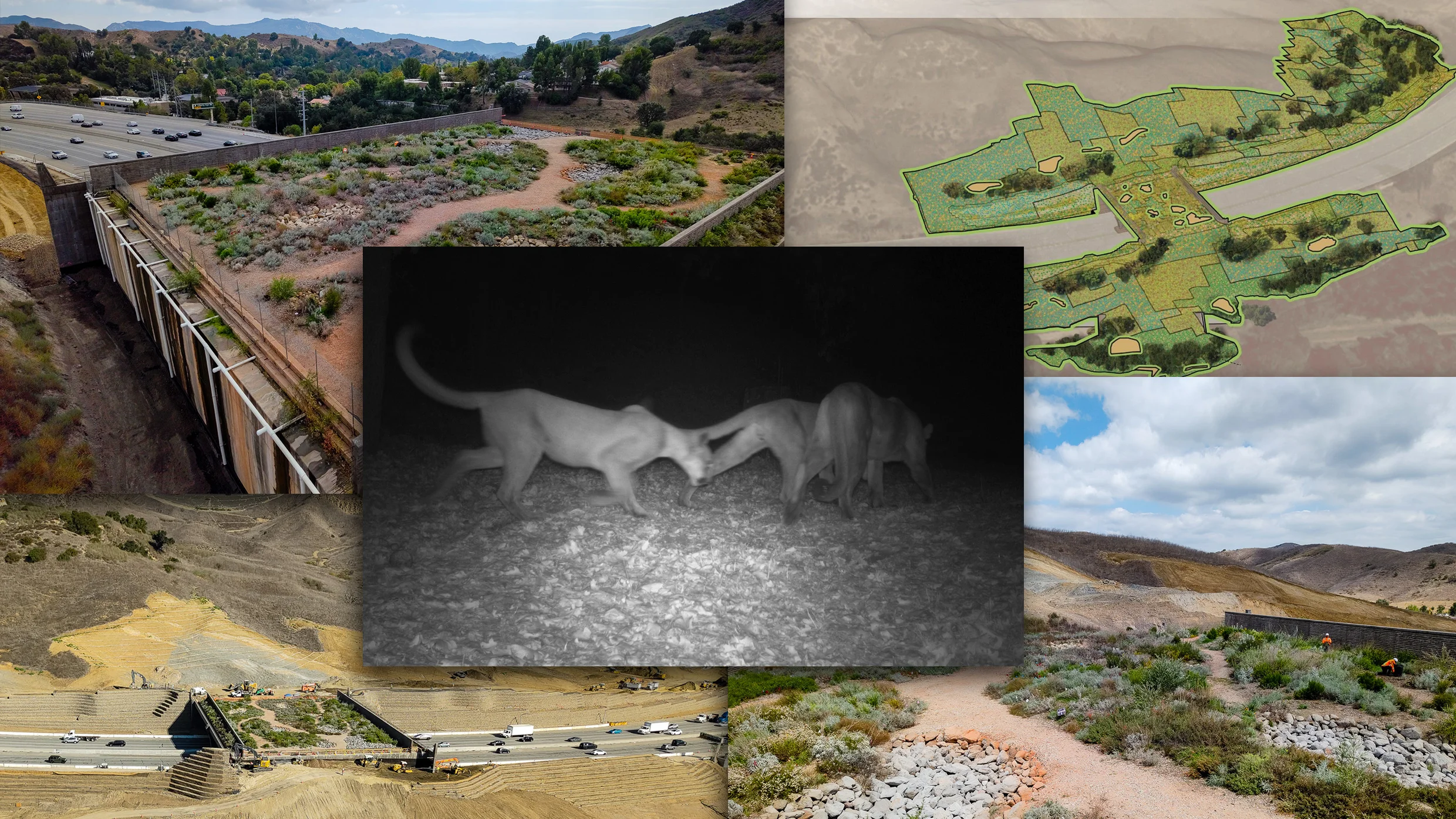
How do you design a bridge that a mountain lion mistakes for a hillside? That’s the design challenge behind the massive new Annenberg Wildlife Crossing, which stretches across 10 lanes of the 101 freeway northwest of Los Angeles.
The crossing—the largest of its kind in the world—won’t officially open until December 2, and even after that point, some construction and habitat restoration will still be underway around the main structure. But animals have already started using it, from a coyote to lizards and Western bluebirds. Around 450 species live in the area. It’s not yet known how many animals will cross the bridge each year, though for apex predators like mountain lions, even a few crossings a year could be crucial to the populations’ survival.
Getting it right took more than a decade of planning and design work. It was the opposite of a typical infrastructure project, with greenery as an afterthought after the concrete is in place. “All of the infrastructure is there in service of this habitat connection,” says Robert Rock, CEO of Rock Design Associates, the lead landscape architect behind the Annenberg Wildlife Crossing.
The project is helping restitch an ecosystem that was split apart by the freeway. To the south is sprawling open space in the Santa Monica Mountains; to the north, there’s more protected land that indirectly connects to the Angeles National Forest. The new crossing includes the main bridge across the freeway, a second smaller bridge across a nearby road, and around 13 acres of habitat restoration.
Source link





