

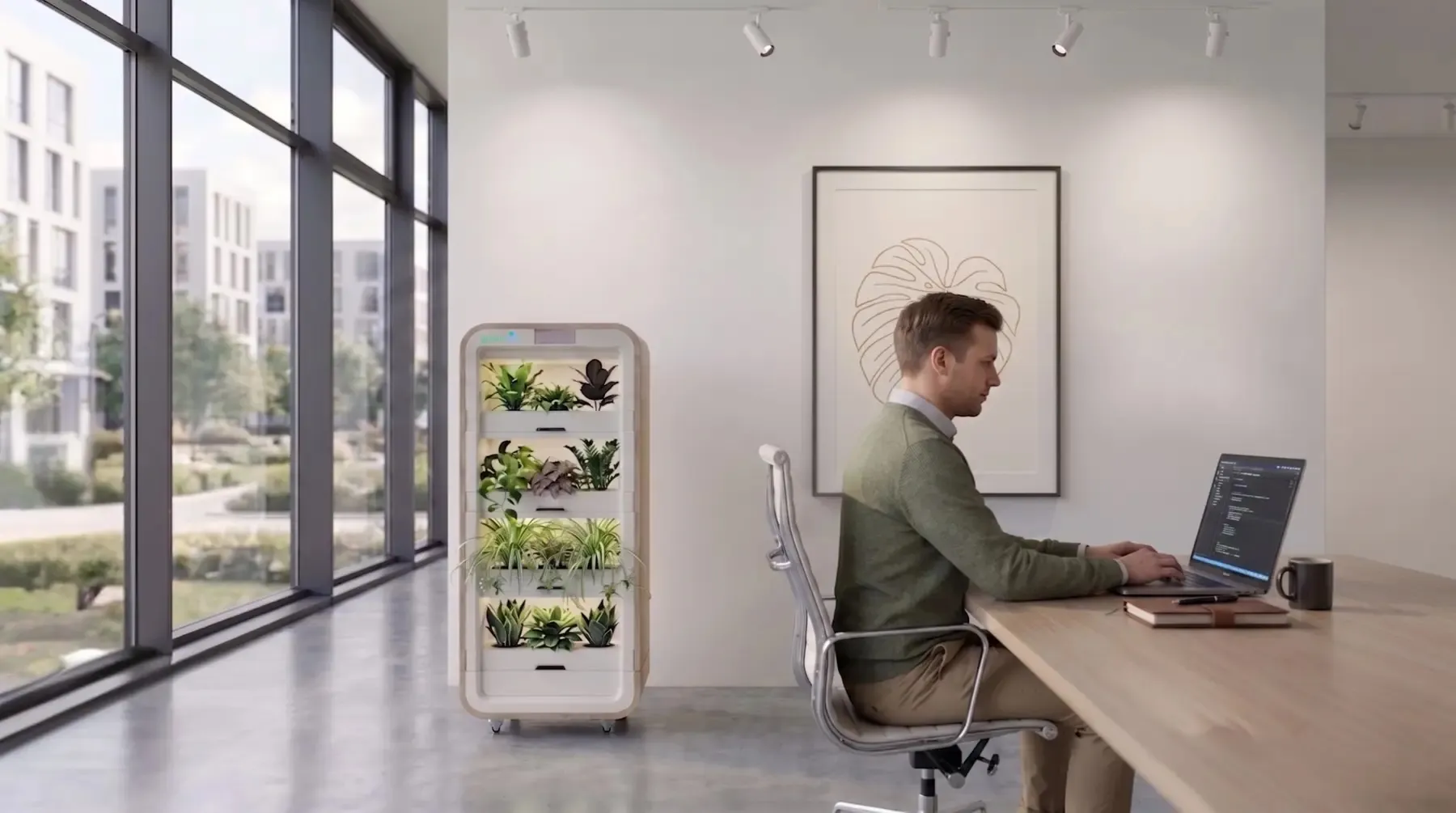
How clean is the air in your workplace? That’s the question Tanvi Thombre and Lakshya Saraf began investigating when they were engineering students who worked in their university makerspace.
In fact, Thombre said via email that, while working in the space, they were “unknowingly exposed to toxic fumes from laser cutters, 3D printers, and soldering irons,” but they didn’t realize it until Thombre’s best friend fainted and had to go to the hospital.
After that, Thombre said, “We began investigating indoor air pollution and realized it was an invisible but dangerous health risk — especially in schools, offices, hotels, salons, and any commercial buildings where air-conditioning prevents windows from being opened.”
Those issues persist even when a building is equipped with air purifiers, as their makerspace was. The problem, according to Saraf, is that although purifiers are good at cleaning out particulate matter like dust and pollen, they are less effective at removing toxic gases such as carbon dioxide, formaldehyde, and benzine (many of which are classified as volatile organic compounds, or VOCs — chemicals that evaporate easily into the air).
Thombre said that VOCs are linked to chronic disease and “sick building syndrome,” a condition in which occupants experience health effects and discomfort after spending time in a building, even though no specific cause or illness has been identified. She also pointed to Harvard research showing that improving indoor air quality improved cognitive function and productivity as well.
That’s why the pair is targeting toxic gases in the workplace with their startup Greenairy , which will be part of Startup Battlefield 200 at this year’s TechCrunch Disrupt .
Source link





