

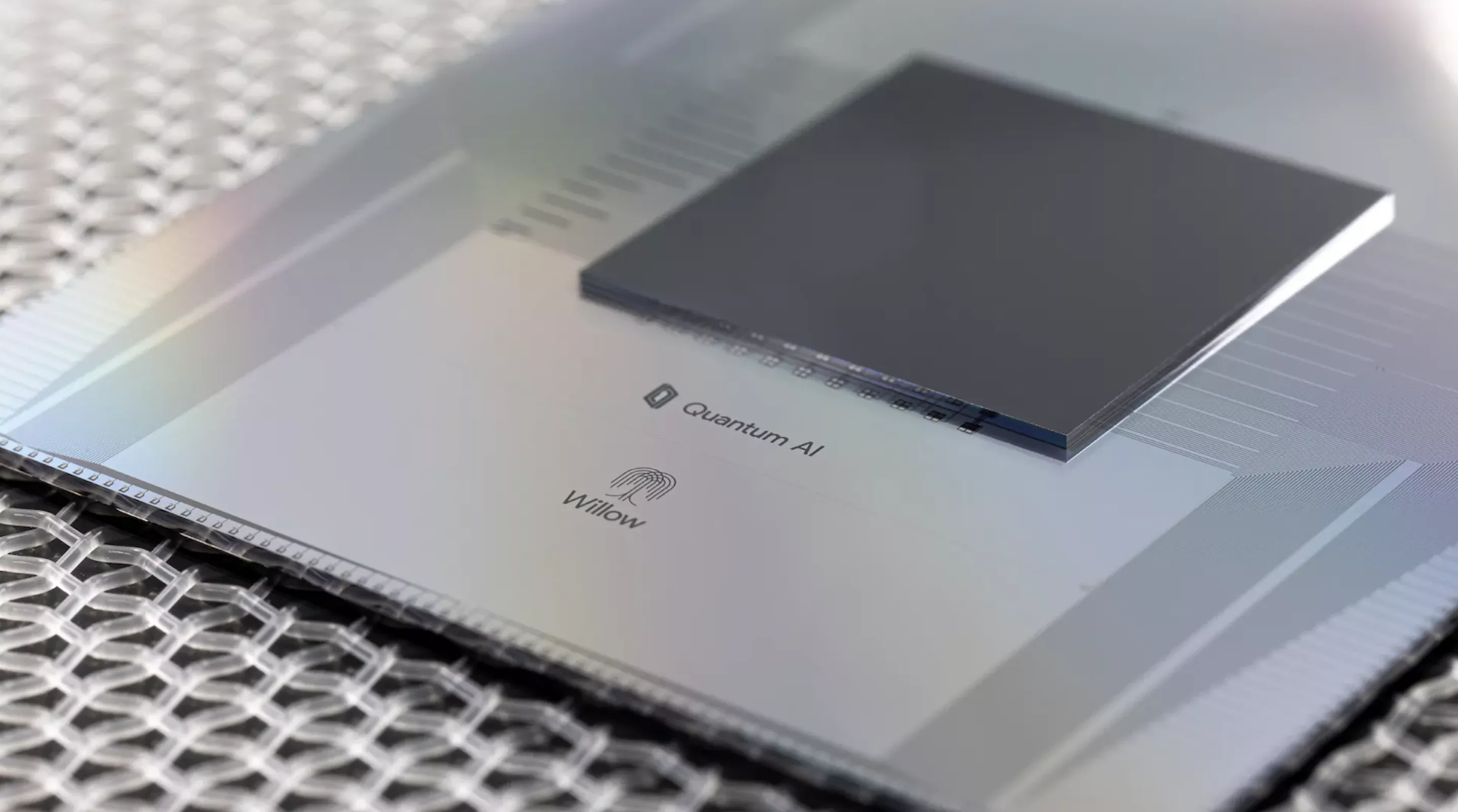
In a nutshell: Google researchers have demonstrated that the company's experimental quantum computer can outperform the best possible classical strategy in a logic puzzle known as the magic square game. The machine achieves this by exploiting quantum contextuality, a property in which the outcome of a measurement is not predetermined but instead depends on the context of other measurements performed alongside it.
Published in the journal Science, the research gives physicists a working hardware demonstration of a phenomenon they consider central to what quantum computers may eventually be capable of.
The game makes the gap between the two types of computing easy to measure. Two teammates must fill a three-by-three grid with numbers that satisfy a set of mathematical conditions, much like a variation of Sudoku. They are not allowed to communicate with each other. Under classical rules, even the best strategy can only achieve a limited number of wins. Google's machine did better.
That advantage comes from the way qubits encode information. In a conventional computer, a bit holds either a 0 or a 1 before anyone checks it. Reading it simply reveals a value that was already there. Qubits work differently. The outcome of a measurement depends on what other compatible measurements are performed alongside it. In the magic square game, the teammates can use this dependence to coordinate their answers more often than classical strategies allow, even though they never communicate. Better-coordinated answers mean more wins.
Shashwat Kumar, a Google researcher and one of the paper's authors, explains the concept using a coin toss.
Source link





