
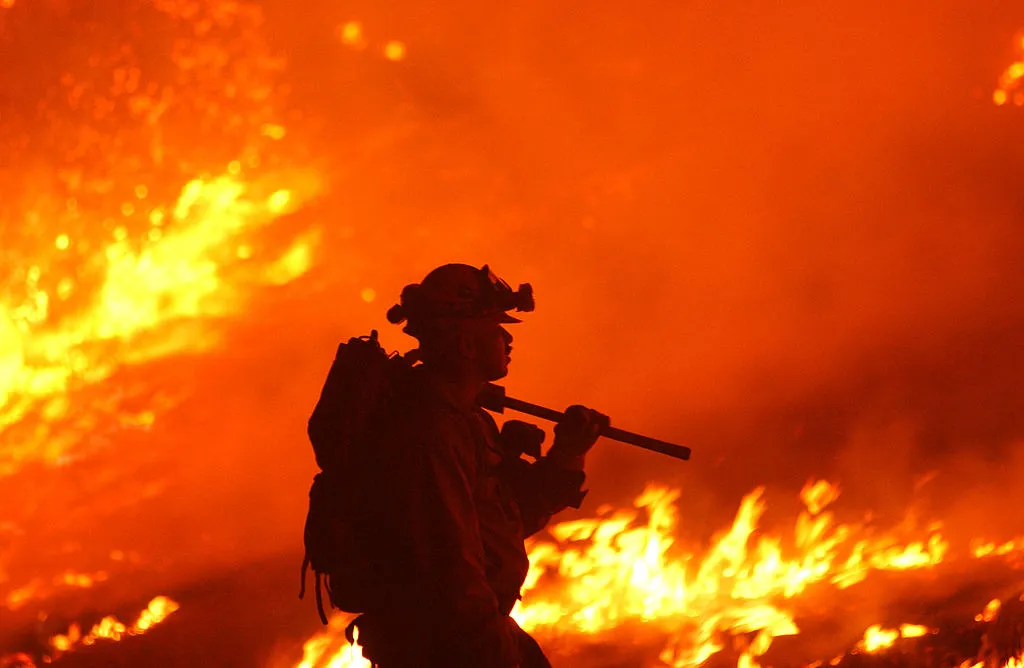
After spending months training with firefighters in the field, the app uses Google Gemini to decode distorted radio signals in real time.
On Friday, Google’s Gemini team announced the results of a new partnership with the wildfire-tracking app Watch Duty, after Gemini engineers spent six months embedded with Watch Duty’s first responders. The results cut vital new wildfire dispatch translations down to seconds and helped improve radio communications, which can be rough on the front lines of a new fire.
The Gemini AI improvements got a real-world test during Washington state’s Railroad Fire in July 2026, when Watch Duty issued what it calls its first-ever nighttime Critical Alert. The alert stemmed from a nearly unintelligible, static-filled 911 call that the Gemini tool transcribed in under 30 seconds. That kind of assistance can help Watch Duty send alerts to affected communities more quickly and enable first responders to update maps more accurately and make better-informed decisions.
“This is something the tool also has the capability to do if reports of flooding are communicated via radio,” said Dave Merritt, co-founder and chief technology officer of Watch Duty. “Across disasters, we hear feedback every day that first responders are using Watch Duty for additional situational awareness, especially for disasters that span multiple counties.”
Watch Duty reporters are active and retired first responders who can manually monitor up to 20 different feeds, though static and rapid-fire jargon can make them difficult to follow.
Gemini workers used more than 20,000 hours of Watch Duty radio recordings to train the AI tool to recognize firefighting terms that aren’t in the average dictionary or books that AIs are typically trained on .
Source link





