
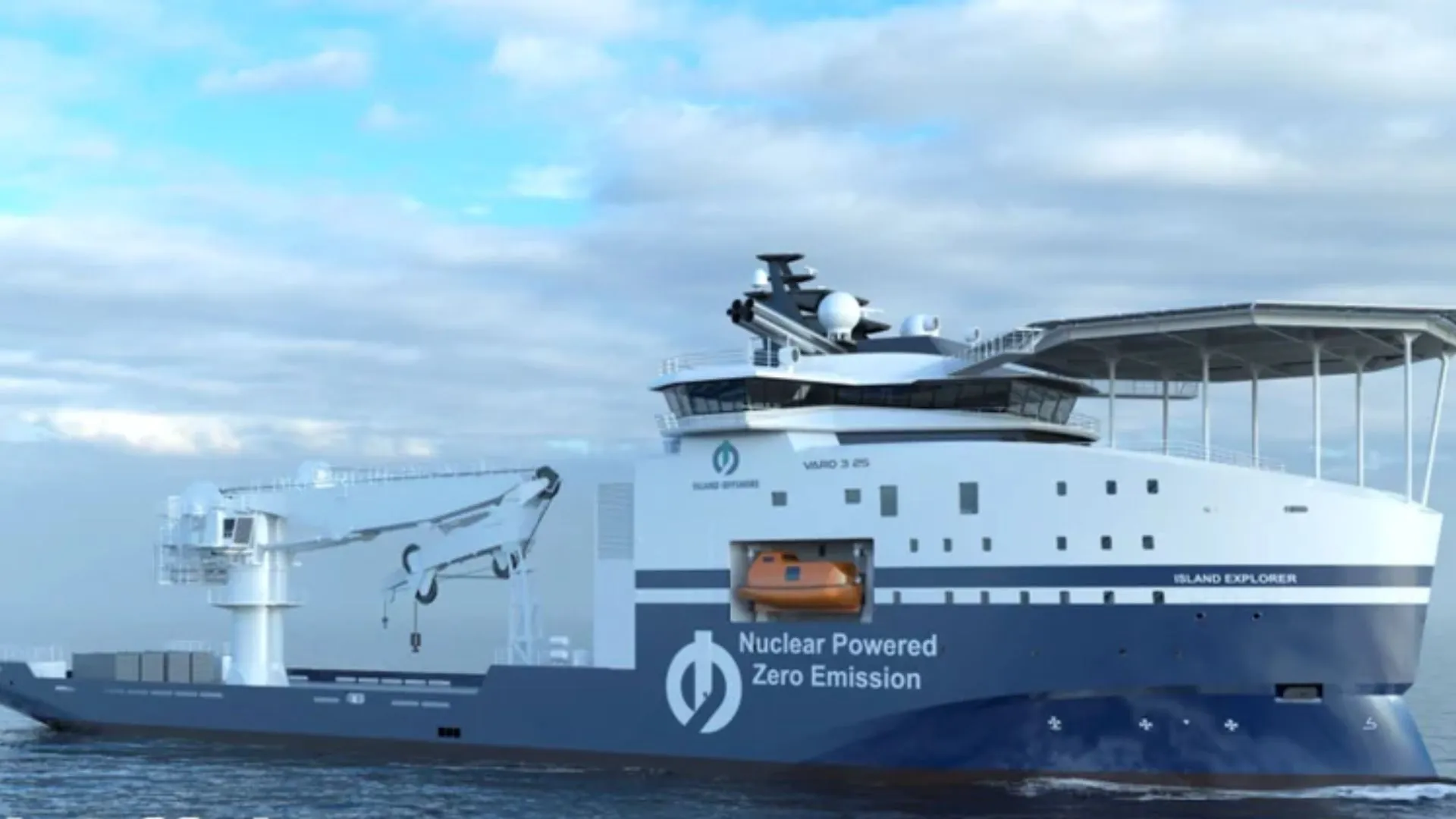
Norway is backing a project to develop and test an integrated nuclear propulsion system for commercial ships, marking a step toward nuclear-powered maritime transport.
The Marine Nuclear Propulsion System (MarNuPS) Pilot project aims to demonstrate a new energy system combining a gas-cooled nuclear reactor with advanced power generation technology.
The first phase is scheduled to begin in 2027, with private-sector commitments also supporting the initiative.
The project targets the deployment of its first demonstration vessel, an offshore supply ship owned by Island Offshore, by 2031 or 2032.
MarNuPS Pilot project will combine a gas-cooled microreactor with a supercritical carbon dioxide (sCO2) turbine system to generate electricity for shipboard use. The project aims to demonstrate how a compact nuclear reactor can be integrated with the electrical and automation systems required to operate a commercial vessel.
At the center of the design is a gas-cooled reactor energy system connected to an sCO2 gas turbine. The turbine will convert heat into electricity, which can then be distributed through the ship’s power management system. The architecture also incorporates energy storage, remote monitoring and control, and an interface with the vessel’s Integrated Automation System (IAS).
Rather than immediately operating with nuclear fuel, the initial demonstration will use electricity to heat the reactor. Active nuclear operation will be considered at a later stage, after the integrated system and its essential safety parameters have been tested.
The first phase will involve building an integrated test facility at Stette, near Ålesund, Norway. It will host a full-scale representation of the shipboard propulsion system, allowing engineers to evaluate its performance before installation on a vessel.
Source link





