
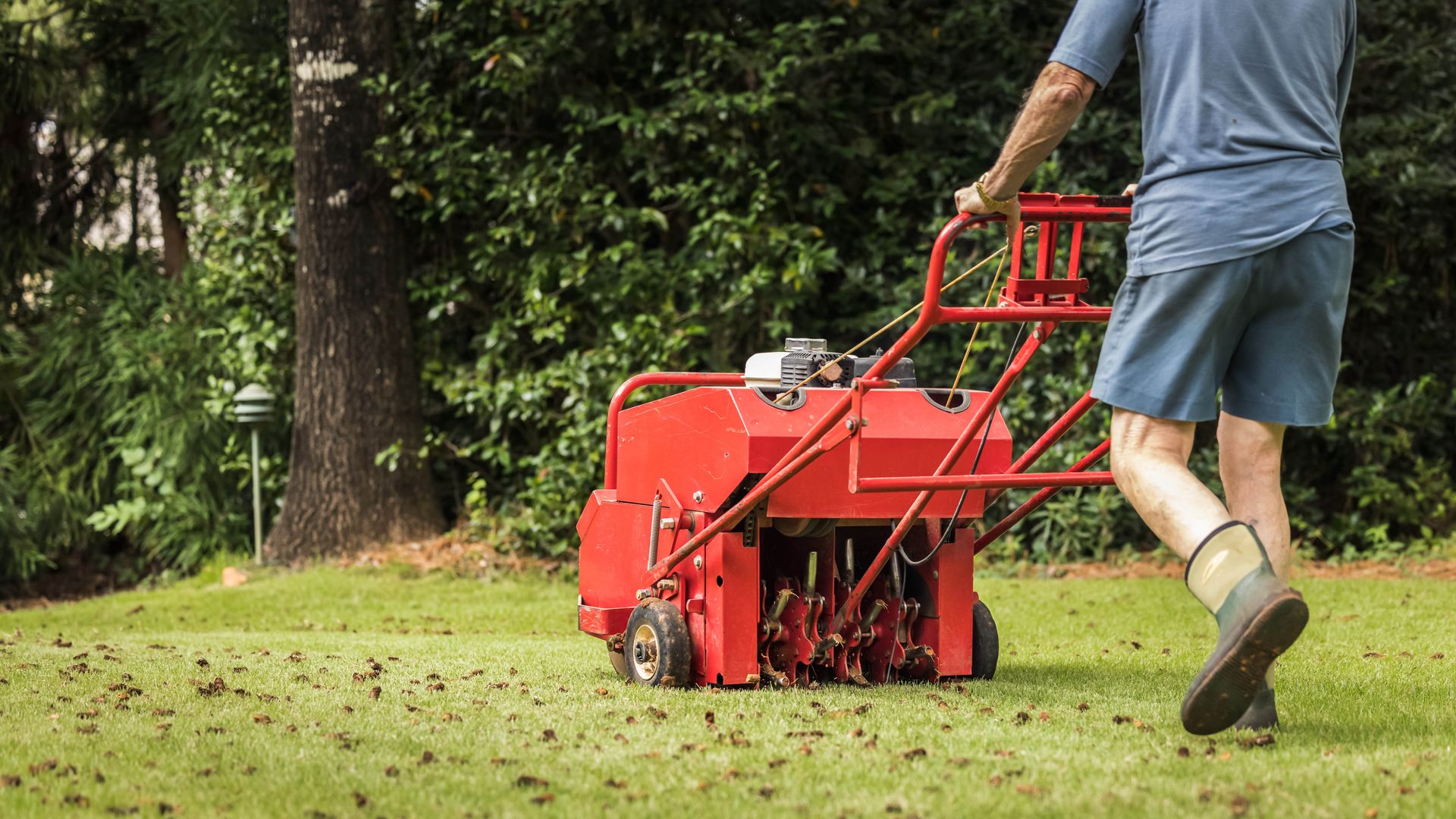
It's a great time of year to roll out your lawn aerator and get to work. Bringing air into the lawn soil will not only help relieve any pressure and compaction that's happened over the year, but it'll also improve airflow, water absorption and your lawn's overall ability to access nutrients to help it grow.
It's not something you need to do too often, but it's a step you don't really want to miss if your lawn is heavily compacted or struggling to drain water (especially with all the rain).
Only after you put in all that effort to push your lawn aerator across your lawn, you might be left wondering if you've done a good enough job. It's certainly something I've contemplated as I stare at my own lawn, unsure whether I've made any real difference.
I've asked the experts for their professional advice on how often you should aerate your lawn, how many passes are enough, and other tips and tricks to get the best results.
Soil compaction is the ultimate telltale sign that your lawn needs aerating, but how exactly do you figure out if that's what's going on beneath the soil?
Allison Koenig, a lawn and garden expert at Tractor Supply, says: "Homeowners should consider aeration if they're seeing standing water after rain, hard-packed soil, thinning grass, or areas that get a lot of traffic.
"A good rule of thumb is the screwdriver test: if it's hard to push a screwdriver into the soil, compaction is probably preventing healthy root growth."
Source link





