

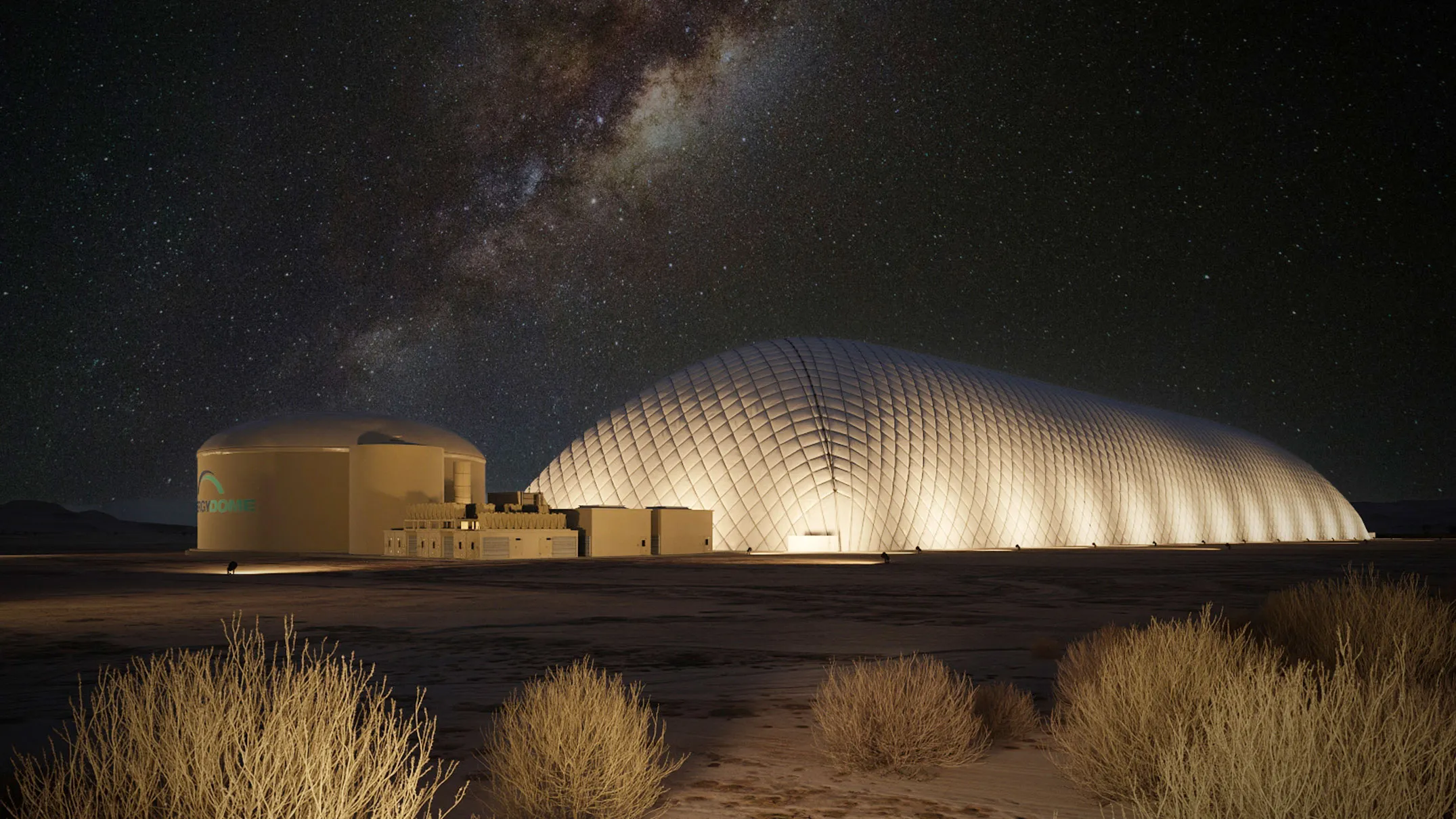
There’s a growing need for long-duration storage to meet energy demand and balance out renewables on the grid. Energy Dome uses compressed carbon dioxide gas in its massive grid batteries, which can deliver power for up to 24 hours.
As the world races to meet growing electricity demand, solar and onshore wind power have become the cheapest and quickest-to-deploy sources to install on the grid. But, despite their upsides, both are subject to variations in weather patterns, which means supplies can be intermittent. Energy Dome is using stored carbon dioxide to help smooth out gaps between supply and demand.
The key component of an Energy Dome plant is a huge white dome that covers an area about the size of seven soccer fields and holds about 2,000 metric tons of carbon dioxide. When energy is available—say, from a connected solar farm—compressors squeeze the gas, turning it into a liquid that’s then stored in carbon-steel tanks. That process generates heat, which the system holds in a proprietary thermal storage material. Then, when the grid needs power, the carbon dioxide is released from the tanks and warmed with the stored heat, turning it back into a gas. That gaseous carbon dioxide then passes through a turbine to generate electricity and flows back into the dome, ready to begin the cycle again.
Compressing gas to store energy isn’t new—utilities have been using compressed air in underground caverns to hang on to reserves for decades. But Energy Dome’s approach doesn’t require any specific geology to work, so it could be more easily scaled to help grids around the world.
Source link





