Microsoft has revealed the depths of its work to make Windows 11 feel less sluggish, with the company claiming, among other things, up to 20% better responsiveness on systems with 8GB of RAM.
Microsoft has claimed before that things "seem faster," but is there any juice behind this new claim? I decided to find out myself by running some tests on an 8GB laptop in my office.
The results will likely be surprising to some, especially once we get into the heavier workloads below.
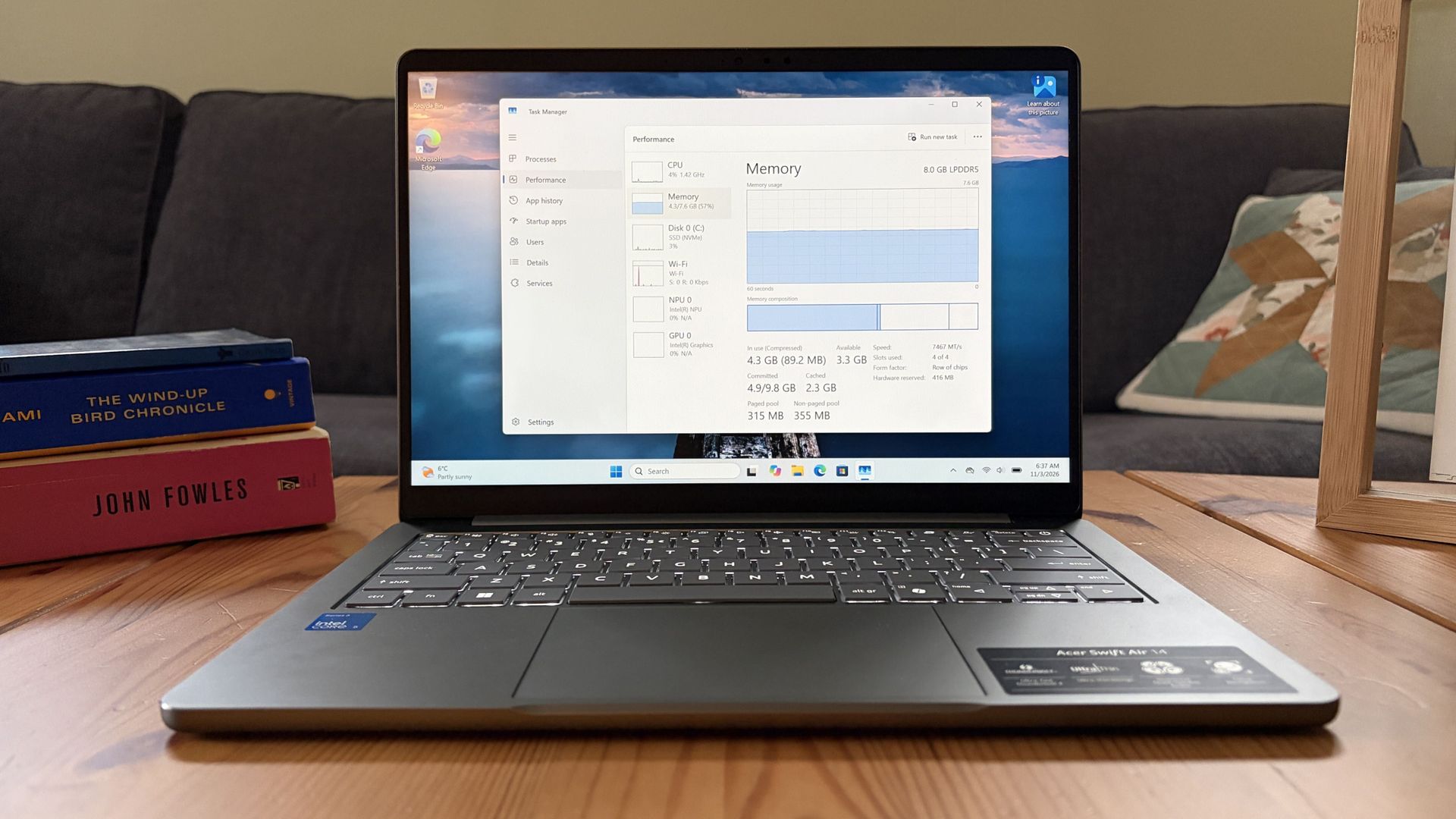
I installed a barebones version of Windows 11 25H2 (262000.7019) from about a year ago on an Acer Swift Air 14 with an Intel Core 5 320 CPU, 8GB of LPDDR5x RAM, and a 512GB M.2 PCIe 3.0 NVMe SSD.
I didn't touch the page file (4524MB), and I only installed the necessary drivers before beginning my tests. I used the Best Performance power profile for all tests.
Once I'd completed all tests on 25H2, I upgraded to Windows 11 26H2 (26300.9711), which was released in October. Same system, same drivers, same programs.
Microsoft used telemetry data from things like Search, Settings, File Explorer, and Snipping Tool to measure responsiveness. I took a look at RAM usage instead; lower usage generally means fewer hiccups and interruptions, leading to an overall better experience.
For this test, I checked both new and old versions of Windows 11 about 10 minutes after booting the PC. This gives me a baseline to work with.
Source link