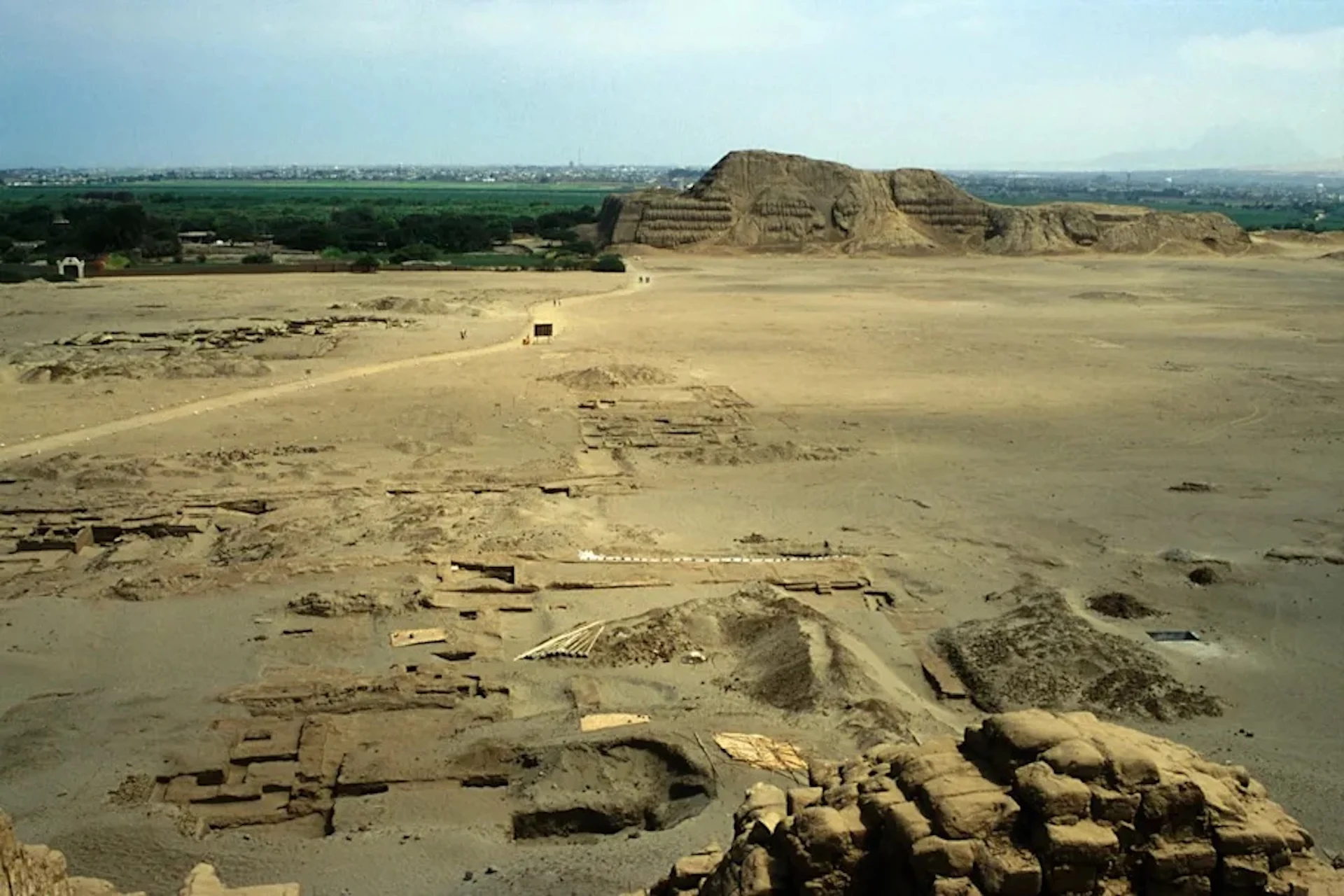
The ancient societies that once inhabited Peru’s desert coast faced a formidable enemy: the weather. Periodic El Niño events brought torrential rains and catastrophic flooding to the otherwise arid landscape, wreaking havoc on communities in the Lambayeque Valley. Some prehistoric cultures responded with large-scale human sacrifices, perhaps in an attempt to appease the gods. A new study suggests these rituals did not reflect a broader culture of violence despite centuries of environmental upheaval.
In ancient northern Peru, ritual killings have been linked to catastrophic flooding brought on by El Niño. This has raised the question of whether climate stress also fueled violence in everyday life as communities competed for scarce resources.
In an effort to understand how societies might respond to climate change, a team of researchers surveyed evidence for violent trauma over thousands of years in Peru’s Lambayeque Valley. The results revealed that everyday violence among these societies was remarkably rare even during times of ecological upheaval.
The findings, published in Frontiers in Environmental Archaeology, suggest that climate stress does not inevitably lead to increased violence in human societies.
The Lambayeque Valley was typically arid, but its communities depended on rivers and a productive marine ecosystem for food and livelihoods. During El Niño events, however, warming ocean waters decimated fish populations while torrential rainfall inundated the valley, disrupting local food systems and placing enormous pressure on communities.
Previous excavations have suggested that large-scale human sacrifices may have been performed during and just before the collapse of the Moche and Sicán societies, in an effort to appease supernatural forces and restore balance.
Source link