Dark matter accounts for approximately 85 percent of all matter in the universe, though that’s about all we really know about the mysterious substance. Scientists believe it because of the gravitational effects it has on galaxies and other cosmic structures, but since it doesn’t otherwise interact with ordinary matter, it’s been a challenge for scientists to determine what it’s really made of.
For decades, scientists have been trying to determine whether dark matter consists of a single type of particle or if it’s made up of several particles that could have different properties and thus different interactions with the surrounding world. Earlier this year, scientists found the most convincing evidence of a dark matter particle yet, and if the second scenario is true, it’s possible we could find more.
This second possibility also raises an intriguing question: If there are a variety of “dark particles,” could they interact and combine with one another—just as the particles we know do—to form their own dark atoms and molecules? If that were the case, the dark universe could be much more complex than researchers had initially imagined.
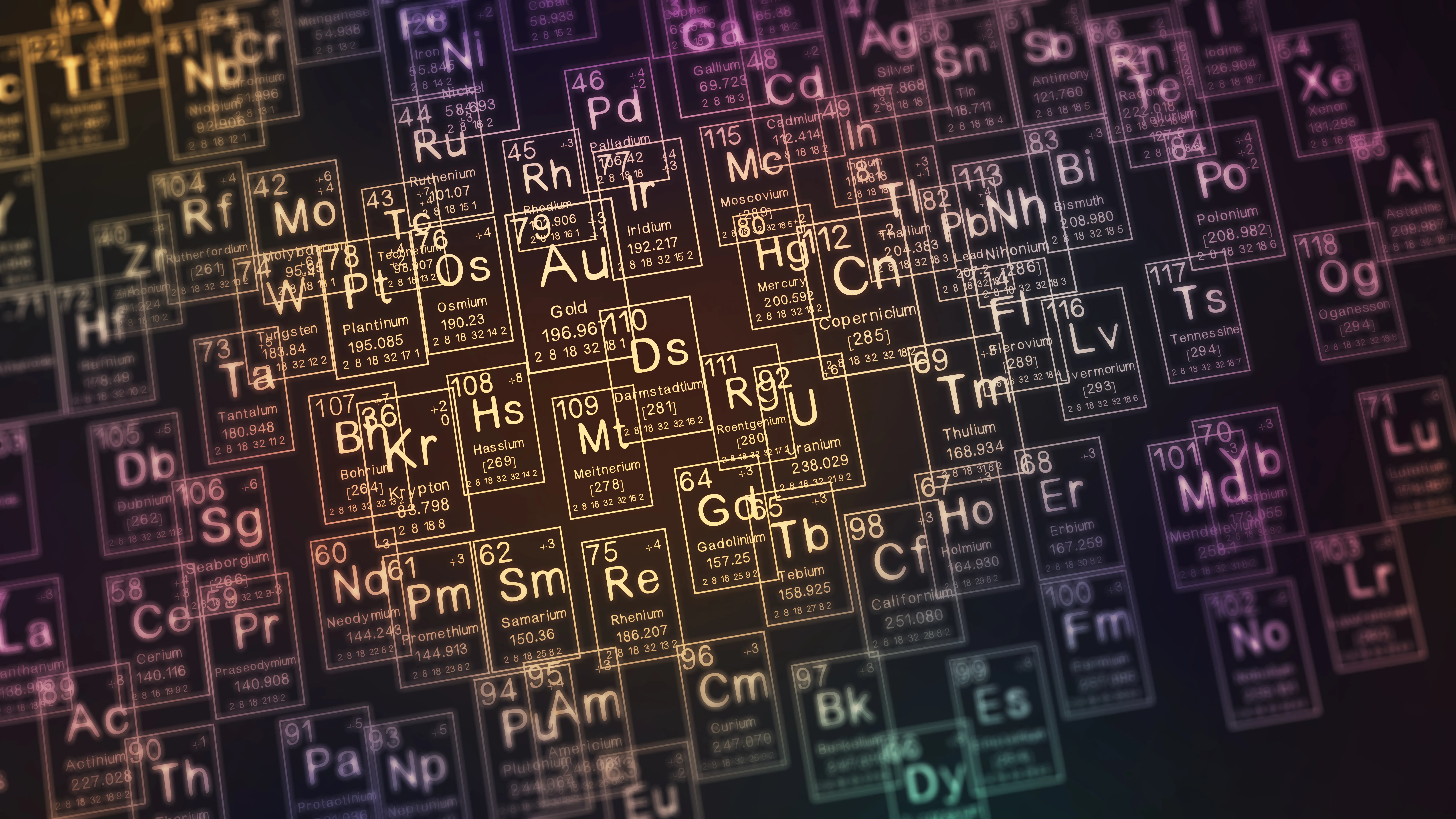
But luckily, humanity has already faced a similar challenge in trying to understand the diversity of ordinary matter. Though to many introductory chemistry students, the periodic table can seem like an odd way to organize information, it’s one of the most ingenious tools developed in our understanding of the physical world. This classification system doesn’t just order the elements, but reveals patterns among their properties that even helped predict the existence of other elements that had not yet been discovered.
Source link