

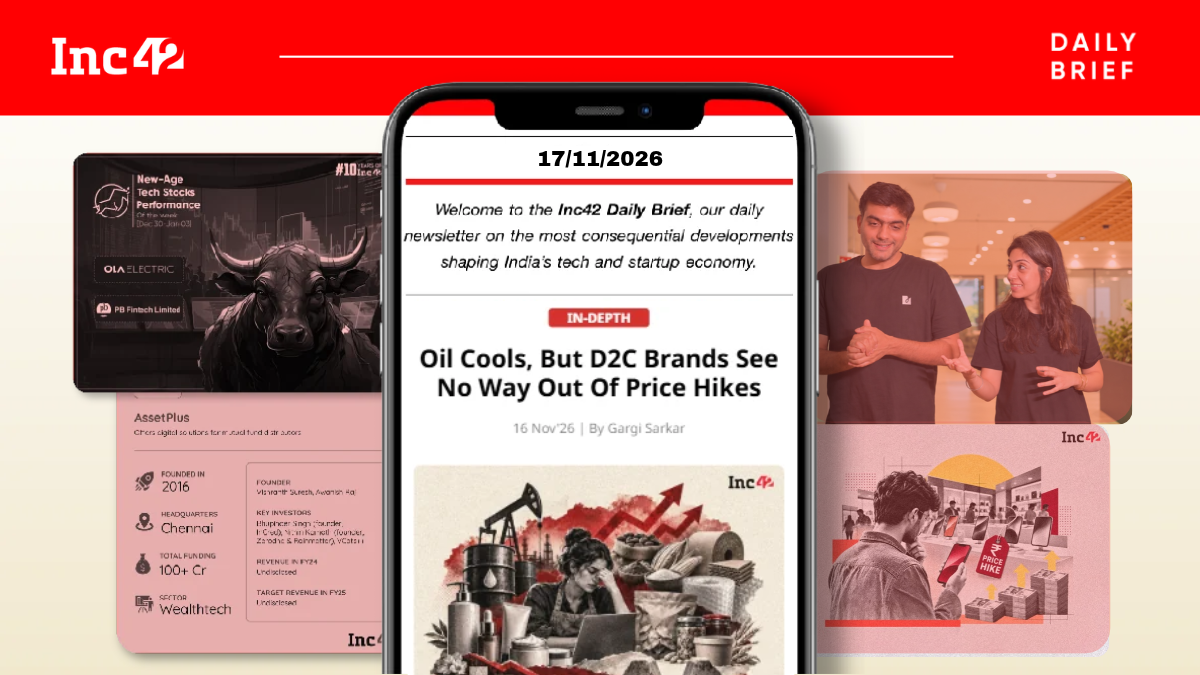
Rising crude prices are squeezing India’s D2C brands. Increasing freight and raw material costs have trapped these emerging brands in a sticky place: absorb losses or risk customer churn. Now, as oil prices begin cooling, can D2C brands find their way out of this Catch-22 situation?
Cost Of Uncertainty: For D2C brands, the challenge is not just higher input costs but their unpredictability too. A single delayed shipment can halt production, forcing brands to pay premiums to avoid disruptions. Imported materials make the problem worse as shipping costs can fluctuate sharply. This leaves founders to choose between paying more to avoid delays or waiting for rates to ease. Either way, working capital takes a hit.
F&Bs Face The Heat: Food and beverage makers face higher exposure than non-food D2C brands as they are more exposed to costs related to commodities and transport. Crude-linked packaging – bottles, preforms, caps and labels – is also adding to the pressure. As such, smaller brands have little room to raise prices and may have to resort to other measures.
The Discount Trap: Unlike established FMCG players, D2C brands rely heavily on ads and discounts to acquire and retain users. Raising prices risks losing customers in a market full of alternatives. Many startups are now considering grammage cuts on entry-level packs and sharper reductions in advertising and discounting. As post-festive demand moderates, brands with strong organic repeat buyers and healthy margins will be better placed to absorb inflation.
Crude Relief Awaits: Although Brent crude has recently retreated from late-October highs, immediate margin relief remains elusive.
Source link





