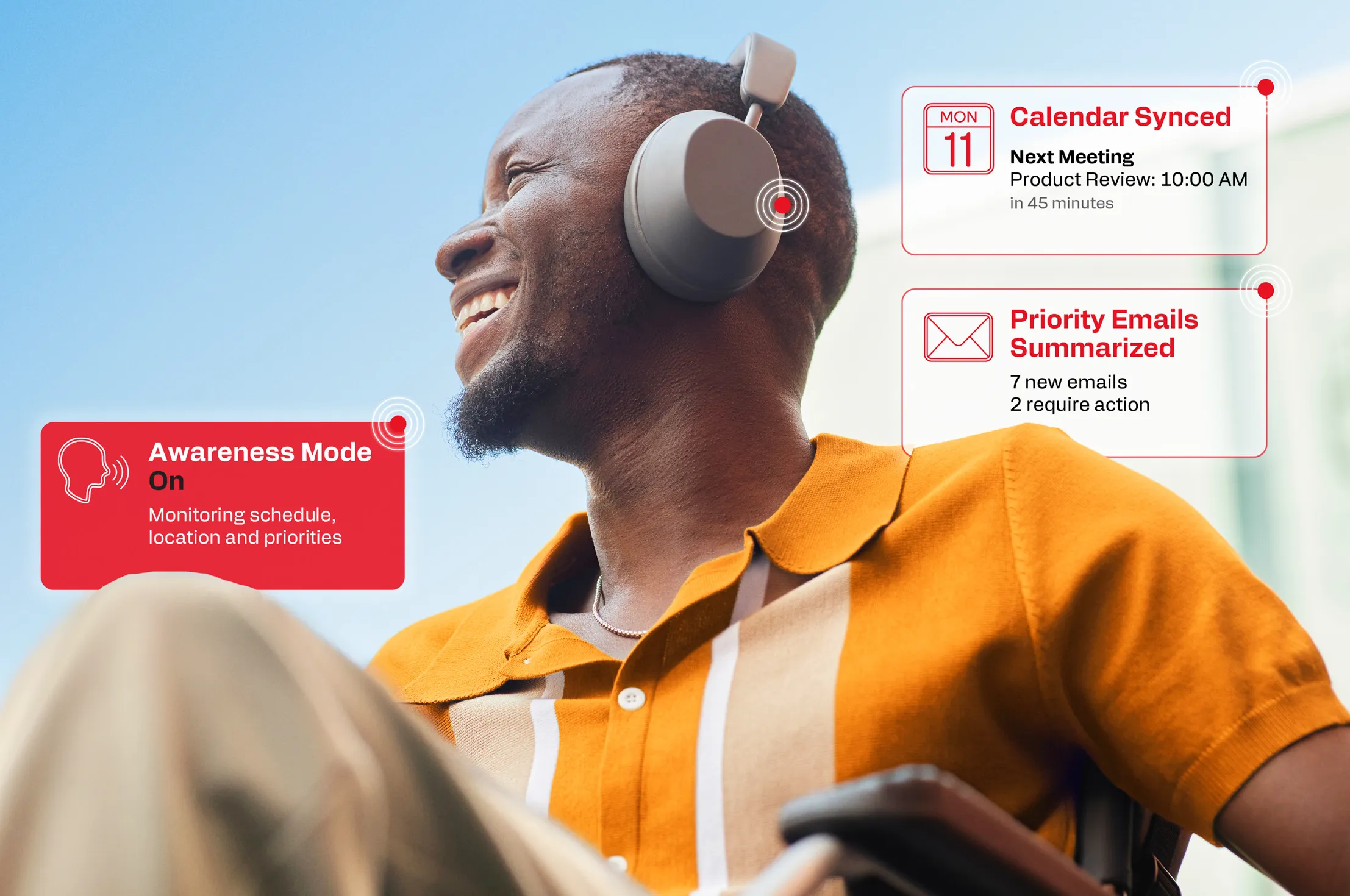
For many consumers, much of the promise and appeal of AI is personal. Consumers are looking past generic tools and want to know how these technologies will help them in their daily lives. These trends coincide with the advent of new classes of wearable devices that, in addition to being able to leverage powerful frontier models, feature built-in intelligence that understand the context of a user. Where are they? What are they seeing and hearing? What are their habits, their preferences, their schedules?
It’s an astonishing pivot, from passive accessories that served mostly to send users smartphone notifications to proactive, intelligent companions. The smartphone is no longer the center of that universe; though it’s still incredibly important, in this personal AI paradigm, the AI is the UI. And it shifts the focus toward you, the user.
A Personal AI report, commissioned by Qualcomm Technologies, built on a survey of more than 12,000 people across key geographies worldwide (the U.S., U.K., Germany, India, Brazil, and China) focused on the rise of personal AI in intelligent wearables looks deeply at these developments.
The smartphone is no longer the center of that universe; though it’s still incredibly important, in this personal AI paradigm, the AI is the UI.
Survey respondents are less interested in single devices and are responding more to the idea of connected ecosystems. As people expand their roster of devices, it only makes sense. Instead of relying entirely on a smartphone and a laptop, respondents also have connected technology in their cars, as well as intelligent wearables like smartwatches, smart glasses, hearables, and other wearables like rings, pins, and pendants.
Source link