
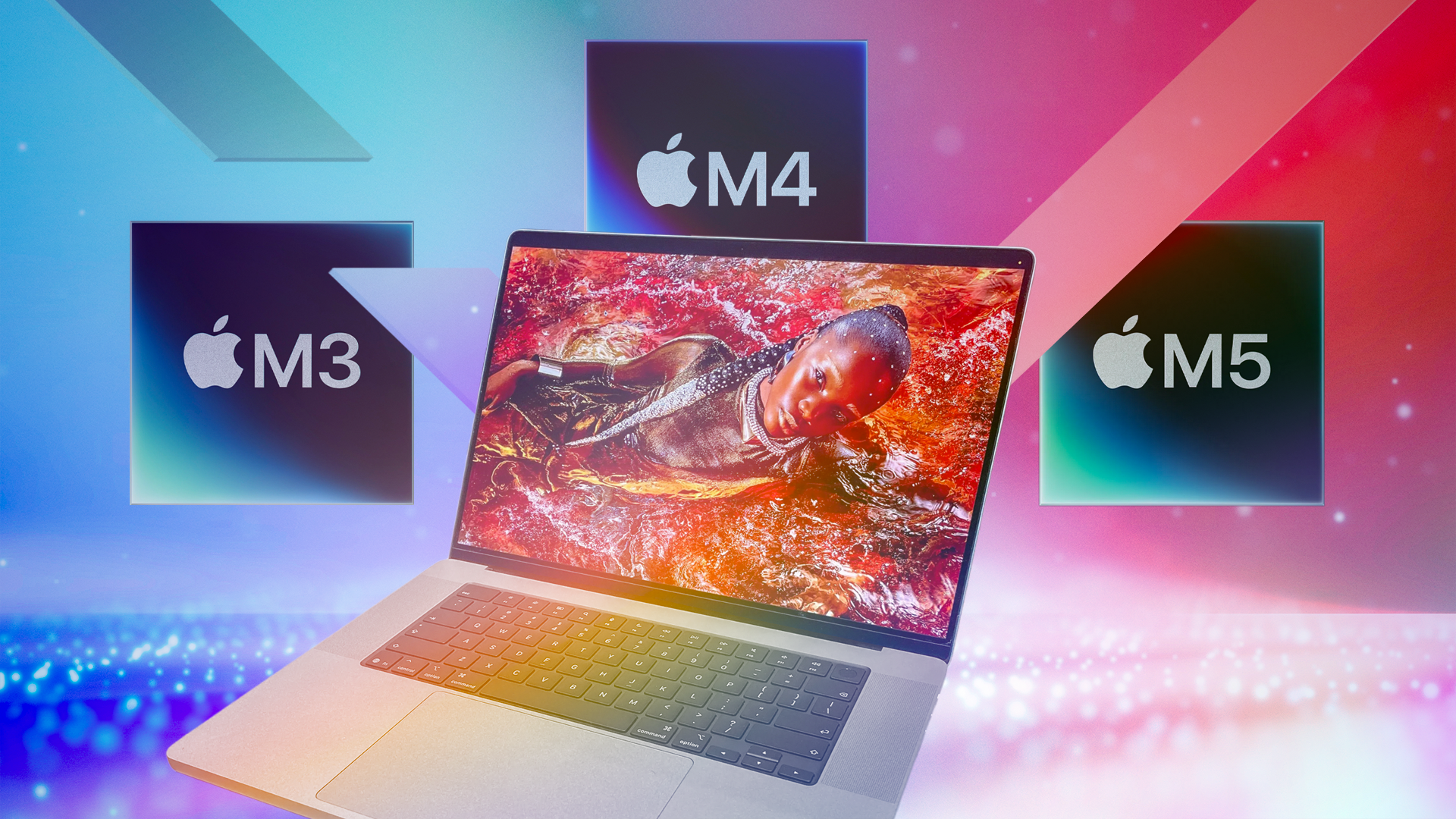
With the M5, it seems like more GPU cores don't add as much as they used to.
Yes, Apple graphics processing unit performance has obviously been getting better over time. This is what we’re used to seeing: a steady upward trend in GPU performance over the years, with the occasional generational discontinuity (such as the M3 Max in this chart).
What we don’t often think about is the diminishing returns to adding more cores. For example, while you may theoretically get better overall performance with a 40-GPU-core M-series Max chip than a 20-core Pro version, you might get less of a boost jumping from 20 GPU cores to 40 cores than you do bumping from 10 in a base chip to 20 in a Pro.
As prices continue to escalate, the incremental cost versus the performance of a better configuration may affect how you spend your money. I’ve been thinking about one aspect of the equation, the GPU, because that frequently governs which configurations you choose from when you’re looking for a certain level of gaming, pro graphics and AI performance.
There have been two major generational enhancements to the GPU since the original M1 (the move from Intel to Apple silicon doesn’t count, because Intel chips were awful).
The first overhaul occurred with the M3 generation in 2023, targeting traditional graphics performance areas like rendering and gaming. That’s when Apple added ray tracing accelerators and mesh shaders; ray tracing is a technique for producing more realistic lighting effects, and mesh shaders are a widely adopted method of more quickly and efficiently generating a rendered scene from basic geometric primitives than previous techniques.
Source link





