Both AI tools offer to delve deep into your bank accounts, but they differ in privacy settings.
Ahead of its plans to go public with a potentially record-breaking valuation, Anthropic recently announced a new feature for Claude called Personal Finance. It's an obvious rival to OpenAI's Finances feature within ChatGPT, which debuted in May. Both options from these AI giants are meant to provide users with a better understanding of their finances and are not designed to offer expert financial advice, but there are slight variations in how they do it that might make you lean towards one or the other. To help you decide which AI chatbot to go with for more clarity on your finances, we've laid out the major similarities and differences of Claude's Personal Finance and ChatGPT's Finances features.
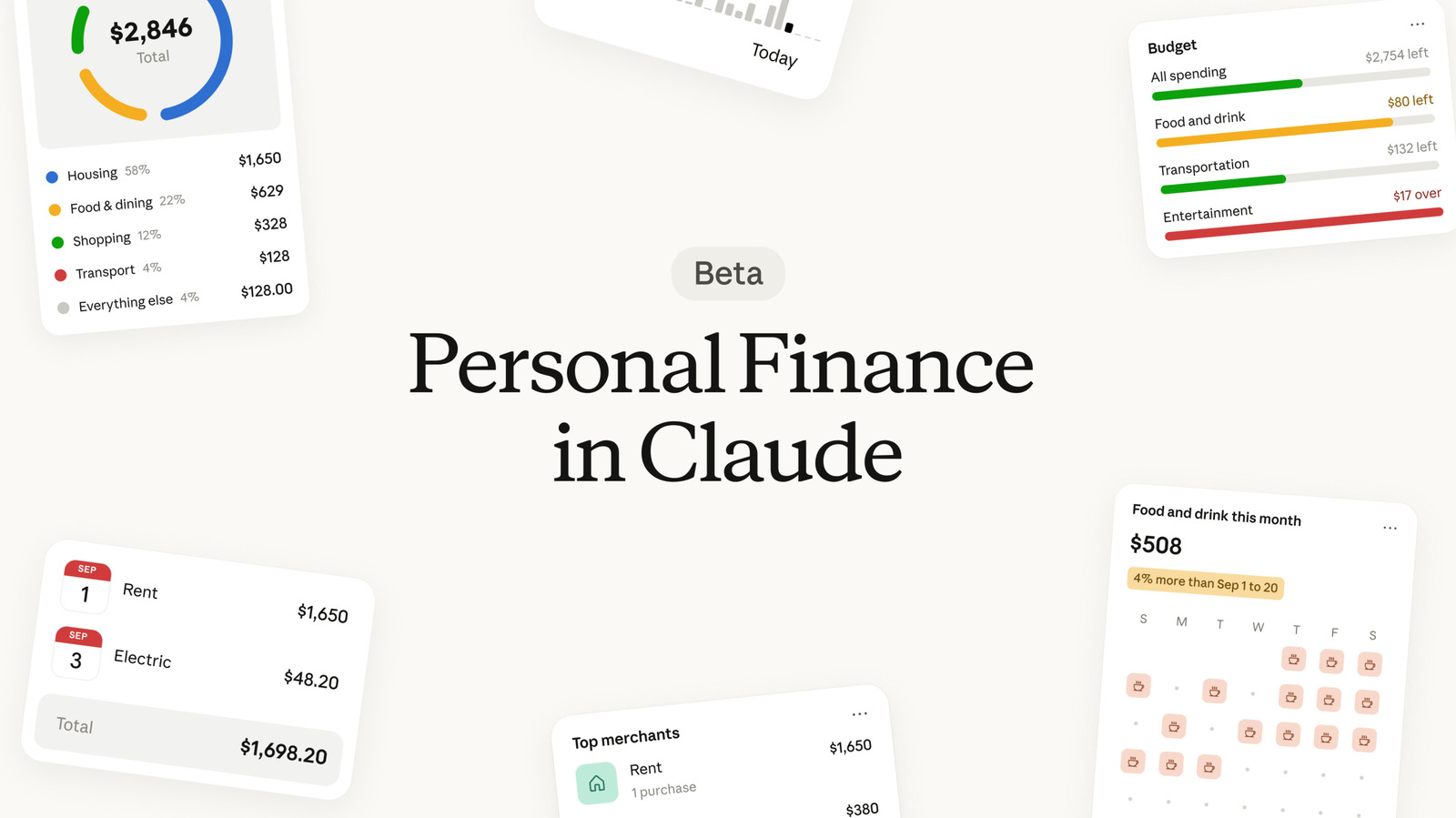
Covering a broad spectrum of personal finance topics, there's a lot of crossover in what both OpenAI and Anthropic's offerings can do. Both of their AI chatbots can address general questions about financial goals, like buying a house, planning an expensive family vacation or creating a savings plan. Claude and ChatGPT will also generate dashboards to offer users better visuals at things like monthly expenses, investments and spending habits.
To activate either Claude's Personal Finance tool or ChatGPT's Finances feature, you have to link your bank account. Both AI companies partnered with Plaid to make this happen, allowing connections with the most popular financial institutions, like Bank of America, Capital One or Chase. Once set up, both Claude and ChatGPT only have "read-only" access to your financial accounts, meaning they can only view the info provided and would not be able to make any changes.
Source link