
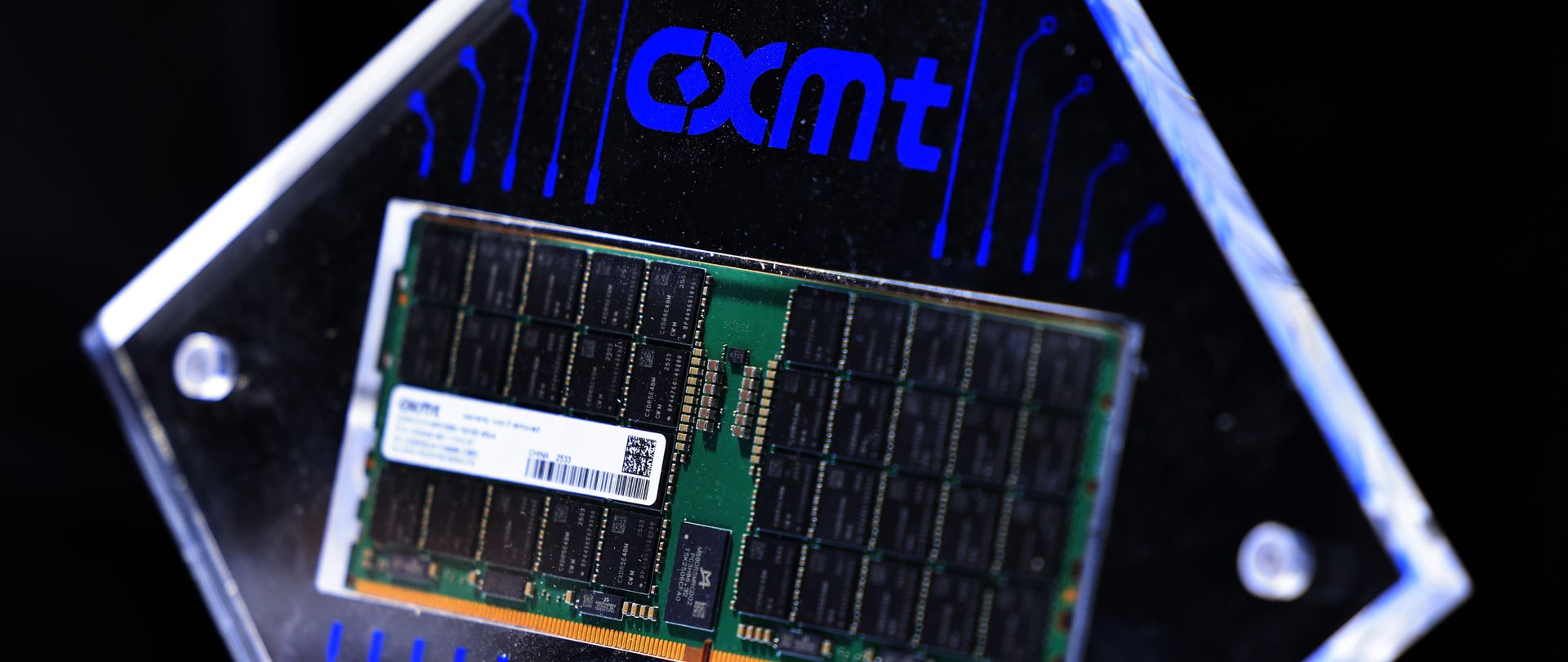
China’s homegrown memory comes largely from two companies, CXMT for DRAM and YMTC for 3D NAND, and both are booming. CXMT’s Oct. 30 quarterly report shows a nine-month net profit of ¥132.0 billion ($19.6 billion), against a ¥5.28 billion ($785 million) loss a year earlier, on revenue more than eight times as high, at ¥269.0 billion ($40.0 billion). YMTC’s numbers, just for Q1, are at ¥47.04 billion ($7.0 billion) in revenue and ¥33.38 billion ($5.0 billion) in profit attributable to shareholders, more than double 2025.
Both are expanding and adding fabs, and each is edging into the other’s products. No Chinese manufacturer can yet produce high-bandwidth memory (HBM) in volume, though. HBM is the stacked DRAM that AI accelerators depend on, and currently the U.S. bars Samsung, SK hynix, and Micron from selling it into China. CXMT’s prospectus lists no HBM project, though its HBM3E is reportedly in risk production, an early run before the process is fully qualified. Huawei designs its own HBM but doesn’t say who makes it.
Memory is a commodity, so the story is in the wafers. We cover the companies running memory fabs in China: CXMT, YMTC, a handful of smaller Chinese fabs, and Samsung and SK hynix, which run some of their biggest plants there. Huawei makes the cut for its HBM program, though it has no memory fab. Fabless designers, module makers, and NOR flash producers are left out, except XMC for its HBM line. Fab counts, products, and financials come from filings and company statements; capacities, planned fabs, and the HBM progress that remains the big question mark rest largely on anonymous reporting.
Source link





