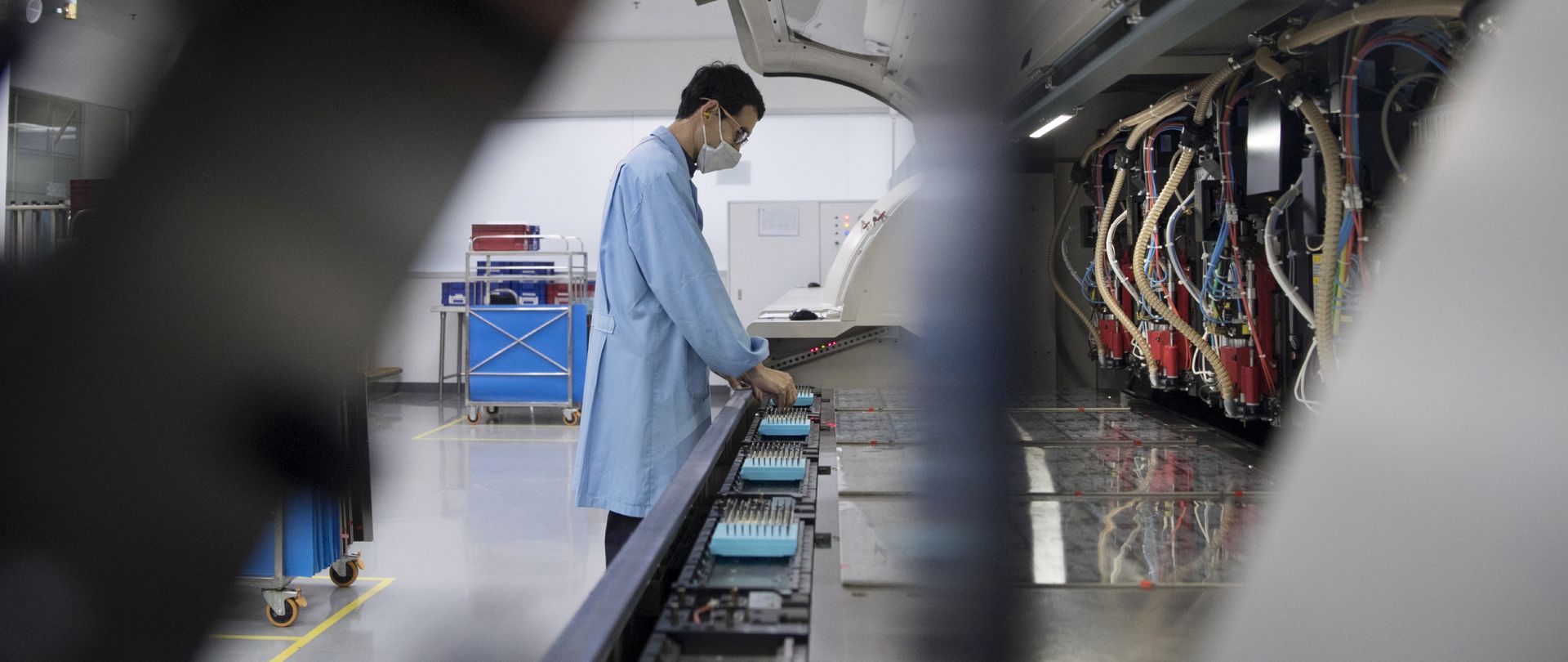
Much of the attention on China's AI hardware industry has been focused on the country’s drive to develop domestic GPUs, including Huawei's Ascend processors, as U.S. export restrictions make it harder to buy advanced chips in the region. But making an AI server involves far more than securing its processors. The printed circuit boards (PCBs) connecting chips, memory, and networking equipment are becoming harder to manufacture, and Chinese companies are racing to supply the materials and equipment they require.
More than 20 Chinese PCB manufacturers announced major expansion plans in the first half of 2026. Three recent reports from HSBC and J.P. Morgan suggest the shortages could extend to products as unglamorous as drill bits and copper foil. Having a plentiful and regular supply of those components in the manufacturing process is important because the tiny drill bit used to make the circuit boards inside AI servers could be worn out after drilling fewer than 200 holes, according to HSBC, compared with around 2,000 holes for older materials.
It’s all part of a manufacturing process which stresses every part of the supply and manufacturing chain, beyond obvious components.
PCBs are built by layering copper and insulating material together, then drilling holes through them to connect their circuits. But the complexity of those boards is increasing as AI servers are designed to handle more data, including more layers than those seen in ordinary computers. HSBC estimates that a notebook PCB has four to eight layers, compared with more than 20 for Nvidia's H100 generation of GPUs.
Source link