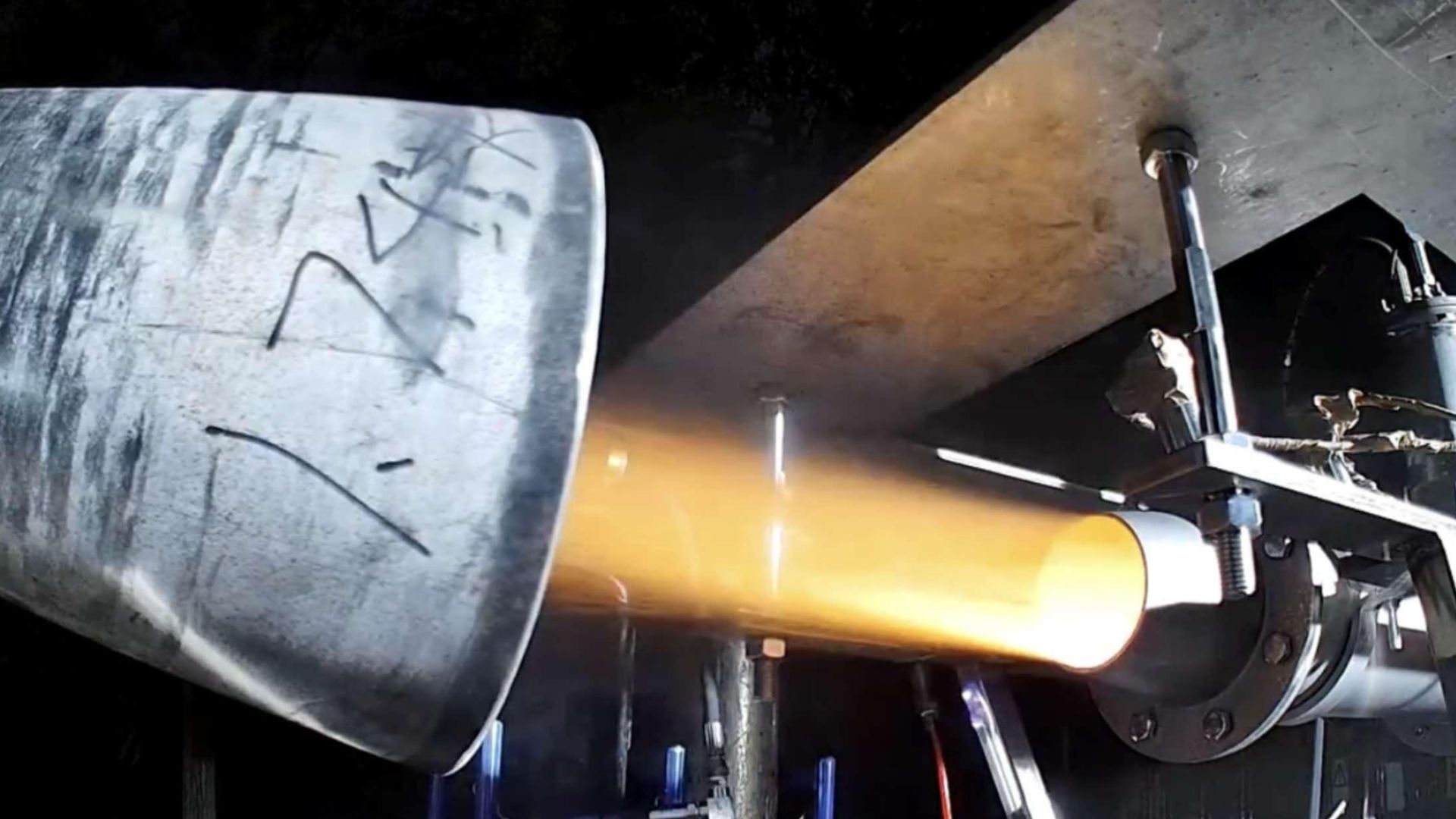
Researchers at Nanchang Hangkong University in eastern China have completed a ground ignition test of a prototype turbojet engine equipped with a metal powder-fueled afterburner, an experimental propulsion approach aimed at overcoming the thrust limits of conventional kerosene-burning fighter engines.
Carried out over four years with backing from a Jiangxi provincial research and development program, the test marks the first reported ground firing of a turbojet afterburner running on solid metal particles rather than liquid hydrocarbon fuel, according to Chinese state media and regional reporting.
As reported by the South China Morning Post and detailed in coverage by PowderSight citing China’s Science and Technology Daily, a team led by Sun Haijun at Nanchang Hangkong University’s School of Power and Energy developed the prototype. During bench trials on a dedicated small-turbine test rig, the engine reportedly achieved stable ignition and met its targeted operating parameters.
In a conventional military turbojet or low-bypass turbofan engine, an afterburner sits downstream of the main turbine section and injects raw aviation kerosene into the hot exhaust stream. Burning that extra fuel using residual oxygen in the exhaust produces a sharp surge in thrust for short-duration maneuvers such as heavy takeoffs, rapid climbs, supersonic dashes, or evading incoming missiles.
However, kerosene afterburners face thermodynamic and volumetric energy limits, alongside severe fuel-burn penalties. Fine metal powders, such as aluminum or magnesium formulations long studied in solid rocket motors and experimental ramjets, offer dramatically higher volumetric energy density.
Solid aluminum carries roughly 84 megajoules (about 301,000 BTU per gallon) of chemical energy per liter, compared with around 34 megajoules per liter (about 122,000 BTU per gallon) for standard aviation kerosene.
Source link