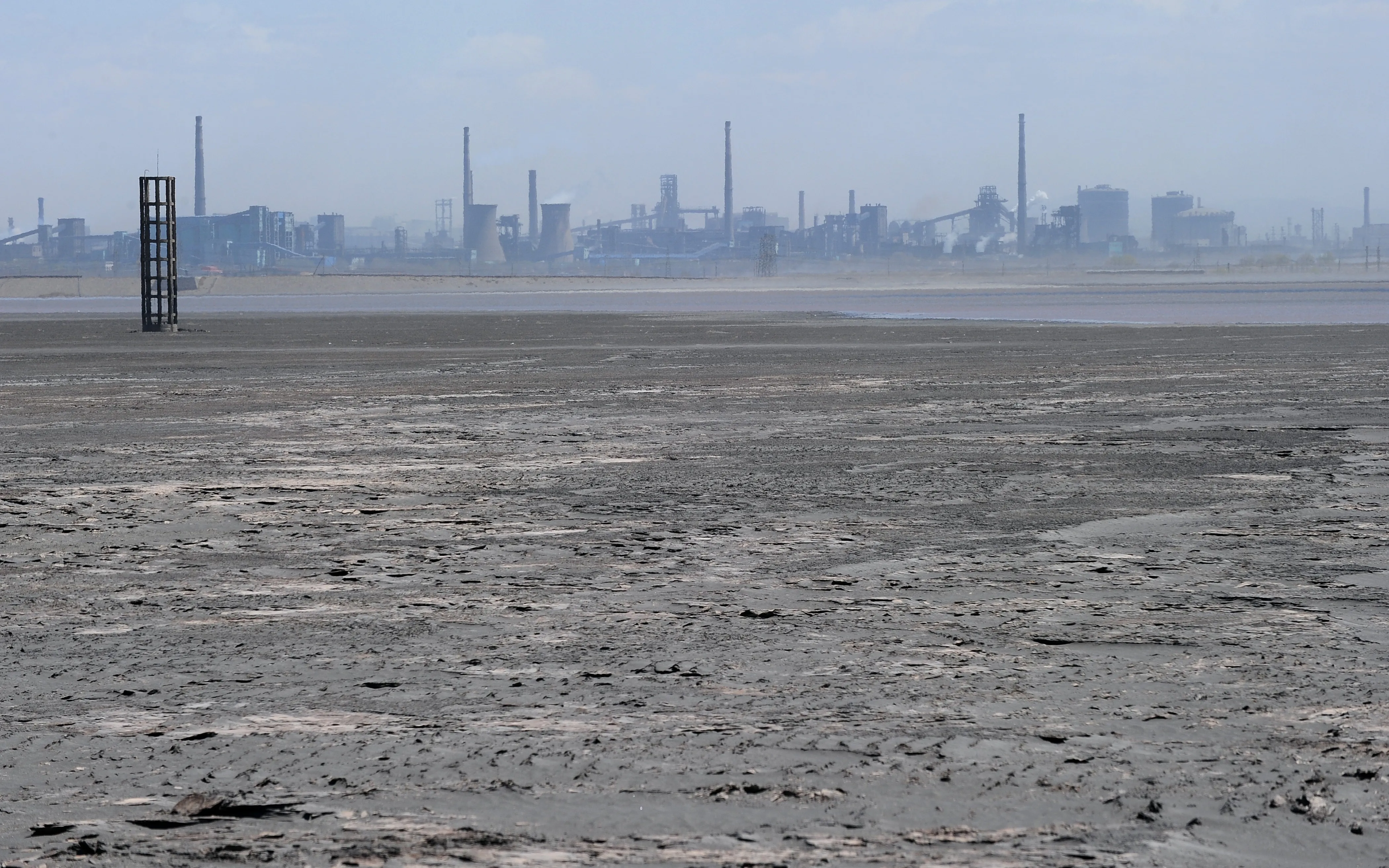
One of the singular features of Baotou, an industrial city of 2 million people in Inner Mongolia, is a 10-square-kilometer (4-square-mile) lake that is among the most polluted in the world. The artificial lake, referred to by the name of the dam associated with it, Weikuang Dam (or Baogang Tailings Dam), has for decades collected the effluent from minerals processing for China’s globally dominant iron, steel, and rare-earths industries.
Built in the late 1950s, the lake contains a highly toxic stew of industrial chemicals with substantial amounts of radioactive thorium, the latter resulting primarily from the processing of monazite ores for rare earths. China has since greatly tightened its environmental regulations and restrictions on mining and minerals processing. For example, largely because of the environmental disaster that is Weikuang Dam, the country doesn’t permit the development or operation of stand-alone monazite mines—that is, mines where nothing is mined except monazite ore.
Now, with industrialized nations in North America, Asia, and Europe spending billions to shore up their rare-earths supply chains, and counting on monazite to help them do it, China’s history and experiences with monazite offer important lessons.
This article is a collaboration between Foreign Policy, the global magazine of politics and ideas, and IEEE Spectrum, the flagship magazine of the IEEE.
Monazite ore is a pillar of China’s rare-earths industry because it is a prime source of some less common but extremely important rare-earth elements, notably dysprosium, terbium, yttrium, and erbium. The country mines and processes vast quantities of monazite ore; it also imports huge amounts of monazite ore for processing.
Source link