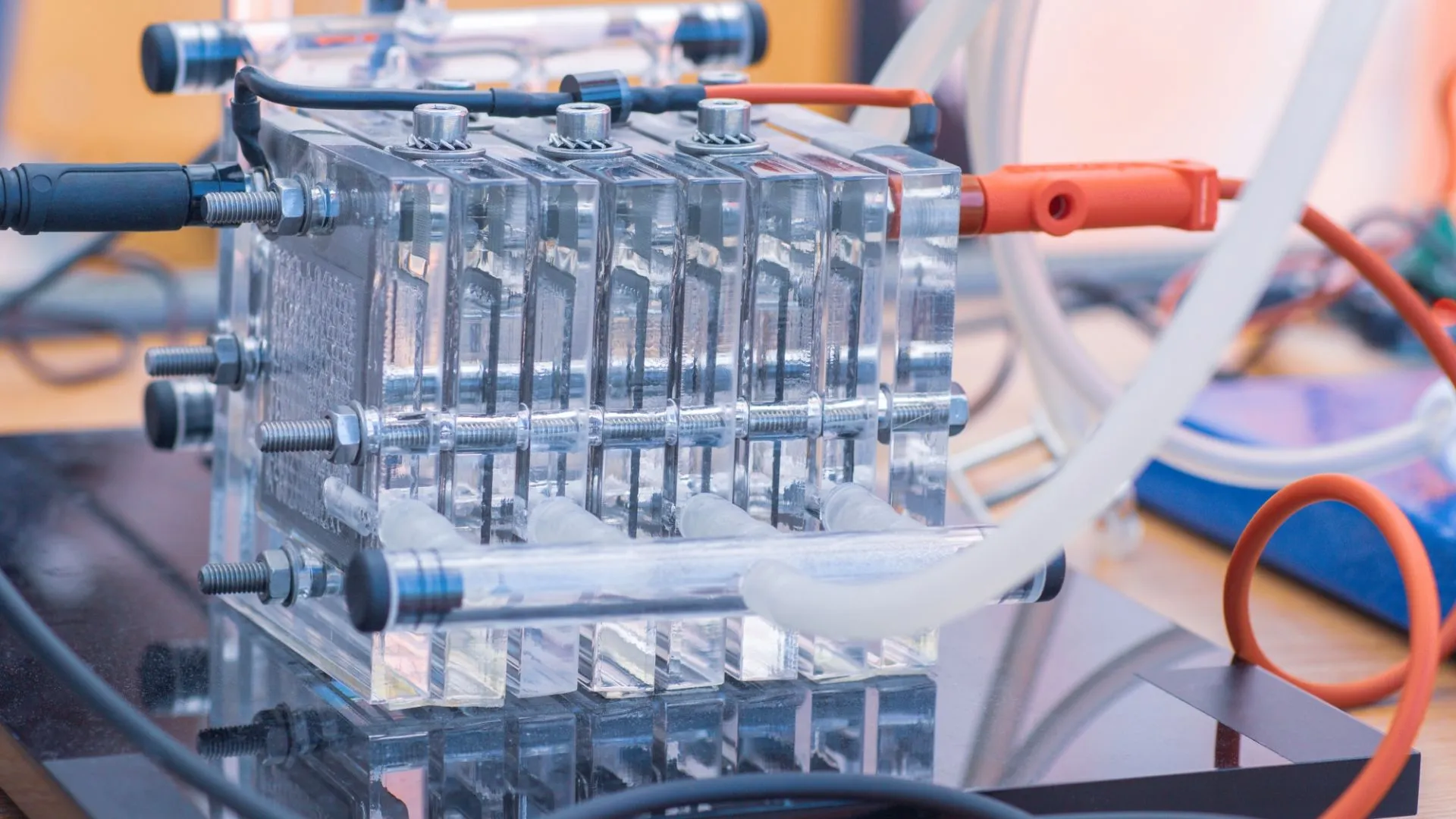
A team of scientists has found a way to double the production of clean hydrogen from steam without using any extra electricity. The breakthrough could help heavy industries cut their reliance on fossil fuels.
Most industrial hydrogen today is stripped from natural gas, a process that releases large amounts of carbon dioxide. Chemical plants need vast quantities of this gas to manufacture fertilizers, refine fuels, and make everyday plastics.
Now, chemical engineers at the University of Groningen have developed a durable ceramic electrolyzer that extracts hydrogen directly from water vapor. The system runs reliably at the high working temperatures already found inside chemical factories.
Details of the research were published in the journal Energy and Environmental Science.
Splitting water with electricity is a well-established technology. Standard liquid electrolyzers run a current through water to divide it into hydrogen and oxygen. However, heating liquid water and powering that split demands huge amounts of electrical energy.
Protonic Ceramic Electrolyzer Cells (PCECs) address this issue by using steam instead of liquid water. These systems, which operate at intermediate heat between 400°C and 650°C, need significantly less electricity to break chemical bonds. Inside a PCEC, steam is split into oxygen and positively charged hydrogen ions, or protons.
“In the PCEC, there is a ceramic membrane, and only the hydrogen without an electron (H+) is small enough to pass through the pores of this membrane, attracted by a negative charge on the other side that allows it to form hydrogen (H2) again,” explained the researchers.
Source link