

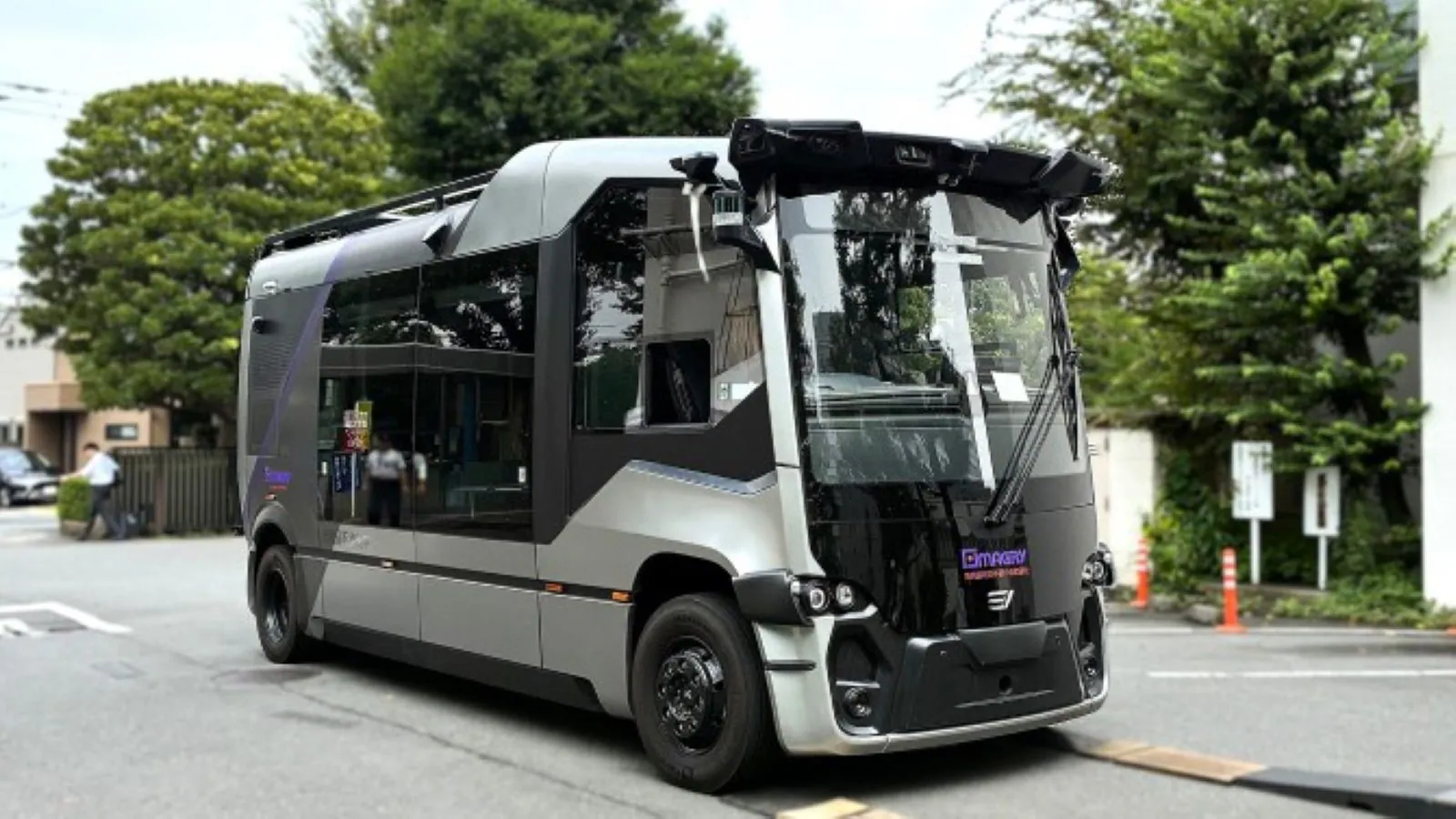
Japan is preparing to take another step towards autonomous public transport, with NTT Mobility planning to test self-driving buses on public roads. The trials will begin in February 2027 and will assess whether the buses can operate without relying on high-definition (HD) maps.
The initiative will use artificial intelligence (AI)-based driving technology developed by Israel-based Imagry and an electric bus manufactured by eVersum. According to NTT Mobility, the project aims to assess whether autonomous vehicles can navigate different road conditions without the time and expense involved in creating detailed digital maps for every new route.
The trials will take place on public roads around NTT's Musashino Research and Development Centre in Japan. The initial phase will operate at Level 2 autonomy, meaning a human driver will remain on board to supervise the vehicle and take control when required. The company plans to begin evaluating the system's performance and technical challenges from April 2027, following initial road testing in February.
Conventional autonomous vehicles often depend on high-definition 3D maps that contain detailed information about roads, lanes, traffic signals, road markings and surrounding infrastructure. These maps help vehicles understand their location and plan their movements.
However, preparing high-precision maps and adjusting autonomous driving systems to local road and traffic conditions can be time-consuming and expensive when introducing services on new routes.
Imagry's system takes a different approach. According to NTT Mobility, it uses cameras to recognise and reconstruct the surrounding environment in real time, without depending on pre-built HD maps or LiDAR sensors.
Source link





