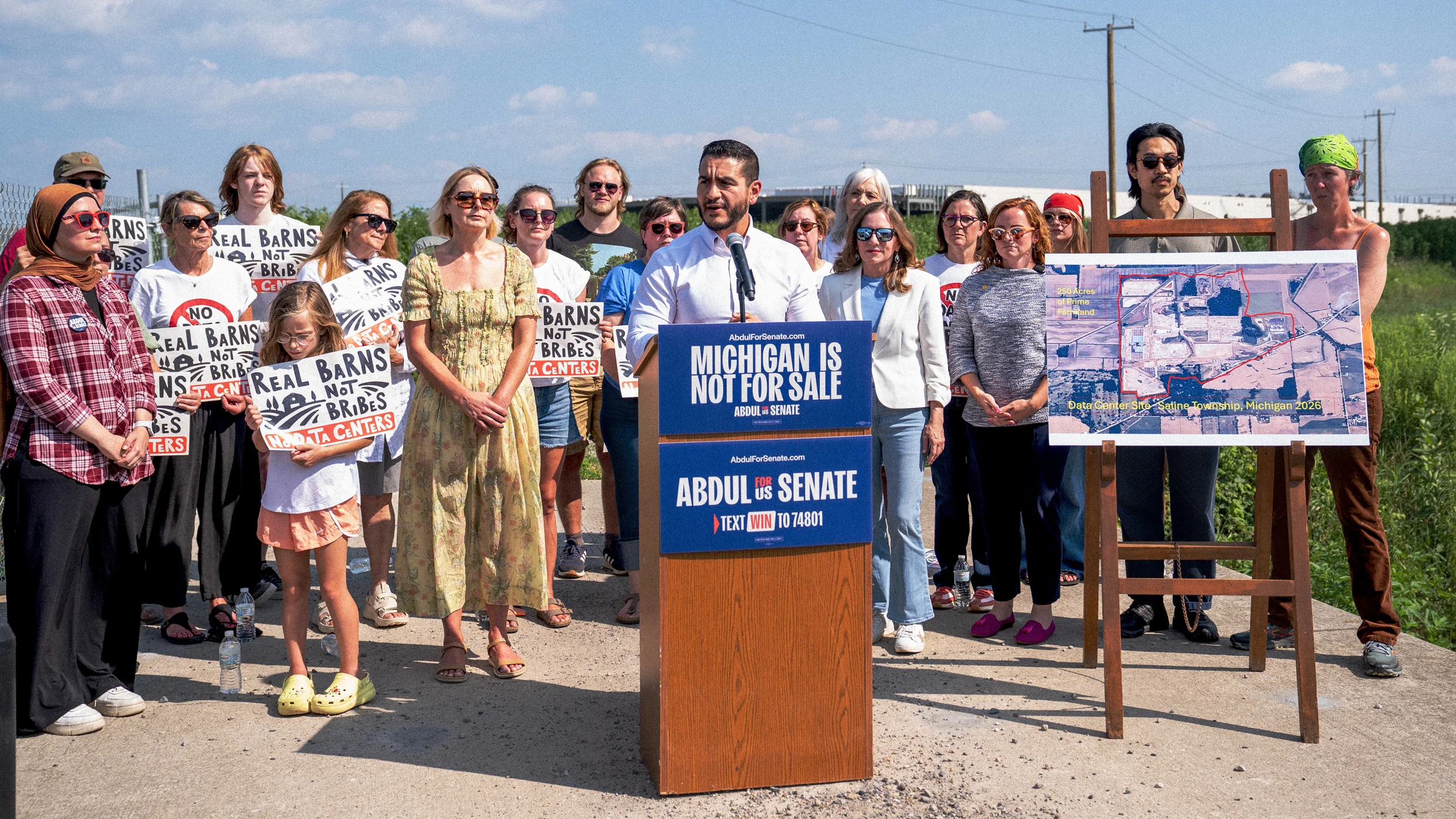
On Election Day, Americans made their opinions about the AI data center boom clear.
Now, it’s up to those newly elected legislators to rein in the country’s high-speed data center development. And there’s a lot they can actually do—particularly on the local level.
Data centers were “dealt a resounding blow in the midterm elections,” Mandy DeRoche, director of emerging issues at Earthjustice, said in a press event on Wednesday.
Across 10 states, residents overwhelmingly voted for ballot measures to pause development, require public approval for projects, restrict data center electricity use, and link financial assurances to tax incentives.
Congressional and state-level candidates who promised to address AI data center development also won in large numbers. The total number of governors supporting moratoria will now represent states with 41% of the country’s planned data center developments, according to Earthjustice.
The data center industry has a history of limiting public information around its projects and a track record of skirting regulations and oversight.
Developers have demanded that government officials sign non-disclosure agreements, denying the public information—and a chance to weigh in.
They’ve also split their projects into smaller permits, sometimes applying for one project’s permits under multiple corporations. That strategy, called “segmentation,” can fasttrack approval and conceal the true scope of a project, allowing developers to sidestep more rigorous environmental reviews.
Still, activists who have been working to protect communities from the harms of data centers are hopeful.
“I’ve never been part of a movement like this before,” said Sarah Friedman, co-founder of Better Data Center Project, an advocacy group that works with communities facing data center development.
Source link