
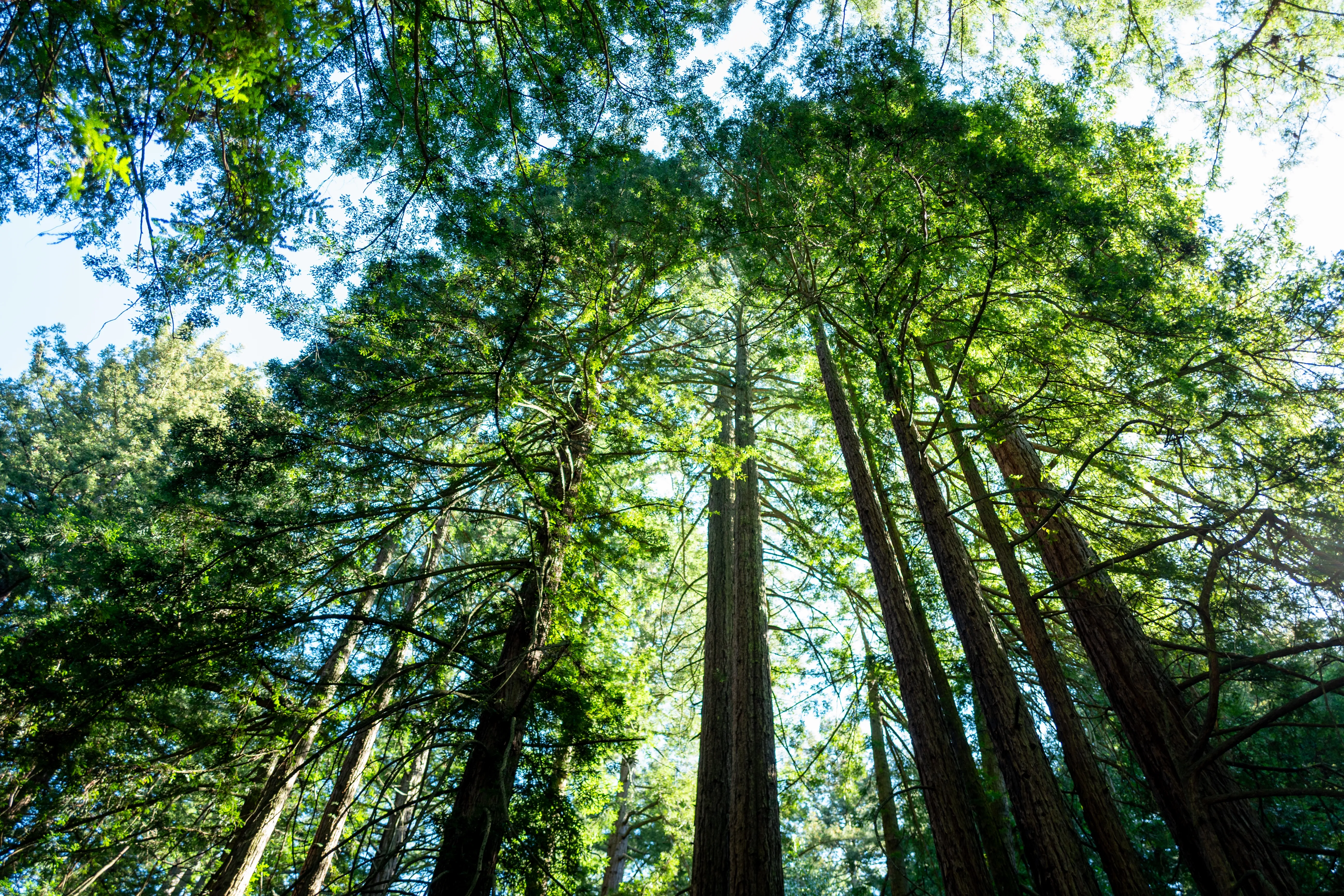
A grove of coast redwood trees is a forest of forests. Individual trees can live for thousands of years, and as they grow, their canopies develop mats of soils and ferns, creating something like a second forest floor hundreds of feet above the ground.
These elevated ecosystems are home to creatures like the wandering salamander, which can spend its entire life cycle on top of a single tree, and the marbled murrelet, a seabird whose nesting habits were a mystery until one day in 1974, when a tree-trimmer stumbled upon a nest 150 feet above the ground. Sometimes a stray seed—a sitka spruce or oak or even another redwood—finds its way up a massive redwood and grows into another tree entirely, nestled among the branches of a giant.
For millennia, redwoods have been the anchors of this incredibly stable ecosystem; they can even survive wildfires that devastate other tree species. They’ve also been the source of plenty of human inspiration and drive millions of dollars to California’s tourist economy. But like other living things, they aren’t immune to warming temperatures, and it turns out these trees have a particular weak spot.
A new study from researchers at the University of California, Davis, using measurements taken twice a month for two years, found that coast redwood leaves essentially dial down their photosynthesis during periods of extreme heat. This means trees are slowing their “breathing” and “eating” because they can’t cool down fast enough when temperatures rise. It’s a problem that’s only going to get worse as climate change continues to drive global temperatures up, and it raises urgent questions about the future of these iconic trees and the layers of life that live on and around their shadow-dappled lengths.
Source link





