In May last year, the Vera C. Rubin Observatory in Chile revealed it had spotted the fastest-spinning asteroid to date. Dubbed 2025 MN45, the asteroid completes a rotation in under two minutes but is also one among the 1,900 asteroids newly discovered by the space observatory.
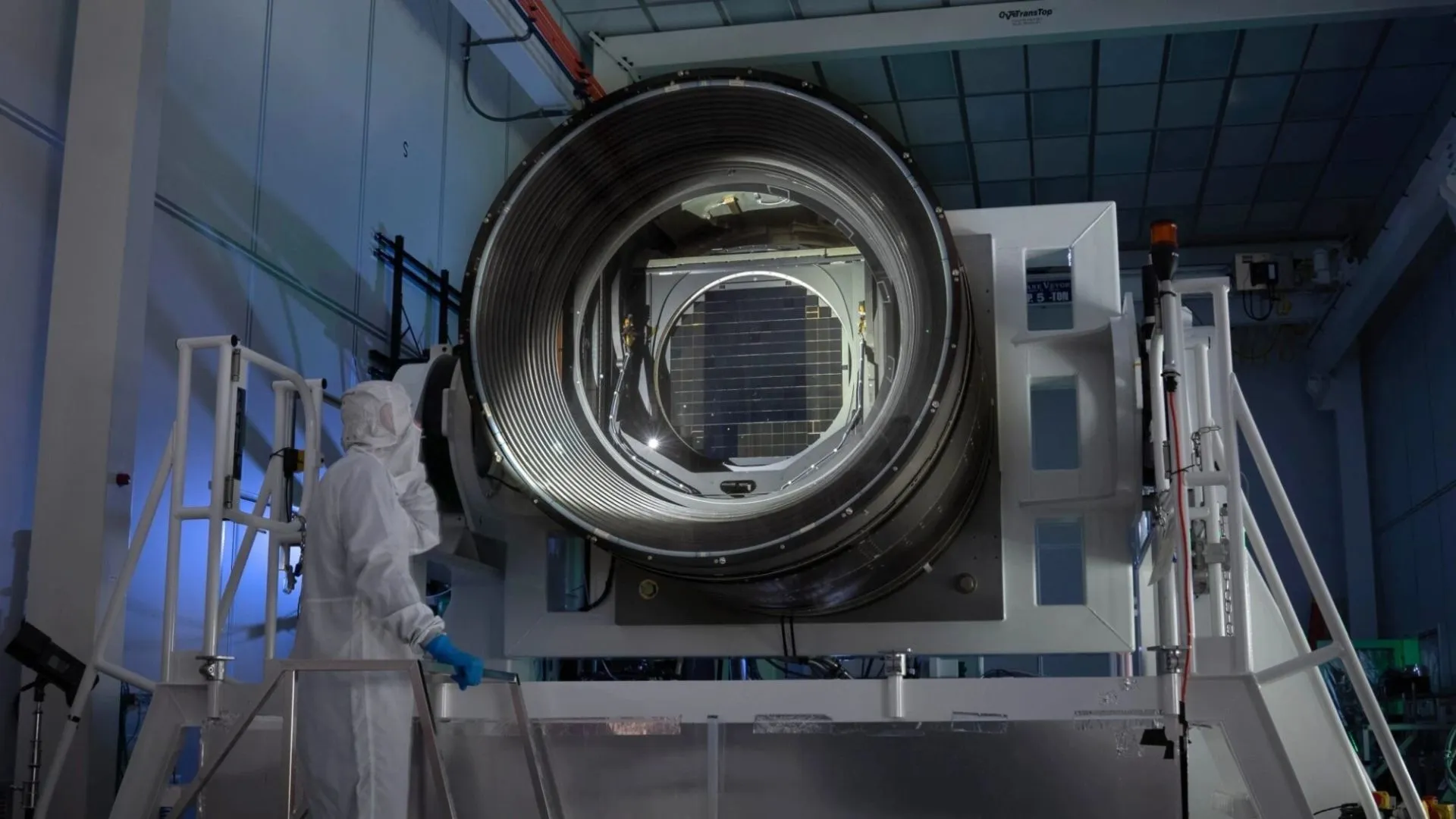
The discovery is part of the Legacy Survey of Space and Time (LSST), an ultra-wide and ultra-high-definition time-lapse of the southern sky that the Observatory is conducting. Central to the LSST is the world’s largest digital camera, roughly the size of a car and one that can take about 800 panoramic shots of the sky every night.
The journey to take these images began more than three decades ago. In the mid-1990s, scientists wanted to build a telescope to search for dark matter.
“It began as a proposal by Tony Tyson (now Chief Scientist at Rubin Observatory) and collaborators for a large-aperture, large field of view survey telescope for the 2000 astrophysics decadal survey,” explained Aaron Roodman, then Deputy Director of Rubin Construction for SLAC National Accelerator Laboratory.
“As the new millennium dawned, the scope of the project increased to include very faint objects and catalog near-Earth asteroids as well.”
In 2007, the project received initial funding from Charles Simonyi and Bill Gates, but only gathered steam after the National Science Foundation (NSF) and the Department of Energy (DOE) provided support.
“Serious design work on the Camera began at SLAC around 2004, led by Steve Kahn. Originally called the LSST, the project was ranked as the highest priority ground-based telescope in 2010,” added Roodman.
Source link